
Home
Experiential Learning in Philosophy
Barnes and Noble
Loading Inventory...
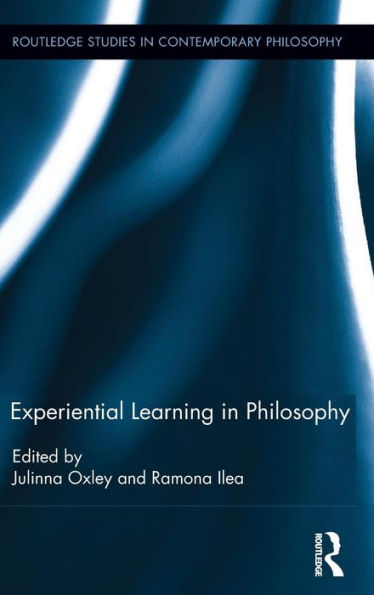
Experiential Learning in Philosophy in Franklin, TN
Current price: $210.00
Barnes and Noble
Experiential Learning in Philosophy in Franklin, TN
Current price: $210.00
Loading Inventory...
Size: OS
In this volume, Julinna Oxley and Ramona Ilea bring together essays that examine and defend the use of
experiential learning
activities to teach philosophical terms, concepts, arguments, and practices. Experiential learning emphasizes the importance of student engagement outside the traditional classroom structure. Service learning, studying abroad, engaging in large-scale collaborative projects such as creating blogs, websites and videos, and practically applying knowledge in a reflective, creative and rigorous way are all forms of experiential learning. Taken together, the contributions to
Experiential Learning in Philosophy
argue that
teaching
philosophy is about
doing
philosophy with others. The book is divided into two sections: essays that engage in the philosophical debate about defining and implementing experiential learning, and essays that describe how to integrate experiential learning into the teaching of philosophy.
provides a timely reflection on best practices for teaching philosophical ideals and theories, an examination of the evolution of the discipline of philosophy and its adoption (or reclamation) of active modes of learning, and an anticipation of the ways in which pedagogical practices will continue to evolve in the 21st century.
experiential learning
activities to teach philosophical terms, concepts, arguments, and practices. Experiential learning emphasizes the importance of student engagement outside the traditional classroom structure. Service learning, studying abroad, engaging in large-scale collaborative projects such as creating blogs, websites and videos, and practically applying knowledge in a reflective, creative and rigorous way are all forms of experiential learning. Taken together, the contributions to
Experiential Learning in Philosophy
argue that
teaching
philosophy is about
doing
philosophy with others. The book is divided into two sections: essays that engage in the philosophical debate about defining and implementing experiential learning, and essays that describe how to integrate experiential learning into the teaching of philosophy.
provides a timely reflection on best practices for teaching philosophical ideals and theories, an examination of the evolution of the discipline of philosophy and its adoption (or reclamation) of active modes of learning, and an anticipation of the ways in which pedagogical practices will continue to evolve in the 21st century.
In this volume, Julinna Oxley and Ramona Ilea bring together essays that examine and defend the use of
experiential learning
activities to teach philosophical terms, concepts, arguments, and practices. Experiential learning emphasizes the importance of student engagement outside the traditional classroom structure. Service learning, studying abroad, engaging in large-scale collaborative projects such as creating blogs, websites and videos, and practically applying knowledge in a reflective, creative and rigorous way are all forms of experiential learning. Taken together, the contributions to
Experiential Learning in Philosophy
argue that
teaching
philosophy is about
doing
philosophy with others. The book is divided into two sections: essays that engage in the philosophical debate about defining and implementing experiential learning, and essays that describe how to integrate experiential learning into the teaching of philosophy.
provides a timely reflection on best practices for teaching philosophical ideals and theories, an examination of the evolution of the discipline of philosophy and its adoption (or reclamation) of active modes of learning, and an anticipation of the ways in which pedagogical practices will continue to evolve in the 21st century.
experiential learning
activities to teach philosophical terms, concepts, arguments, and practices. Experiential learning emphasizes the importance of student engagement outside the traditional classroom structure. Service learning, studying abroad, engaging in large-scale collaborative projects such as creating blogs, websites and videos, and practically applying knowledge in a reflective, creative and rigorous way are all forms of experiential learning. Taken together, the contributions to
Experiential Learning in Philosophy
argue that
teaching
philosophy is about
doing
philosophy with others. The book is divided into two sections: essays that engage in the philosophical debate about defining and implementing experiential learning, and essays that describe how to integrate experiential learning into the teaching of philosophy.
provides a timely reflection on best practices for teaching philosophical ideals and theories, an examination of the evolution of the discipline of philosophy and its adoption (or reclamation) of active modes of learning, and an anticipation of the ways in which pedagogical practices will continue to evolve in the 21st century.
You May Also Like








More About Barnes and Noble at CoolSprings Galleria
Barnes & Noble is the world’s largest retail bookseller and a leading retailer of content, digital media and educational products. Our Nook Digital business offers a lineup of NOOK® tablets and e-Readers and an expansive collection of digital reading content through the NOOK Store®. Barnes & Noble’s mission is to operate the best omni-channel specialty retail business in America, helping both our customers and booksellers reach their aspirations, while being a credit to the communities we serve.
1800 Galleria Blvd #1310, Franklin, TN 37067, United States
Find Barnes and Noble at CoolSprings Galleria in Franklin, TN
Visit Barnes and Noble at CoolSprings Galleria in Franklin, TN
