
Home
Exporting Progressivism to Communist China: How New York's Union Seminary Liberalized Christianity Twentieth-Century China
Barnes and Noble
Loading Inventory...
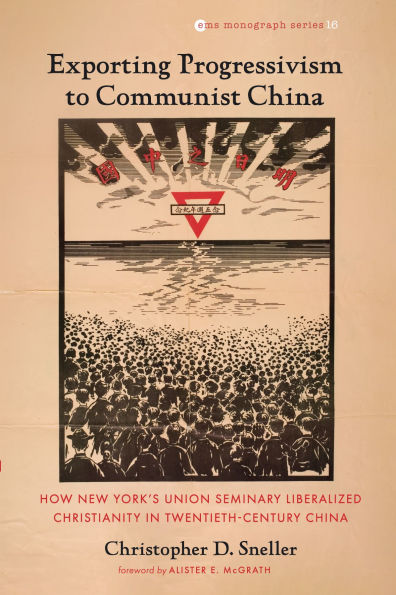
Exporting Progressivism to Communist China: How New York's Union Seminary Liberalized Christianity Twentieth-Century China in Franklin, TN
Current price: $35.00
Barnes and Noble
Exporting Progressivism to Communist China: How New York's Union Seminary Liberalized Christianity Twentieth-Century China in Franklin, TN
Current price: $35.00
Loading Inventory...
Size: Paperback
Using new archival research, this book shows how Union Theological Seminary exported progressive Christianity to Communist China. Founded in 1836, the New York seminary disseminated its version of Christianity to China through its alumni. From 1911 to 1949, 196 Union alumni went to China. Thirty-nine of these former students were Chinese nationals. Many of these Chinese studentssuch as Y. T. Wu (Wu Yaozong), K. H. Ting (Ding Guangxun), John Sung (Song Shangjie), and Timothy Tingfang Lew (Liu Tingfang)became key leaders in the Sino-Foreign Protestant Establishment and the Three-Self Patriotic Movement. The school became a dense hub of influential Chinese and American Christians. Union's role in liberalizing and indigenizing Christianity in twentieth-century China has been largely unnoticed, until now.
Using new archival research, this book shows how Union Theological Seminary exported progressive Christianity to Communist China. Founded in 1836, the New York seminary disseminated its version of Christianity to China through its alumni. From 1911 to 1949, 196 Union alumni went to China. Thirty-nine of these former students were Chinese nationals. Many of these Chinese studentssuch as Y. T. Wu (Wu Yaozong), K. H. Ting (Ding Guangxun), John Sung (Song Shangjie), and Timothy Tingfang Lew (Liu Tingfang)became key leaders in the Sino-Foreign Protestant Establishment and the Three-Self Patriotic Movement. The school became a dense hub of influential Chinese and American Christians. Union's role in liberalizing and indigenizing Christianity in twentieth-century China has been largely unnoticed, until now.
You May Also Like








More About Barnes and Noble at CoolSprings Galleria
Barnes & Noble is the world’s largest retail bookseller and a leading retailer of content, digital media and educational products. Our Nook Digital business offers a lineup of NOOK® tablets and e-Readers and an expansive collection of digital reading content through the NOOK Store®. Barnes & Noble’s mission is to operate the best omni-channel specialty retail business in America, helping both our customers and booksellers reach their aspirations, while being a credit to the communities we serve.
1800 Galleria Blvd #1310, Franklin, TN 37067, United States
Find Barnes and Noble at CoolSprings Galleria in Franklin, TN
Visit Barnes and Noble at CoolSprings Galleria in Franklin, TN
