
Home
Factorization of Boundary Value Problems Using the Invariant Embedding Method
Barnes and Noble
Loading Inventory...
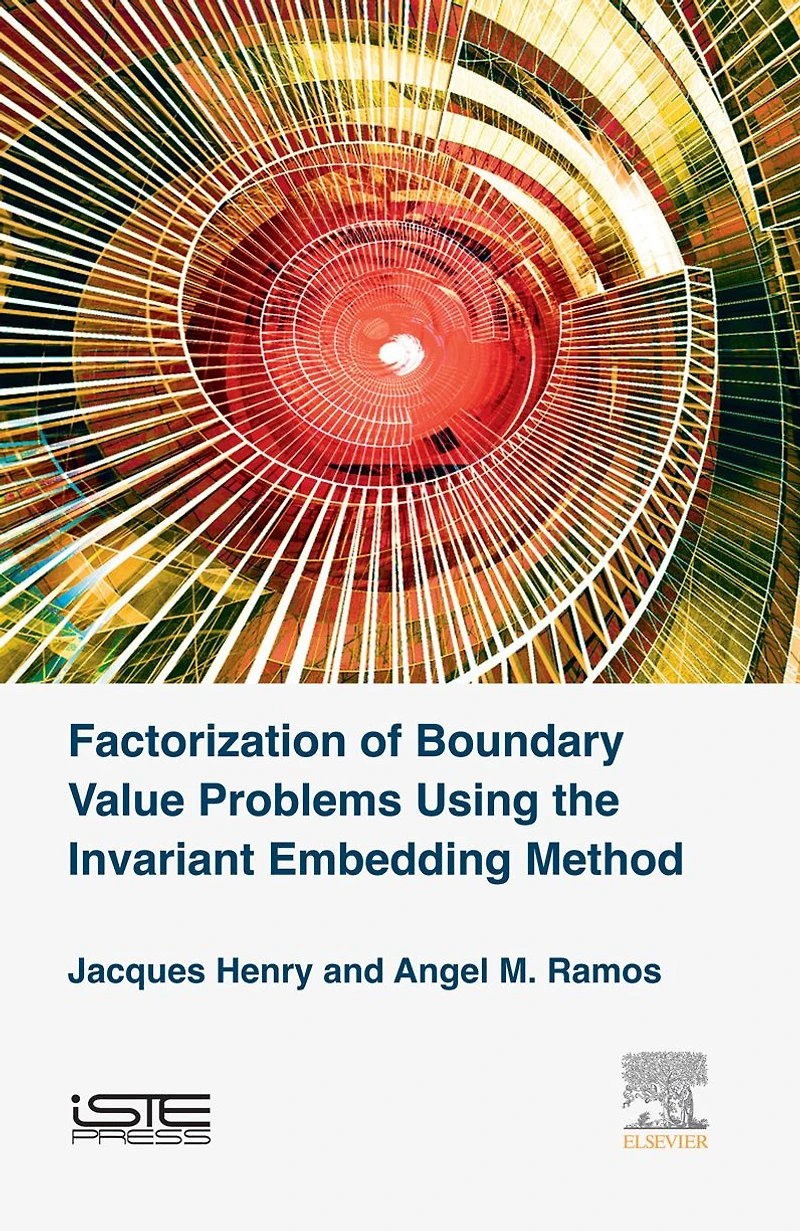
Factorization of Boundary Value Problems Using the Invariant Embedding Method in Franklin, TN
By Barnes & Noble
Current price: $110.00
Barnes and Noble
Factorization of Boundary Value Problems Using the Invariant Embedding Method in Franklin, TN
By Barnes & Noble
Current price: $110.00
Loading Inventory...
Size: EBook
Factorization Method for Boundary Value Problems by Invariant Embedding presents a new theory for linear elliptic boundary value problems. The authors provide a transformation of the problem in two initial value problems that are uncoupled, enabling you to solve these successively. This method appears similar to the Gauss block factorization of the matrix, obtained in finite dimension after discretization of the problem. This proposed method is comparable to the computation of optimal feedbacks for linear quadratic control problems.- Develops the invariant embedding technique for boundary value problems- Makes a link between control theory, boundary value problems and the Gauss factorization- Presents a new theory for successively solving linear elliptic boundary value problems- Includes a transformation in two initial value problems that are uncoupled
Factorization Method for Boundary Value Problems by Invariant Embedding presents a new theory for linear elliptic boundary value problems. The authors provide a transformation of the problem in two initial value problems that are uncoupled, enabling you to solve these successively. This method appears similar to the Gauss block factorization of the matrix, obtained in finite dimension after discretization of the problem. This proposed method is comparable to the computation of optimal feedbacks for linear quadratic control problems.- Develops the invariant embedding technique for boundary value problems- Makes a link between control theory, boundary value problems and the Gauss factorization- Presents a new theory for successively solving linear elliptic boundary value problems- Includes a transformation in two initial value problems that are uncoupled
You May Also Like







More About Barnes and Noble at CoolSprings Galleria
Barnes & Noble is the world’s largest retail bookseller and a leading retailer of content, digital media and educational products. Our Nook Digital business offers a lineup of NOOK® tablets and e-Readers and an expansive collection of digital reading content through the NOOK Store®. Barnes & Noble’s mission is to operate the best omni-channel specialty retail business in America, helping both our customers and booksellers reach their aspirations, while being a credit to the communities we serve.
1800 Galleria Blvd #1310, Franklin, TN 37067, United States
Find Barnes and Noble at CoolSprings Galleria in Franklin, TN
Visit Barnes and Noble at CoolSprings Galleria in Franklin, TN
