
Home
Flames of Discontent: The 1916 Minnesota Iron Ore Strike
Barnes and Noble
Loading Inventory...
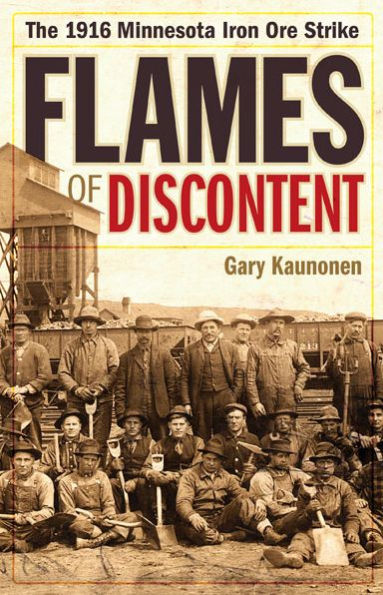
Flames of Discontent: The 1916 Minnesota Iron Ore Strike in Franklin, TN
Current price: $24.95
Barnes and Noble
Flames of Discontent: The 1916 Minnesota Iron Ore Strike in Franklin, TN
Current price: $24.95
Loading Inventory...
Size: Paperback
On June 2, 1916, forty mostly immigrant mineworkers at the St. James Mine in Aurora, Minnesota, walked off the job. This seemingly small labor disturbance would mushroom into one of the region’s, if not the nation’s, most contentious and significant battles between organized labor and management in the early twentieth century.
Flames of Discontent
tells the story of this pivotal moment and what it meant for workers and immigrants, mining and labor relations in Minnesota and beyond.
Drawing on previously untapped accounts from immigrant press newspapers, company letters, personal journals, and oral histories, historian Gary Kaunonen gives voice to the strike’s organizers and workingclass participants. In depth and in dramatic detail, his book describes the events leading up to the strike, and the violence that made it one of the most contentious in Minnesota history. Against the background of the physical and cultural landscape of Minnesota’s Iron Range, Kaunonen’s history brings the lives of workingclass Finnish immigrants into sharp relief, documenting the conditions and circumstances behind the emergence of leftist politics and union organization in their ranks. At the same time, it shows how the region’s South Slavic immigrants went from “scabs” during a 1907 strike to fullfledged striking members of the labor revolt of 1916. A look at the media of the time reveals how the three main contenders for workingclass allegiancesmine owners, Progressive reformers, and a revolutionary unioncommunicated with their mostly immigrant audience. Meanwhile, documents from mining company officials provide a strong argument for corruption reaching as far as the state’s then governor, Joseph A. A. Burnquist, whose strikebusting was undertaken in the interests of billion dollar corporations.
Ultimately, antisyndicalist laws were put in place to thwart the growing influence of organizations that sought to represent immigrant workers. Flames of Discontent raises the voices of those workers, and of history, against an injustice that reverberates to this day.
Flames of Discontent
tells the story of this pivotal moment and what it meant for workers and immigrants, mining and labor relations in Minnesota and beyond.
Drawing on previously untapped accounts from immigrant press newspapers, company letters, personal journals, and oral histories, historian Gary Kaunonen gives voice to the strike’s organizers and workingclass participants. In depth and in dramatic detail, his book describes the events leading up to the strike, and the violence that made it one of the most contentious in Minnesota history. Against the background of the physical and cultural landscape of Minnesota’s Iron Range, Kaunonen’s history brings the lives of workingclass Finnish immigrants into sharp relief, documenting the conditions and circumstances behind the emergence of leftist politics and union organization in their ranks. At the same time, it shows how the region’s South Slavic immigrants went from “scabs” during a 1907 strike to fullfledged striking members of the labor revolt of 1916. A look at the media of the time reveals how the three main contenders for workingclass allegiancesmine owners, Progressive reformers, and a revolutionary unioncommunicated with their mostly immigrant audience. Meanwhile, documents from mining company officials provide a strong argument for corruption reaching as far as the state’s then governor, Joseph A. A. Burnquist, whose strikebusting was undertaken in the interests of billion dollar corporations.
Ultimately, antisyndicalist laws were put in place to thwart the growing influence of organizations that sought to represent immigrant workers. Flames of Discontent raises the voices of those workers, and of history, against an injustice that reverberates to this day.
On June 2, 1916, forty mostly immigrant mineworkers at the St. James Mine in Aurora, Minnesota, walked off the job. This seemingly small labor disturbance would mushroom into one of the region’s, if not the nation’s, most contentious and significant battles between organized labor and management in the early twentieth century.
Flames of Discontent
tells the story of this pivotal moment and what it meant for workers and immigrants, mining and labor relations in Minnesota and beyond.
Drawing on previously untapped accounts from immigrant press newspapers, company letters, personal journals, and oral histories, historian Gary Kaunonen gives voice to the strike’s organizers and workingclass participants. In depth and in dramatic detail, his book describes the events leading up to the strike, and the violence that made it one of the most contentious in Minnesota history. Against the background of the physical and cultural landscape of Minnesota’s Iron Range, Kaunonen’s history brings the lives of workingclass Finnish immigrants into sharp relief, documenting the conditions and circumstances behind the emergence of leftist politics and union organization in their ranks. At the same time, it shows how the region’s South Slavic immigrants went from “scabs” during a 1907 strike to fullfledged striking members of the labor revolt of 1916. A look at the media of the time reveals how the three main contenders for workingclass allegiancesmine owners, Progressive reformers, and a revolutionary unioncommunicated with their mostly immigrant audience. Meanwhile, documents from mining company officials provide a strong argument for corruption reaching as far as the state’s then governor, Joseph A. A. Burnquist, whose strikebusting was undertaken in the interests of billion dollar corporations.
Ultimately, antisyndicalist laws were put in place to thwart the growing influence of organizations that sought to represent immigrant workers. Flames of Discontent raises the voices of those workers, and of history, against an injustice that reverberates to this day.
Flames of Discontent
tells the story of this pivotal moment and what it meant for workers and immigrants, mining and labor relations in Minnesota and beyond.
Drawing on previously untapped accounts from immigrant press newspapers, company letters, personal journals, and oral histories, historian Gary Kaunonen gives voice to the strike’s organizers and workingclass participants. In depth and in dramatic detail, his book describes the events leading up to the strike, and the violence that made it one of the most contentious in Minnesota history. Against the background of the physical and cultural landscape of Minnesota’s Iron Range, Kaunonen’s history brings the lives of workingclass Finnish immigrants into sharp relief, documenting the conditions and circumstances behind the emergence of leftist politics and union organization in their ranks. At the same time, it shows how the region’s South Slavic immigrants went from “scabs” during a 1907 strike to fullfledged striking members of the labor revolt of 1916. A look at the media of the time reveals how the three main contenders for workingclass allegiancesmine owners, Progressive reformers, and a revolutionary unioncommunicated with their mostly immigrant audience. Meanwhile, documents from mining company officials provide a strong argument for corruption reaching as far as the state’s then governor, Joseph A. A. Burnquist, whose strikebusting was undertaken in the interests of billion dollar corporations.
Ultimately, antisyndicalist laws were put in place to thwart the growing influence of organizations that sought to represent immigrant workers. Flames of Discontent raises the voices of those workers, and of history, against an injustice that reverberates to this day.
You May Also Like



![Getz/Gilberto [Transparent Flame Orange Vinyl] [Barnes & Noble Exclusive]](https://prodimage.images-bn.com/pimages/0602475202349_p0_v1_s600x595.jpg)














More About Barnes and Noble at CoolSprings Galleria
Barnes & Noble is the world’s largest retail bookseller and a leading retailer of content, digital media and educational products. Our Nook Digital business offers a lineup of NOOK® tablets and e-Readers and an expansive collection of digital reading content through the NOOK Store®. Barnes & Noble’s mission is to operate the best omni-channel specialty retail business in America, helping both our customers and booksellers reach their aspirations, while being a credit to the communities we serve.
1800 Galleria Blvd #1310, Franklin, TN 37067, United States
Find Barnes and Noble at CoolSprings Galleria in Franklin, TN
Visit Barnes and Noble at CoolSprings Galleria in Franklin, TN
