
Home
Flap Your Wings
Barnes and Noble
Loading Inventory...
Flap Your Wings in Franklin, TN
Current price: $9.99
Barnes and Noble
Flap Your Wings in Franklin, TN
Current price: $9.99
Loading Inventory...
Size: Hardcover
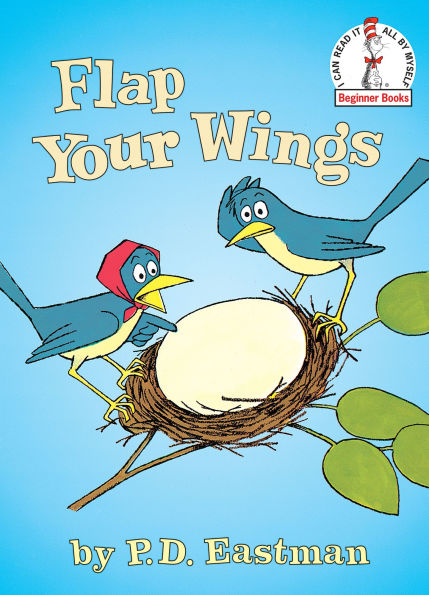
When a strange egg appears in their nest, Mr. and Mrs. Bird kindly take it upon themselves to raise the "baby bird" inside. But when the egg hatches, the Birds are in for a big surprise—"Junior" is the oddest-looking baby bird they've ever seen—with big, long
jaws
full of teeth and an appetite to match. In fact, he looks more like a baby
alligator
than a baby bird! Nevertheless, the devoted Birds run themselves ragged feeding Junior until he gets so big, he must leave the nest or it will collapse underneath him.
But how can Junior fly without wings
? To the delight of the Birds—and readers!—the dilemma is solved when Junior takes off from a branch overlooking a pond.
Beginner Books are fun, funny, and easy to read! Launched by Dr. Seuss in 1957 with the publication of
The Cat in the Hat
, this beloved early reader series motivates children to read on their own by using simple words with illustrations that give clues to their meaning. Featuring a combination of kid appeal, supportive vocabulary, and bright, cheerful art, Beginner Books will encourage a love of reading in children ages 3–7.
jaws
full of teeth and an appetite to match. In fact, he looks more like a baby
alligator
than a baby bird! Nevertheless, the devoted Birds run themselves ragged feeding Junior until he gets so big, he must leave the nest or it will collapse underneath him.
But how can Junior fly without wings
? To the delight of the Birds—and readers!—the dilemma is solved when Junior takes off from a branch overlooking a pond.
Beginner Books are fun, funny, and easy to read! Launched by Dr. Seuss in 1957 with the publication of
The Cat in the Hat
, this beloved early reader series motivates children to read on their own by using simple words with illustrations that give clues to their meaning. Featuring a combination of kid appeal, supportive vocabulary, and bright, cheerful art, Beginner Books will encourage a love of reading in children ages 3–7.
When a strange egg appears in their nest, Mr. and Mrs. Bird kindly take it upon themselves to raise the "baby bird" inside. But when the egg hatches, the Birds are in for a big surprise—"Junior" is the oddest-looking baby bird they've ever seen—with big, long
jaws
full of teeth and an appetite to match. In fact, he looks more like a baby
alligator
than a baby bird! Nevertheless, the devoted Birds run themselves ragged feeding Junior until he gets so big, he must leave the nest or it will collapse underneath him.
But how can Junior fly without wings
? To the delight of the Birds—and readers!—the dilemma is solved when Junior takes off from a branch overlooking a pond.
Beginner Books are fun, funny, and easy to read! Launched by Dr. Seuss in 1957 with the publication of
The Cat in the Hat
, this beloved early reader series motivates children to read on their own by using simple words with illustrations that give clues to their meaning. Featuring a combination of kid appeal, supportive vocabulary, and bright, cheerful art, Beginner Books will encourage a love of reading in children ages 3–7.
jaws
full of teeth and an appetite to match. In fact, he looks more like a baby
alligator
than a baby bird! Nevertheless, the devoted Birds run themselves ragged feeding Junior until he gets so big, he must leave the nest or it will collapse underneath him.
But how can Junior fly without wings
? To the delight of the Birds—and readers!—the dilemma is solved when Junior takes off from a branch overlooking a pond.
Beginner Books are fun, funny, and easy to read! Launched by Dr. Seuss in 1957 with the publication of
The Cat in the Hat
, this beloved early reader series motivates children to read on their own by using simple words with illustrations that give clues to their meaning. Featuring a combination of kid appeal, supportive vocabulary, and bright, cheerful art, Beginner Books will encourage a love of reading in children ages 3–7.
You May Also Like







More About Barnes and Noble at CoolSprings Galleria
Barnes & Noble is the world’s largest retail bookseller and a leading retailer of content, digital media and educational products. Our Nook Digital business offers a lineup of NOOK® tablets and e-Readers and an expansive collection of digital reading content through the NOOK Store®. Barnes & Noble’s mission is to operate the best omni-channel specialty retail business in America, helping both our customers and booksellers reach their aspirations, while being a credit to the communities we serve.
1800 Galleria Blvd #1310, Franklin, TN 37067, United States
Find Barnes and Noble at CoolSprings Galleria in Franklin, TN
Visit Barnes and Noble at CoolSprings Galleria in Franklin, TN
