
Home
Food Allergens: Biochemistry and Molecular Nutrition
Barnes and Noble
Loading Inventory...
Food Allergens: Biochemistry and Molecular Nutrition in Franklin, TN
Current price: $109.99
Barnes and Noble
Food Allergens: Biochemistry and Molecular Nutrition in Franklin, TN
Current price: $109.99
Loading Inventory...
Size: Hardcover
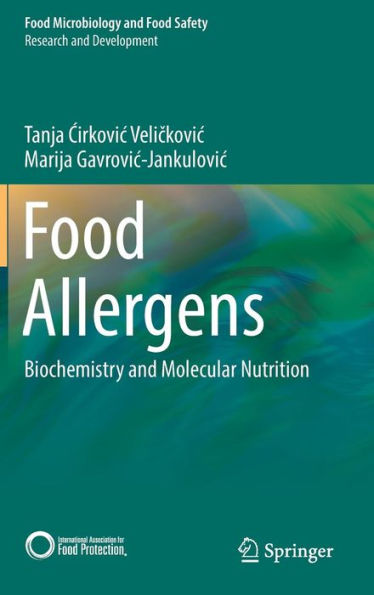
A food allergen has the ability to first elicit an IgE response, and then, on subsequent exposures, a clinical response to the same or similar protein. How harmless food protein becomes recognized by the mucosal immune system as an allergen remains an open question and more data are needed to explain how regulatory mechanisms of the mucosal immune system fail and result in allergic sensitization to dietary antigens.
Some biochemical characteristics associated with food allergens, such as the presence of multiple, linear IgE-binding epitopes and the resistance of the protein to digestion and processing, seem to predominate among food allergens. Digestion susceptibility of food allergens that sensitize via the gastrointestinal tract and stability to food processing conditions are inherently related to protein structural features. Thereby, physiological changes in the digestion process, pathological conditions affecting digestion, as well as procedures and food processing conditions that affect protein structure may all have a profound effect on the sensitizing potential and allergenicity of food proteins. In addition, signals coming from the diet and micro biome can modulate regulatory mechanisms of the mucosal immune system and influence mucosal immunity and intestinal barrier function.
The detection of allergenic ingredients in food products has received increased attention from the food industry and legislative and regulatory agencies over recent years. This has resulted in the improvement of applied safety measures that provide protection for food-allergic consumers and development of sensitive and highly specific analytical methods of food allergens detection. Food allergy is an important and common health issue and therefore there is a need to characterize the sensitizing potential of newly introduced proteins in genetically engineered foods. A combination of
in vitro
and
in silico
methods provide information thatcontributes to safety assessment. Suitable
in vivo
models may provide a more holistic assessment of allergenic potential of novel food proteins.
Some biochemical characteristics associated with food allergens, such as the presence of multiple, linear IgE-binding epitopes and the resistance of the protein to digestion and processing, seem to predominate among food allergens. Digestion susceptibility of food allergens that sensitize via the gastrointestinal tract and stability to food processing conditions are inherently related to protein structural features. Thereby, physiological changes in the digestion process, pathological conditions affecting digestion, as well as procedures and food processing conditions that affect protein structure may all have a profound effect on the sensitizing potential and allergenicity of food proteins. In addition, signals coming from the diet and micro biome can modulate regulatory mechanisms of the mucosal immune system and influence mucosal immunity and intestinal barrier function.
The detection of allergenic ingredients in food products has received increased attention from the food industry and legislative and regulatory agencies over recent years. This has resulted in the improvement of applied safety measures that provide protection for food-allergic consumers and development of sensitive and highly specific analytical methods of food allergens detection. Food allergy is an important and common health issue and therefore there is a need to characterize the sensitizing potential of newly introduced proteins in genetically engineered foods. A combination of
in vitro
and
in silico
methods provide information thatcontributes to safety assessment. Suitable
in vivo
models may provide a more holistic assessment of allergenic potential of novel food proteins.
A food allergen has the ability to first elicit an IgE response, and then, on subsequent exposures, a clinical response to the same or similar protein. How harmless food protein becomes recognized by the mucosal immune system as an allergen remains an open question and more data are needed to explain how regulatory mechanisms of the mucosal immune system fail and result in allergic sensitization to dietary antigens.
Some biochemical characteristics associated with food allergens, such as the presence of multiple, linear IgE-binding epitopes and the resistance of the protein to digestion and processing, seem to predominate among food allergens. Digestion susceptibility of food allergens that sensitize via the gastrointestinal tract and stability to food processing conditions are inherently related to protein structural features. Thereby, physiological changes in the digestion process, pathological conditions affecting digestion, as well as procedures and food processing conditions that affect protein structure may all have a profound effect on the sensitizing potential and allergenicity of food proteins. In addition, signals coming from the diet and micro biome can modulate regulatory mechanisms of the mucosal immune system and influence mucosal immunity and intestinal barrier function.
The detection of allergenic ingredients in food products has received increased attention from the food industry and legislative and regulatory agencies over recent years. This has resulted in the improvement of applied safety measures that provide protection for food-allergic consumers and development of sensitive and highly specific analytical methods of food allergens detection. Food allergy is an important and common health issue and therefore there is a need to characterize the sensitizing potential of newly introduced proteins in genetically engineered foods. A combination of
in vitro
and
in silico
methods provide information thatcontributes to safety assessment. Suitable
in vivo
models may provide a more holistic assessment of allergenic potential of novel food proteins.
Some biochemical characteristics associated with food allergens, such as the presence of multiple, linear IgE-binding epitopes and the resistance of the protein to digestion and processing, seem to predominate among food allergens. Digestion susceptibility of food allergens that sensitize via the gastrointestinal tract and stability to food processing conditions are inherently related to protein structural features. Thereby, physiological changes in the digestion process, pathological conditions affecting digestion, as well as procedures and food processing conditions that affect protein structure may all have a profound effect on the sensitizing potential and allergenicity of food proteins. In addition, signals coming from the diet and micro biome can modulate regulatory mechanisms of the mucosal immune system and influence mucosal immunity and intestinal barrier function.
The detection of allergenic ingredients in food products has received increased attention from the food industry and legislative and regulatory agencies over recent years. This has resulted in the improvement of applied safety measures that provide protection for food-allergic consumers and development of sensitive and highly specific analytical methods of food allergens detection. Food allergy is an important and common health issue and therefore there is a need to characterize the sensitizing potential of newly introduced proteins in genetically engineered foods. A combination of
in vitro
and
in silico
methods provide information thatcontributes to safety assessment. Suitable
in vivo
models may provide a more holistic assessment of allergenic potential of novel food proteins.
You May Also Like















More About Barnes and Noble at CoolSprings Galleria
Barnes & Noble is the world’s largest retail bookseller and a leading retailer of content, digital media and educational products. Our Nook Digital business offers a lineup of NOOK® tablets and e-Readers and an expansive collection of digital reading content through the NOOK Store®. Barnes & Noble’s mission is to operate the best omni-channel specialty retail business in America, helping both our customers and booksellers reach their aspirations, while being a credit to the communities we serve.
1800 Galleria Blvd #1310, Franklin, TN 37067, United States
Find Barnes and Noble at CoolSprings Galleria in Franklin, TN
Visit Barnes and Noble at CoolSprings Galleria in Franklin, TN
