
Home
From Coast to Fen: Archaeology a Dynamic Landscape: the of Triton Knoll Electrical System, Lincolnshire
Barnes and Noble
Loading Inventory...
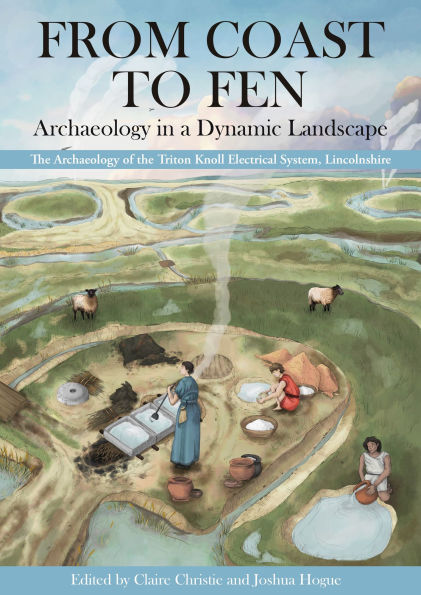
From Coast to Fen: Archaeology a Dynamic Landscape: the of Triton Knoll Electrical System, Lincolnshire in Franklin, TN
Current price: $55.00
Barnes and Noble
From Coast to Fen: Archaeology a Dynamic Landscape: the of Triton Knoll Electrical System, Lincolnshire in Franklin, TN
Current price: $55.00
Loading Inventory...
Size: Paperback
Excavations across East Lincolnshire reveal prehistoric, Iron Age, Roman, and post-medieval settlements, saltmaking, and industrial activity, shaped by changing landscapes.
The area between Anderby Creek and Bicker Fen, Lincolnshire, to the west of the Lincolnshire Wolds, represents a dynamic landscape both in terms of its natural and human aspects. This volume presents the results of an extensive programme of archaeological excavation undertaken by Headland Archaeology (UK) Ltd and Allen Archaeology Ltd from 2018 to 2019, where a total of 15 sites were excavated. The excavations uncovered a panoply of remains spanning the prehistoric through to modern periods, providing important insights into changing patterns of occupation and the way this diverse landscape was utilised.
As evidenced through the archaeological works the area saw limited activity during the early prehistoric period, in part reflecting the prevailing environmental conditions in which most of the area was inundated. Among the earliest recorded finds was an enigmatic middle Bronze Age timber structure as well as a copper alloy axe.
During the Roman period there is evidence for an expansion in activity across the Scheme, with formerly inundated areas becoming accessible. Activity within the northern half of the Scheme was focused upon salt production. Two of these sites were dated to the late Roman period, contrary to the prevailing notion that the salt industry in this region had declined by the mid-2nd century AD. Within the southern half of the Scheme were several Roman farmsteads, some featuring timber buildings. Notable among these was an unusual post-built, moated structure. From these sites a range of artefactual and environmental data was collected, providing important insights into the nature of agricultural regimes.
Evidence of medieval and post-medieval activity was also uncovered, providing important insights into the development of rural settlement against a backdrop of landscape and environmental changes. Evidence of late to post-medieval clay extraction and brick manufacture was also identified.
The area between Anderby Creek and Bicker Fen, Lincolnshire, to the west of the Lincolnshire Wolds, represents a dynamic landscape both in terms of its natural and human aspects. This volume presents the results of an extensive programme of archaeological excavation undertaken by Headland Archaeology (UK) Ltd and Allen Archaeology Ltd from 2018 to 2019, where a total of 15 sites were excavated. The excavations uncovered a panoply of remains spanning the prehistoric through to modern periods, providing important insights into changing patterns of occupation and the way this diverse landscape was utilised.
As evidenced through the archaeological works the area saw limited activity during the early prehistoric period, in part reflecting the prevailing environmental conditions in which most of the area was inundated. Among the earliest recorded finds was an enigmatic middle Bronze Age timber structure as well as a copper alloy axe.
During the Roman period there is evidence for an expansion in activity across the Scheme, with formerly inundated areas becoming accessible. Activity within the northern half of the Scheme was focused upon salt production. Two of these sites were dated to the late Roman period, contrary to the prevailing notion that the salt industry in this region had declined by the mid-2nd century AD. Within the southern half of the Scheme were several Roman farmsteads, some featuring timber buildings. Notable among these was an unusual post-built, moated structure. From these sites a range of artefactual and environmental data was collected, providing important insights into the nature of agricultural regimes.
Evidence of medieval and post-medieval activity was also uncovered, providing important insights into the development of rural settlement against a backdrop of landscape and environmental changes. Evidence of late to post-medieval clay extraction and brick manufacture was also identified.
Excavations across East Lincolnshire reveal prehistoric, Iron Age, Roman, and post-medieval settlements, saltmaking, and industrial activity, shaped by changing landscapes.
The area between Anderby Creek and Bicker Fen, Lincolnshire, to the west of the Lincolnshire Wolds, represents a dynamic landscape both in terms of its natural and human aspects. This volume presents the results of an extensive programme of archaeological excavation undertaken by Headland Archaeology (UK) Ltd and Allen Archaeology Ltd from 2018 to 2019, where a total of 15 sites were excavated. The excavations uncovered a panoply of remains spanning the prehistoric through to modern periods, providing important insights into changing patterns of occupation and the way this diverse landscape was utilised.
As evidenced through the archaeological works the area saw limited activity during the early prehistoric period, in part reflecting the prevailing environmental conditions in which most of the area was inundated. Among the earliest recorded finds was an enigmatic middle Bronze Age timber structure as well as a copper alloy axe.
During the Roman period there is evidence for an expansion in activity across the Scheme, with formerly inundated areas becoming accessible. Activity within the northern half of the Scheme was focused upon salt production. Two of these sites were dated to the late Roman period, contrary to the prevailing notion that the salt industry in this region had declined by the mid-2nd century AD. Within the southern half of the Scheme were several Roman farmsteads, some featuring timber buildings. Notable among these was an unusual post-built, moated structure. From these sites a range of artefactual and environmental data was collected, providing important insights into the nature of agricultural regimes.
Evidence of medieval and post-medieval activity was also uncovered, providing important insights into the development of rural settlement against a backdrop of landscape and environmental changes. Evidence of late to post-medieval clay extraction and brick manufacture was also identified.
The area between Anderby Creek and Bicker Fen, Lincolnshire, to the west of the Lincolnshire Wolds, represents a dynamic landscape both in terms of its natural and human aspects. This volume presents the results of an extensive programme of archaeological excavation undertaken by Headland Archaeology (UK) Ltd and Allen Archaeology Ltd from 2018 to 2019, where a total of 15 sites were excavated. The excavations uncovered a panoply of remains spanning the prehistoric through to modern periods, providing important insights into changing patterns of occupation and the way this diverse landscape was utilised.
As evidenced through the archaeological works the area saw limited activity during the early prehistoric period, in part reflecting the prevailing environmental conditions in which most of the area was inundated. Among the earliest recorded finds was an enigmatic middle Bronze Age timber structure as well as a copper alloy axe.
During the Roman period there is evidence for an expansion in activity across the Scheme, with formerly inundated areas becoming accessible. Activity within the northern half of the Scheme was focused upon salt production. Two of these sites were dated to the late Roman period, contrary to the prevailing notion that the salt industry in this region had declined by the mid-2nd century AD. Within the southern half of the Scheme were several Roman farmsteads, some featuring timber buildings. Notable among these was an unusual post-built, moated structure. From these sites a range of artefactual and environmental data was collected, providing important insights into the nature of agricultural regimes.
Evidence of medieval and post-medieval activity was also uncovered, providing important insights into the development of rural settlement against a backdrop of landscape and environmental changes. Evidence of late to post-medieval clay extraction and brick manufacture was also identified.
You May Also Like













More About Barnes and Noble at CoolSprings Galleria
Barnes & Noble is the world’s largest retail bookseller and a leading retailer of content, digital media and educational products. Our Nook Digital business offers a lineup of NOOK® tablets and e-Readers and an expansive collection of digital reading content through the NOOK Store®. Barnes & Noble’s mission is to operate the best omni-channel specialty retail business in America, helping both our customers and booksellers reach their aspirations, while being a credit to the communities we serve.
1800 Galleria Blvd #1310, Franklin, TN 37067, United States
Find Barnes and Noble at CoolSprings Galleria in Franklin, TN
Visit Barnes and Noble at CoolSprings Galleria in Franklin, TN
