
Home
From Geometry to Behavior: An Introduction Spatial Cognition
Barnes and Noble
Loading Inventory...
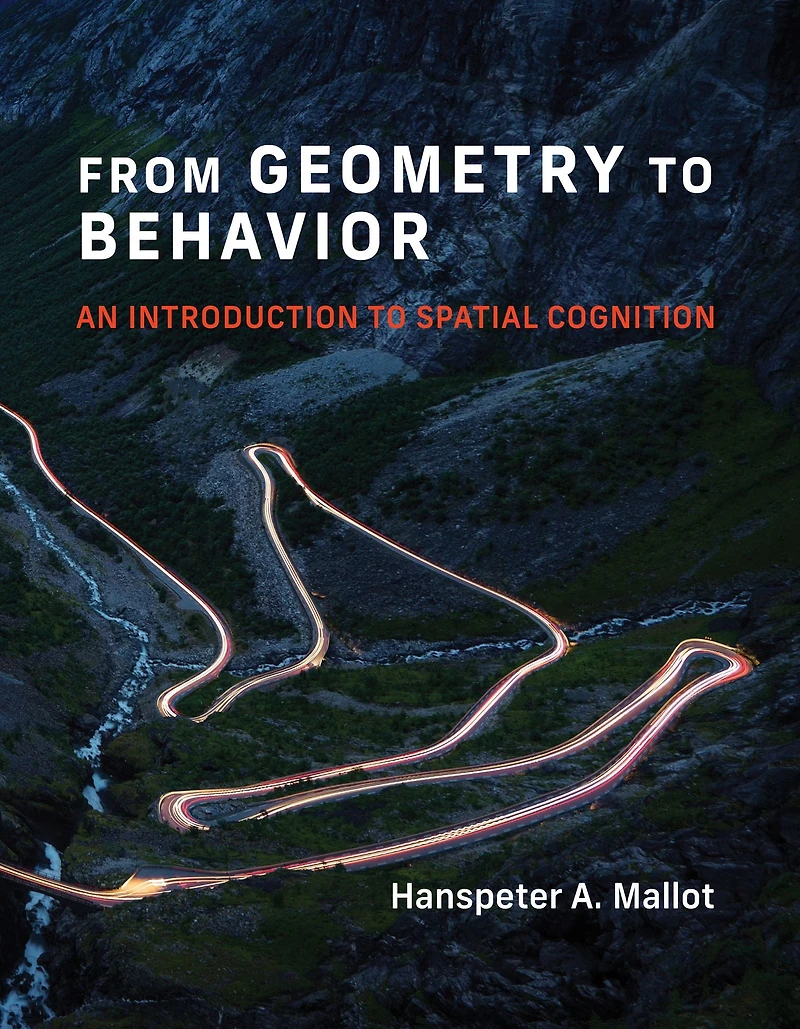
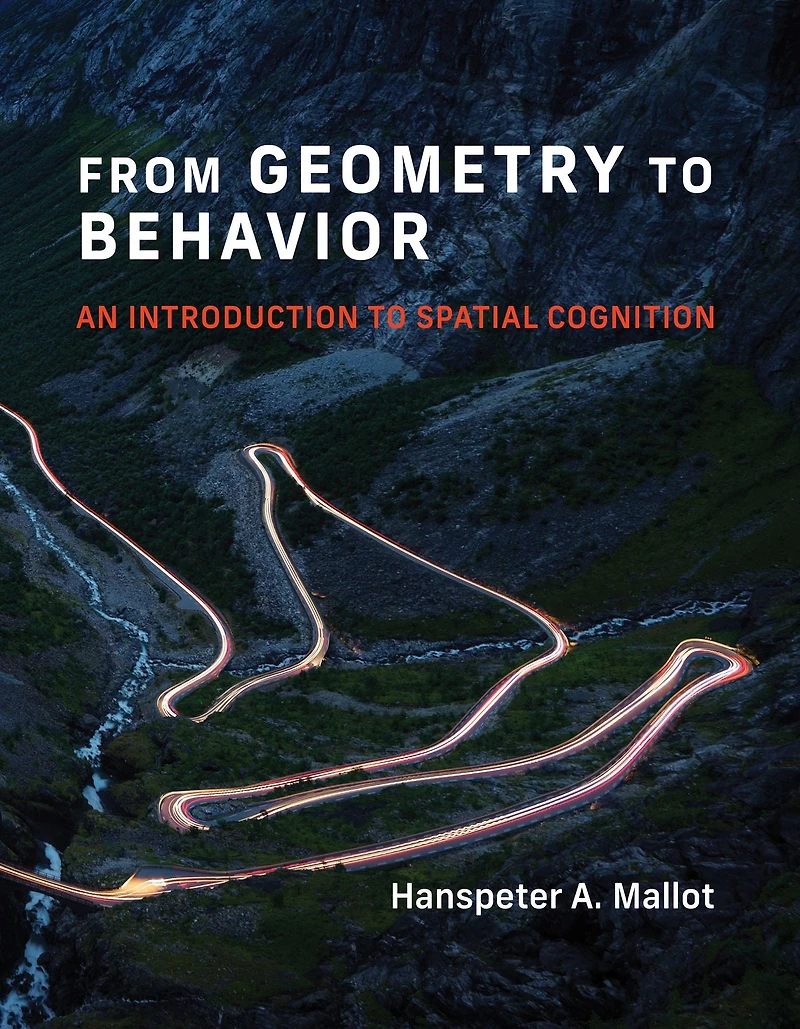
From Geometry to Behavior: An Introduction Spatial Cognition in Franklin, TN
By Barnes & Noble
Current price: $44.99
Barnes and Noble
From Geometry to Behavior: An Introduction Spatial Cognition in Franklin, TN
By Barnes & Noble
Current price: $44.99
Loading Inventory...
Size: EBook
An overview of the mechanisms and evolution of spatial cognition, integrating evidence from psychology, neuroscience, cognitive science, and computational geometry.Understanding how we deal with space requires input from many fields, including ethology, neuroscience, psychology, cognitive science, linguistics, geography, and spatial information theory. In From Geometry to Behavior, cognitive neuroscientist Hanspeter A. Mallot provides an overview of the basic mechanisms of spatial behavior in animals and humans, showing how they combine to support higher-level performance. Mallot explores the biological mechanisms of dealing with space, from the perception of visual space to the constructions of large space representations: that is, the cognitive map. The volume is also relevant to the epistemology of spatial knowledge in the philosophy of mind.Mallot aims to establish spatial cognition as a scientific field in its own right. His general approach is psychophysical, in that it focuses on quantitative descriptions of behavioral performance and their real-world determinants, thus connecting to the work of theorists in computational neuroscience, robotics, and computational geometry. After an overview of scientific thinking about space, Mallot covers spatial behavior and its underlying mechanisms in the order of increasing memory involvement. He describes the cognitive processes that underlie advanced spatial behaviors such as directed search, wayfinding, spatial planning, spatial reasoning, object building and manipulation, and communication about space. These mechanisms are part of the larger cognitive apparatus that also serves visual and object cognition; understanding events, actions, and causality; and social cognition, which includes language. Of all of these cognitive domains, spatial cognition most likely occurred first in the course of evolution and is the most widespread throughout the animal kingdom.
An overview of the mechanisms and evolution of spatial cognition, integrating evidence from psychology, neuroscience, cognitive science, and computational geometry.Understanding how we deal with space requires input from many fields, including ethology, neuroscience, psychology, cognitive science, linguistics, geography, and spatial information theory. In From Geometry to Behavior, cognitive neuroscientist Hanspeter A. Mallot provides an overview of the basic mechanisms of spatial behavior in animals and humans, showing how they combine to support higher-level performance. Mallot explores the biological mechanisms of dealing with space, from the perception of visual space to the constructions of large space representations: that is, the cognitive map. The volume is also relevant to the epistemology of spatial knowledge in the philosophy of mind.Mallot aims to establish spatial cognition as a scientific field in its own right. His general approach is psychophysical, in that it focuses on quantitative descriptions of behavioral performance and their real-world determinants, thus connecting to the work of theorists in computational neuroscience, robotics, and computational geometry. After an overview of scientific thinking about space, Mallot covers spatial behavior and its underlying mechanisms in the order of increasing memory involvement. He describes the cognitive processes that underlie advanced spatial behaviors such as directed search, wayfinding, spatial planning, spatial reasoning, object building and manipulation, and communication about space. These mechanisms are part of the larger cognitive apparatus that also serves visual and object cognition; understanding events, actions, and causality; and social cognition, which includes language. Of all of these cognitive domains, spatial cognition most likely occurred first in the course of evolution and is the most widespread throughout the animal kingdom.
You May Also Like









More About Barnes and Noble at CoolSprings Galleria
Barnes & Noble is the world’s largest retail bookseller and a leading retailer of content, digital media and educational products. Our Nook Digital business offers a lineup of NOOK® tablets and e-Readers and an expansive collection of digital reading content through the NOOK Store®. Barnes & Noble’s mission is to operate the best omni-channel specialty retail business in America, helping both our customers and booksellers reach their aspirations, while being a credit to the communities we serve.
1800 Galleria Blvd #1310, Franklin, TN 37067, United States
Find Barnes and Noble at CoolSprings Galleria in Franklin, TN
Visit Barnes and Noble at CoolSprings Galleria in Franklin, TN
