
Home
Futurism: A Very Short Introduction
Barnes and Noble
Loading Inventory...
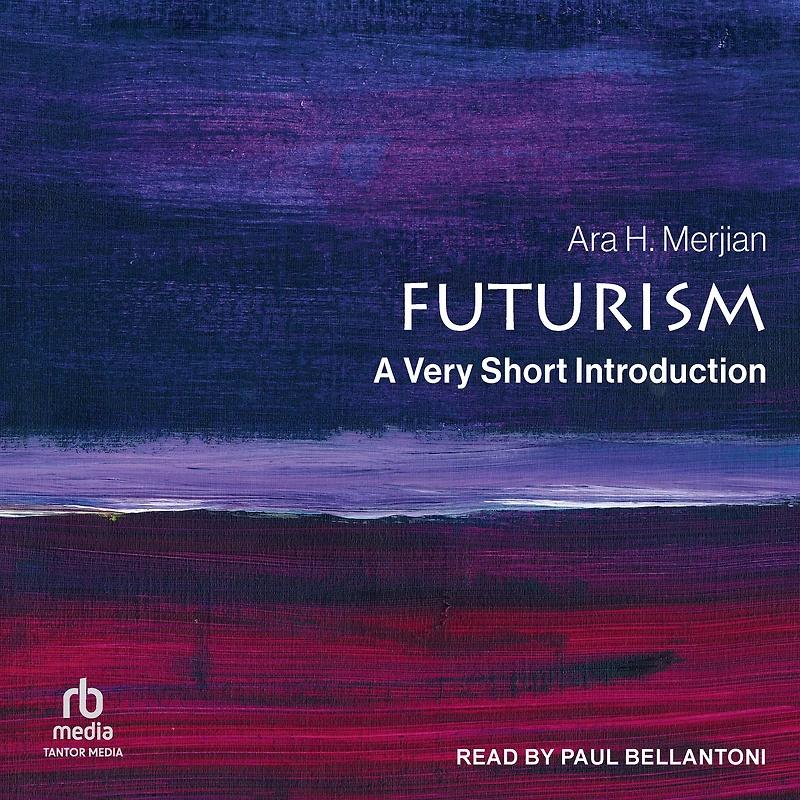


Futurism: A Very Short Introduction in Franklin, TN
By Barnes & Noble
Current price: $15.99
Barnes and Noble
Futurism: A Very Short Introduction in Franklin, TN
By Barnes & Noble
Current price: $15.99
Loading Inventory...
Size: Audiobook
Very Short Introductions: Brilliant, Sharp, InspiringFrom the motorcar to the radio, modern technology radically transformed urban life by the first decade of the twentieth century. As one of Western Europe's least industrialized countries, Italy appeared impervious to such developments. It was this state of affairs at which the Futurist movement took aim. With its founding in 1909, the poet and impresario F.T. Marinetti called for a revitalization of aesthetic expression by means of "movement and aggression." A growing cadre of Futurist painters, poets, authors, and musicians exchanged Italy's cultural patrimony for new technologies, media, and metaphors, championing machine-propelled speed and its salutary hazards. Cubist painting, collage, and sculpture lent the Futurist campaign a revolutionary style to match its rhetorical fervor. Yet whereas Cubism remained a revolution of artistic form, Futurism sought to shatter the boundaries between art and life itself. Indeed, the movement's challenge to twentieth-century culture lay not in any specific set of images or objects, but a more comprehensive revolution of sensibility. By the mid-1910s there circulated several dozen Futurist proclamations on everything from men's clothing to set design, photography to film, dance to politics. That political impetus proved relentlessly paradoxical in origin and upshot. From its base in Milan, Futurist activity spread throughout the entire peninsula, while related movements emerged almost immediately in Moscow, Lisbon, Tiblisi, and Tokyo. Prefiguring and then propagandizing Fascist imperialism, Futurism also galvanized a range of progressive modernist phenomena. More than a century later, the “activist model” of the Futurist avant-garde remains deeply fraught in its historical implications. ABOUT THE SERIES: The Very Short Introductions series from Oxford University Press contains hundreds of titles in almost every subject area. These pocket-sized books are the perfect way to get ahead in a new subject quickly. Our expert authors combine facts, analysis, perspective, new ideas, and enthusiasm to make interesting and challenging topics highly readable.
Very Short Introductions: Brilliant, Sharp, InspiringFrom the motorcar to the radio, modern technology radically transformed urban life by the first decade of the twentieth century. As one of Western Europe's least industrialized countries, Italy appeared impervious to such developments. It was this state of affairs at which the Futurist movement took aim. With its founding in 1909, the poet and impresario F.T. Marinetti called for a revitalization of aesthetic expression by means of "movement and aggression." A growing cadre of Futurist painters, poets, authors, and musicians exchanged Italy's cultural patrimony for new technologies, media, and metaphors, championing machine-propelled speed and its salutary hazards. Cubist painting, collage, and sculpture lent the Futurist campaign a revolutionary style to match its rhetorical fervor. Yet whereas Cubism remained a revolution of artistic form, Futurism sought to shatter the boundaries between art and life itself. Indeed, the movement's challenge to twentieth-century culture lay not in any specific set of images or objects, but a more comprehensive revolution of sensibility. By the mid-1910s there circulated several dozen Futurist proclamations on everything from men's clothing to set design, photography to film, dance to politics. That political impetus proved relentlessly paradoxical in origin and upshot. From its base in Milan, Futurist activity spread throughout the entire peninsula, while related movements emerged almost immediately in Moscow, Lisbon, Tiblisi, and Tokyo. Prefiguring and then propagandizing Fascist imperialism, Futurism also galvanized a range of progressive modernist phenomena. More than a century later, the “activist model” of the Futurist avant-garde remains deeply fraught in its historical implications. ABOUT THE SERIES: The Very Short Introductions series from Oxford University Press contains hundreds of titles in almost every subject area. These pocket-sized books are the perfect way to get ahead in a new subject quickly. Our expert authors combine facts, analysis, perspective, new ideas, and enthusiasm to make interesting and challenging topics highly readable.
You May Also Like

















More About Barnes and Noble at CoolSprings Galleria
Barnes & Noble is the world’s largest retail bookseller and a leading retailer of content, digital media and educational products. Our Nook Digital business offers a lineup of NOOK® tablets and e-Readers and an expansive collection of digital reading content through the NOOK Store®. Barnes & Noble’s mission is to operate the best omni-channel specialty retail business in America, helping both our customers and booksellers reach their aspirations, while being a credit to the communities we serve.
1800 Galleria Blvd #1310, Franklin, TN 37067, United States
Find Barnes and Noble at CoolSprings Galleria in Franklin, TN
Visit Barnes and Noble at CoolSprings Galleria in Franklin, TN
