
Home
Gender, Memory and Documentary Culture, c.900-1300
Barnes and Noble
Loading Inventory...
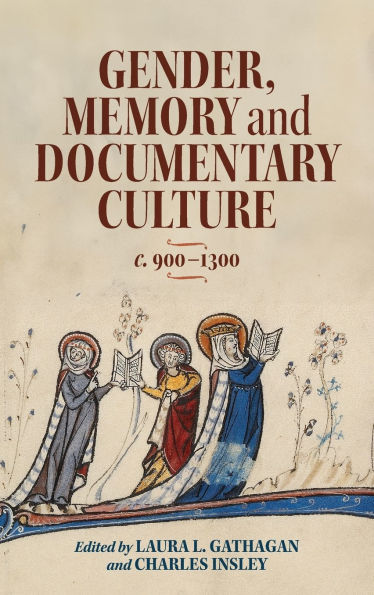
Gender, Memory and Documentary Culture, c.900-1300 in Franklin, TN
Current price: $130.00
Barnes and Noble
Gender, Memory and Documentary Culture, c.900-1300 in Franklin, TN
Current price: $130.00
Loading Inventory...
Size: OS
Considers the role gender played in the production, use and preservation of documents.
How was the world of medieval documentation and memory creation affected by gender? This question is central to the essays collected here, which bring together aspects of gender and documentary culture that are usually studied only in isolation. Covering the tenth to the thirteenth centuries, the volume offers a broad geographical reach England, France, Flanders, Germany, Spain and an array of sources, from charters, letters and court proceedings to seals, iconography, and illumination. There is a particular focus on lay female communities, including women's collective legal action in preConquest England, documentary initiatives of Castilian peasant widows, and urban Flemish women's sealing practices. Reexaminations of noblewomen's centrality and erasure in charters focus on Ermengarde of Brittany, Mathilda of Boulogne and Berengaria of Navarre. Contributions on gender and historical writing explore their development in Ottonian courts, tenthcentury English coronation portraits, Orderic Vitalis'
Historia Ecclesiastica
, and French chroniclers' rhetorical strategies for writing noblewomen's rage. Further chapters consider monastic spaces, including women's houses at Auxerre and Marcigny and at Holy Trinity, Caen, and explore women's memory preservation efforts, at Spanish houses San Salvador de Oña and Santa María de Piasca and a community at Bouxières. This volume demonstrates the new insights that can be gleaned by viewing various processes, such as legal disputes and monastic narratives and foundation, through a gendered lens.
How was the world of medieval documentation and memory creation affected by gender? This question is central to the essays collected here, which bring together aspects of gender and documentary culture that are usually studied only in isolation. Covering the tenth to the thirteenth centuries, the volume offers a broad geographical reach England, France, Flanders, Germany, Spain and an array of sources, from charters, letters and court proceedings to seals, iconography, and illumination. There is a particular focus on lay female communities, including women's collective legal action in preConquest England, documentary initiatives of Castilian peasant widows, and urban Flemish women's sealing practices. Reexaminations of noblewomen's centrality and erasure in charters focus on Ermengarde of Brittany, Mathilda of Boulogne and Berengaria of Navarre. Contributions on gender and historical writing explore their development in Ottonian courts, tenthcentury English coronation portraits, Orderic Vitalis'
Historia Ecclesiastica
, and French chroniclers' rhetorical strategies for writing noblewomen's rage. Further chapters consider monastic spaces, including women's houses at Auxerre and Marcigny and at Holy Trinity, Caen, and explore women's memory preservation efforts, at Spanish houses San Salvador de Oña and Santa María de Piasca and a community at Bouxières. This volume demonstrates the new insights that can be gleaned by viewing various processes, such as legal disputes and monastic narratives and foundation, through a gendered lens.
Considers the role gender played in the production, use and preservation of documents.
How was the world of medieval documentation and memory creation affected by gender? This question is central to the essays collected here, which bring together aspects of gender and documentary culture that are usually studied only in isolation. Covering the tenth to the thirteenth centuries, the volume offers a broad geographical reach England, France, Flanders, Germany, Spain and an array of sources, from charters, letters and court proceedings to seals, iconography, and illumination. There is a particular focus on lay female communities, including women's collective legal action in preConquest England, documentary initiatives of Castilian peasant widows, and urban Flemish women's sealing practices. Reexaminations of noblewomen's centrality and erasure in charters focus on Ermengarde of Brittany, Mathilda of Boulogne and Berengaria of Navarre. Contributions on gender and historical writing explore their development in Ottonian courts, tenthcentury English coronation portraits, Orderic Vitalis'
Historia Ecclesiastica
, and French chroniclers' rhetorical strategies for writing noblewomen's rage. Further chapters consider monastic spaces, including women's houses at Auxerre and Marcigny and at Holy Trinity, Caen, and explore women's memory preservation efforts, at Spanish houses San Salvador de Oña and Santa María de Piasca and a community at Bouxières. This volume demonstrates the new insights that can be gleaned by viewing various processes, such as legal disputes and monastic narratives and foundation, through a gendered lens.
How was the world of medieval documentation and memory creation affected by gender? This question is central to the essays collected here, which bring together aspects of gender and documentary culture that are usually studied only in isolation. Covering the tenth to the thirteenth centuries, the volume offers a broad geographical reach England, France, Flanders, Germany, Spain and an array of sources, from charters, letters and court proceedings to seals, iconography, and illumination. There is a particular focus on lay female communities, including women's collective legal action in preConquest England, documentary initiatives of Castilian peasant widows, and urban Flemish women's sealing practices. Reexaminations of noblewomen's centrality and erasure in charters focus on Ermengarde of Brittany, Mathilda of Boulogne and Berengaria of Navarre. Contributions on gender and historical writing explore their development in Ottonian courts, tenthcentury English coronation portraits, Orderic Vitalis'
Historia Ecclesiastica
, and French chroniclers' rhetorical strategies for writing noblewomen's rage. Further chapters consider monastic spaces, including women's houses at Auxerre and Marcigny and at Holy Trinity, Caen, and explore women's memory preservation efforts, at Spanish houses San Salvador de Oña and Santa María de Piasca and a community at Bouxières. This volume demonstrates the new insights that can be gleaned by viewing various processes, such as legal disputes and monastic narratives and foundation, through a gendered lens.
You May Also Like













More About Barnes and Noble at CoolSprings Galleria
Barnes & Noble is the world’s largest retail bookseller and a leading retailer of content, digital media and educational products. Our Nook Digital business offers a lineup of NOOK® tablets and e-Readers and an expansive collection of digital reading content through the NOOK Store®. Barnes & Noble’s mission is to operate the best omni-channel specialty retail business in America, helping both our customers and booksellers reach their aspirations, while being a credit to the communities we serve.
1800 Galleria Blvd #1310, Franklin, TN 37067, United States
Find Barnes and Noble at CoolSprings Galleria in Franklin, TN
Visit Barnes and Noble at CoolSprings Galleria in Franklin, TN
