
Home
Gender, the New Woman, and Monster
Barnes and Noble
Loading Inventory...
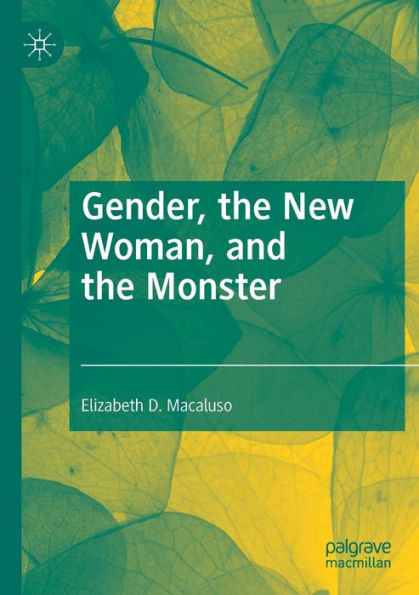
Gender, the New Woman, and Monster in Franklin, TN
Current price: $84.99
Barnes and Noble
Gender, the New Woman, and Monster in Franklin, TN
Current price: $84.99
Loading Inventory...
Size: Hardcover
This book views late Victorian femininity, the New Woman, and gender through literary representations of the figure of the monster, an appendage to the New Woman. The monster, an aberrant occurrence, performs Brecht’s “alienation effect,” making strange the world that she inhabits, thereby drawing veiled conclusions about the New Woman and gender at the end of the
fin-de-siècle
. The monster reveals that New Women loved one another complexly, not just as “friend” or “lover,” but
both
“friend”
and
“lover.” The monster, like the
British populace, mocked the New Woman’s modernity. She was paradoxically viewed as a threat to society and as a role model for women to follow. The tragic suicides of “monstrous” New Women of color suggest that many
authors, especially female authors, thought that these women should be included in society, not banished to its limits.
This book, the first on the relationship between the figure of the monster and the New Woman, argues that there is hidden complexity to the New Woman. Her sexuality was complicated and could move between categories of sexuality and friendship for late Victorian women, and the way that the
populace viewed her was just as multifarious. Further, the narratives of her tragedies ironically became narratives that advocated for her survival.
fin-de-siècle
. The monster reveals that New Women loved one another complexly, not just as “friend” or “lover,” but
both
“friend”
and
“lover.” The monster, like the
British populace, mocked the New Woman’s modernity. She was paradoxically viewed as a threat to society and as a role model for women to follow. The tragic suicides of “monstrous” New Women of color suggest that many
authors, especially female authors, thought that these women should be included in society, not banished to its limits.
This book, the first on the relationship between the figure of the monster and the New Woman, argues that there is hidden complexity to the New Woman. Her sexuality was complicated and could move between categories of sexuality and friendship for late Victorian women, and the way that the
populace viewed her was just as multifarious. Further, the narratives of her tragedies ironically became narratives that advocated for her survival.
This book views late Victorian femininity, the New Woman, and gender through literary representations of the figure of the monster, an appendage to the New Woman. The monster, an aberrant occurrence, performs Brecht’s “alienation effect,” making strange the world that she inhabits, thereby drawing veiled conclusions about the New Woman and gender at the end of the
fin-de-siècle
. The monster reveals that New Women loved one another complexly, not just as “friend” or “lover,” but
both
“friend”
and
“lover.” The monster, like the
British populace, mocked the New Woman’s modernity. She was paradoxically viewed as a threat to society and as a role model for women to follow. The tragic suicides of “monstrous” New Women of color suggest that many
authors, especially female authors, thought that these women should be included in society, not banished to its limits.
This book, the first on the relationship between the figure of the monster and the New Woman, argues that there is hidden complexity to the New Woman. Her sexuality was complicated and could move between categories of sexuality and friendship for late Victorian women, and the way that the
populace viewed her was just as multifarious. Further, the narratives of her tragedies ironically became narratives that advocated for her survival.
fin-de-siècle
. The monster reveals that New Women loved one another complexly, not just as “friend” or “lover,” but
both
“friend”
and
“lover.” The monster, like the
British populace, mocked the New Woman’s modernity. She was paradoxically viewed as a threat to society and as a role model for women to follow. The tragic suicides of “monstrous” New Women of color suggest that many
authors, especially female authors, thought that these women should be included in society, not banished to its limits.
This book, the first on the relationship between the figure of the monster and the New Woman, argues that there is hidden complexity to the New Woman. Her sexuality was complicated and could move between categories of sexuality and friendship for late Victorian women, and the way that the
populace viewed her was just as multifarious. Further, the narratives of her tragedies ironically became narratives that advocated for her survival.
You May Also Like
![Hard Headed Woman [Yellow Vinyl] [Barnes & Noble Exclusive]](https://prodimage.images-bn.com/pimages/0888072718944_p0_v2_s600x595.jpg)

![About A Woman [Black Ice Vinyl] [Barnes & Noble Exclusive]](https://prodimage.images-bn.com/pimages/0843930112449_p0_v1_s600x595.jpg)
![Monsters Of Folk [Deluxe Edition] [Clear/Green Splatter Vinyl] [Barnes & Noble Exclusive]](https://prodimage.images-bn.com/pimages/0880882622114_p0_v3_s600x595.jpg)







More About Barnes and Noble at CoolSprings Galleria
Barnes & Noble is the world’s largest retail bookseller and a leading retailer of content, digital media and educational products. Our Nook Digital business offers a lineup of NOOK® tablets and e-Readers and an expansive collection of digital reading content through the NOOK Store®. Barnes & Noble’s mission is to operate the best omni-channel specialty retail business in America, helping both our customers and booksellers reach their aspirations, while being a credit to the communities we serve.
1800 Galleria Blvd #1310, Franklin, TN 37067, United States
Find Barnes and Noble at CoolSprings Galleria in Franklin, TN
Visit Barnes and Noble at CoolSprings Galleria in Franklin, TN