
Home
Genetic mutations associated with Sotos and Kabuki syndromes
Barnes and Noble
Loading Inventory...
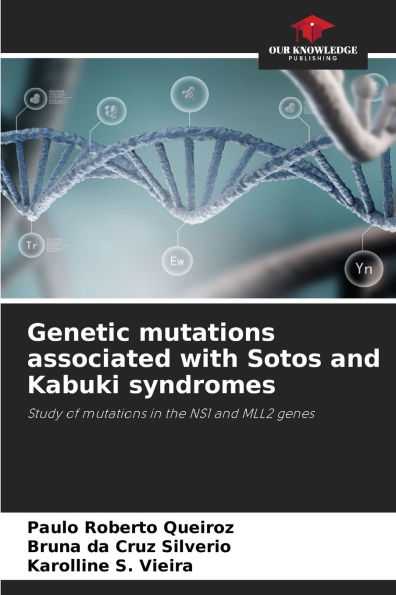
Genetic mutations associated with Sotos and Kabuki syndromes in Franklin, TN
Current price: $34.00
Barnes and Noble
Genetic mutations associated with Sotos and Kabuki syndromes in Franklin, TN
Current price: $34.00
Loading Inventory...
Size: OS
Sotos syndrome is an abnormality also known as cerebral gigantism, and it presents three main characteristics that facilitate recognition of the pathology: characteristic facial features, excessive growth, and learning difficulties. It is a syndrome with an autosomal dominant inheritance pattern, a diverse phenotype, and its main cause is haploinsufficiency of the NSD1 gene located on the long arm of chromosome 5. Kabuki syndrome manifests itself through Niikawa's pentad (dysmorphic face; skeletal anomalies; dermatoglyphic alterations; mild to moderate mental retardation; postnatal growth retardation). The clinical diagnosis has linked a series of physical characteristics present in patients with KS, but what is expected regarding this syndrome is a consensus on the relationship between molecular diagnosis and mutations present in the MLL2 (KMT2D) gene.
Sotos syndrome is an abnormality also known as cerebral gigantism, and it presents three main characteristics that facilitate recognition of the pathology: characteristic facial features, excessive growth, and learning difficulties. It is a syndrome with an autosomal dominant inheritance pattern, a diverse phenotype, and its main cause is haploinsufficiency of the NSD1 gene located on the long arm of chromosome 5. Kabuki syndrome manifests itself through Niikawa's pentad (dysmorphic face; skeletal anomalies; dermatoglyphic alterations; mild to moderate mental retardation; postnatal growth retardation). The clinical diagnosis has linked a series of physical characteristics present in patients with KS, but what is expected regarding this syndrome is a consensus on the relationship between molecular diagnosis and mutations present in the MLL2 (KMT2D) gene.
You May Also Like














More About Barnes and Noble at CoolSprings Galleria
Barnes & Noble is the world’s largest retail bookseller and a leading retailer of content, digital media and educational products. Our Nook Digital business offers a lineup of NOOK® tablets and e-Readers and an expansive collection of digital reading content through the NOOK Store®. Barnes & Noble’s mission is to operate the best omni-channel specialty retail business in America, helping both our customers and booksellers reach their aspirations, while being a credit to the communities we serve.
1800 Galleria Blvd #1310, Franklin, TN 37067, United States
Find Barnes and Noble at CoolSprings Galleria in Franklin, TN
Visit Barnes and Noble at CoolSprings Galleria in Franklin, TN
