
Home
Global Women, Colonial Ports: Prostitution the Interwar Middle East
Barnes and Noble
Loading Inventory...
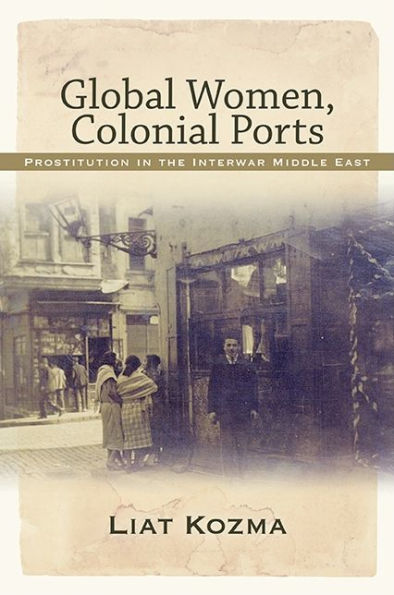
Global Women, Colonial Ports: Prostitution the Interwar Middle East in Franklin, TN
Current price: $99.00
Barnes and Noble
Global Women, Colonial Ports: Prostitution the Interwar Middle East in Franklin, TN
Current price: $99.00
Loading Inventory...
Size: Hardcover
Combines analysis of transnational prostitution and traffic in women with a social history of the League of Nations and interwar globalization.
Global Women, Colonial Ports
is a transnational history of state-regulated prostitution in the Middle East and North Africa between the two world wars. Beginning with international efforts to eradicate traffic in women and children, Liat Kozma examines French and British policies regarding local and foreign prostitutes in the region and shows how these policies affected and interacted with global migration routes of prostitutes and procurers. In so doing, she reveals how colonial domination mediated global mobility of people, practices, and ideas. Kozma weaves together the perspectives of colonial and local feminists with those of medical doctors, demonstrating that debates on prostitution were globalized and that transnational networks of knowledge and activism existed. She also explores the League of Nations' involvement in this social issue. As a history of the Middle East, the book joins recent scholarship on modern globalization and the integration of the region in global economic, activist, social, and religious interconnectedness.
Global Women, Colonial Ports
is a transnational history of state-regulated prostitution in the Middle East and North Africa between the two world wars. Beginning with international efforts to eradicate traffic in women and children, Liat Kozma examines French and British policies regarding local and foreign prostitutes in the region and shows how these policies affected and interacted with global migration routes of prostitutes and procurers. In so doing, she reveals how colonial domination mediated global mobility of people, practices, and ideas. Kozma weaves together the perspectives of colonial and local feminists with those of medical doctors, demonstrating that debates on prostitution were globalized and that transnational networks of knowledge and activism existed. She also explores the League of Nations' involvement in this social issue. As a history of the Middle East, the book joins recent scholarship on modern globalization and the integration of the region in global economic, activist, social, and religious interconnectedness.
Combines analysis of transnational prostitution and traffic in women with a social history of the League of Nations and interwar globalization.
Global Women, Colonial Ports
is a transnational history of state-regulated prostitution in the Middle East and North Africa between the two world wars. Beginning with international efforts to eradicate traffic in women and children, Liat Kozma examines French and British policies regarding local and foreign prostitutes in the region and shows how these policies affected and interacted with global migration routes of prostitutes and procurers. In so doing, she reveals how colonial domination mediated global mobility of people, practices, and ideas. Kozma weaves together the perspectives of colonial and local feminists with those of medical doctors, demonstrating that debates on prostitution were globalized and that transnational networks of knowledge and activism existed. She also explores the League of Nations' involvement in this social issue. As a history of the Middle East, the book joins recent scholarship on modern globalization and the integration of the region in global economic, activist, social, and religious interconnectedness.
Global Women, Colonial Ports
is a transnational history of state-regulated prostitution in the Middle East and North Africa between the two world wars. Beginning with international efforts to eradicate traffic in women and children, Liat Kozma examines French and British policies regarding local and foreign prostitutes in the region and shows how these policies affected and interacted with global migration routes of prostitutes and procurers. In so doing, she reveals how colonial domination mediated global mobility of people, practices, and ideas. Kozma weaves together the perspectives of colonial and local feminists with those of medical doctors, demonstrating that debates on prostitution were globalized and that transnational networks of knowledge and activism existed. She also explores the League of Nations' involvement in this social issue. As a history of the Middle East, the book joins recent scholarship on modern globalization and the integration of the region in global economic, activist, social, and religious interconnectedness.
You May Also Like











More About Barnes and Noble at CoolSprings Galleria
Barnes & Noble is the world’s largest retail bookseller and a leading retailer of content, digital media and educational products. Our Nook Digital business offers a lineup of NOOK® tablets and e-Readers and an expansive collection of digital reading content through the NOOK Store®. Barnes & Noble’s mission is to operate the best omni-channel specialty retail business in America, helping both our customers and booksellers reach their aspirations, while being a credit to the communities we serve.
1800 Galleria Blvd #1310, Franklin, TN 37067, United States
Find Barnes and Noble at CoolSprings Galleria in Franklin, TN
Visit Barnes and Noble at CoolSprings Galleria in Franklin, TN
