
Home
Globalism and Gendering Cancer: Tracking the Trope of Oncogenic Women from US to Kenya
Barnes and Noble
Loading Inventory...
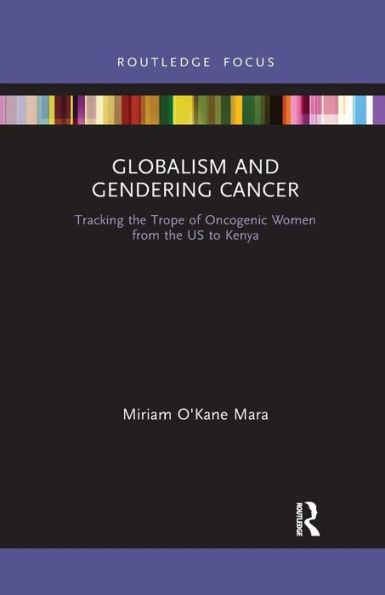
Globalism and Gendering Cancer: Tracking the Trope of Oncogenic Women from US to Kenya in Franklin, TN
Current price: $28.99
Barnes and Noble
Globalism and Gendering Cancer: Tracking the Trope of Oncogenic Women from US to Kenya in Franklin, TN
Current price: $28.99
Loading Inventory...
Size: Paperback
This book connects a rhetorical examination of medical and public health policy documents with a humanistic investigation of cultural texts to uncover the link between gendered representations of health and cancer.
The author argues that in western biomedical contexts cancer is considered a women’s disease and their bodies are treated as inherently oncogenic or cancer-producing, which leads to biomedical practices that adversely impact their bodily autonomy. She examines how these biases traverse national boundaries by examining the transmission of biomedical cancer practices from the US and international organizations to Kenya.
This book is suited to scholars and students working in the fields of Rhetorics of Health and Medicine, Medical Humanities and Gender Studies. It is also of interest to medical professionals and readers interested in globalism and global health.
The author argues that in western biomedical contexts cancer is considered a women’s disease and their bodies are treated as inherently oncogenic or cancer-producing, which leads to biomedical practices that adversely impact their bodily autonomy. She examines how these biases traverse national boundaries by examining the transmission of biomedical cancer practices from the US and international organizations to Kenya.
This book is suited to scholars and students working in the fields of Rhetorics of Health and Medicine, Medical Humanities and Gender Studies. It is also of interest to medical professionals and readers interested in globalism and global health.
This book connects a rhetorical examination of medical and public health policy documents with a humanistic investigation of cultural texts to uncover the link between gendered representations of health and cancer.
The author argues that in western biomedical contexts cancer is considered a women’s disease and their bodies are treated as inherently oncogenic or cancer-producing, which leads to biomedical practices that adversely impact their bodily autonomy. She examines how these biases traverse national boundaries by examining the transmission of biomedical cancer practices from the US and international organizations to Kenya.
This book is suited to scholars and students working in the fields of Rhetorics of Health and Medicine, Medical Humanities and Gender Studies. It is also of interest to medical professionals and readers interested in globalism and global health.
The author argues that in western biomedical contexts cancer is considered a women’s disease and their bodies are treated as inherently oncogenic or cancer-producing, which leads to biomedical practices that adversely impact their bodily autonomy. She examines how these biases traverse national boundaries by examining the transmission of biomedical cancer practices from the US and international organizations to Kenya.
This book is suited to scholars and students working in the fields of Rhetorics of Health and Medicine, Medical Humanities and Gender Studies. It is also of interest to medical professionals and readers interested in globalism and global health.
You May Also Like
















More About Barnes and Noble at CoolSprings Galleria
Barnes & Noble is the world’s largest retail bookseller and a leading retailer of content, digital media and educational products. Our Nook Digital business offers a lineup of NOOK® tablets and e-Readers and an expansive collection of digital reading content through the NOOK Store®. Barnes & Noble’s mission is to operate the best omni-channel specialty retail business in America, helping both our customers and booksellers reach their aspirations, while being a credit to the communities we serve.
1800 Galleria Blvd #1310, Franklin, TN 37067, United States
Find Barnes and Noble at CoolSprings Galleria in Franklin, TN
Visit Barnes and Noble at CoolSprings Galleria in Franklin, TN
