
Home
Gods The Bazaar: Economies of Indian Calendar Art
Barnes and Noble
Loading Inventory...
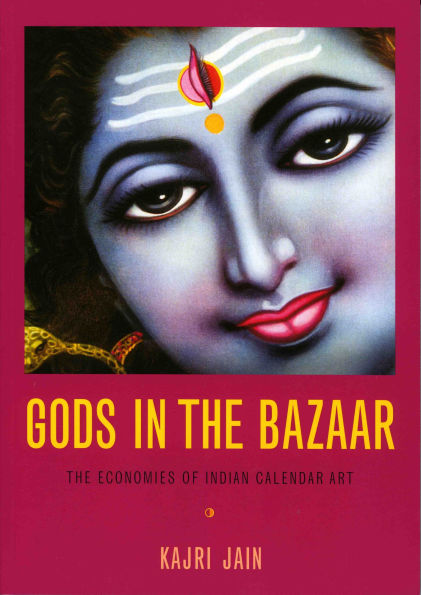
Gods The Bazaar: Economies of Indian Calendar Art in Franklin, TN
Current price: $31.95
Barnes and Noble
Gods The Bazaar: Economies of Indian Calendar Art in Franklin, TN
Current price: $31.95
Loading Inventory...
Size: Paperback
Gods in the Bazaar
is a fascinating account of the printed images known in India as “calendar art” or “bazaar art,” the color-saturated, mass-produced pictures often used on calendars and in advertisements, featuring deities and other religious themes as well as nationalist leaders, alluring women, movie stars, chubby babies, and landscapes. Calendar art appears in all manner of contexts in India: in chic elite living rooms, middle-class kitchens, urban slums, village huts; hung on walls, stuck on scooters and computers, propped up on machines, affixed to dashboards, tucked into wallets and lockets. In this beautifully illustrated book, Kajri Jain examines the power that calendar art wields in Indian mass culture, arguing that its meanings derive as much from the production and circulation of the images as from their visual features.
Jain draws on interviews with artists, printers, publishers, and consumers as well as analyses of the prints themselves to trace the economies—of art, commerce, religion, and desire—within which calendar images and ideas about them are formulated. For Jain, an analysis of the bazaar, or vernacular commercial arena, is crucial to understanding not only the calendar art that circulates within the bazaar but also India’s postcolonial modernity and the ways that its mass culture has developed in close connection with a religiously inflected nationalism. The bazaar is characterized by the coexistence of seemingly incompatible elements: bourgeois-liberal and neoliberal modernism on the one hand, and vernacular discourses and practices on the other. Jain argues that from the colonial era to the present, capitalist expansion has depended on the maintenance of these multiple coexisting realms: the sacred, the commercial, and the artistic; the official and the vernacular.
is a fascinating account of the printed images known in India as “calendar art” or “bazaar art,” the color-saturated, mass-produced pictures often used on calendars and in advertisements, featuring deities and other religious themes as well as nationalist leaders, alluring women, movie stars, chubby babies, and landscapes. Calendar art appears in all manner of contexts in India: in chic elite living rooms, middle-class kitchens, urban slums, village huts; hung on walls, stuck on scooters and computers, propped up on machines, affixed to dashboards, tucked into wallets and lockets. In this beautifully illustrated book, Kajri Jain examines the power that calendar art wields in Indian mass culture, arguing that its meanings derive as much from the production and circulation of the images as from their visual features.
Jain draws on interviews with artists, printers, publishers, and consumers as well as analyses of the prints themselves to trace the economies—of art, commerce, religion, and desire—within which calendar images and ideas about them are formulated. For Jain, an analysis of the bazaar, or vernacular commercial arena, is crucial to understanding not only the calendar art that circulates within the bazaar but also India’s postcolonial modernity and the ways that its mass culture has developed in close connection with a religiously inflected nationalism. The bazaar is characterized by the coexistence of seemingly incompatible elements: bourgeois-liberal and neoliberal modernism on the one hand, and vernacular discourses and practices on the other. Jain argues that from the colonial era to the present, capitalist expansion has depended on the maintenance of these multiple coexisting realms: the sacred, the commercial, and the artistic; the official and the vernacular.
Gods in the Bazaar
is a fascinating account of the printed images known in India as “calendar art” or “bazaar art,” the color-saturated, mass-produced pictures often used on calendars and in advertisements, featuring deities and other religious themes as well as nationalist leaders, alluring women, movie stars, chubby babies, and landscapes. Calendar art appears in all manner of contexts in India: in chic elite living rooms, middle-class kitchens, urban slums, village huts; hung on walls, stuck on scooters and computers, propped up on machines, affixed to dashboards, tucked into wallets and lockets. In this beautifully illustrated book, Kajri Jain examines the power that calendar art wields in Indian mass culture, arguing that its meanings derive as much from the production and circulation of the images as from their visual features.
Jain draws on interviews with artists, printers, publishers, and consumers as well as analyses of the prints themselves to trace the economies—of art, commerce, religion, and desire—within which calendar images and ideas about them are formulated. For Jain, an analysis of the bazaar, or vernacular commercial arena, is crucial to understanding not only the calendar art that circulates within the bazaar but also India’s postcolonial modernity and the ways that its mass culture has developed in close connection with a religiously inflected nationalism. The bazaar is characterized by the coexistence of seemingly incompatible elements: bourgeois-liberal and neoliberal modernism on the one hand, and vernacular discourses and practices on the other. Jain argues that from the colonial era to the present, capitalist expansion has depended on the maintenance of these multiple coexisting realms: the sacred, the commercial, and the artistic; the official and the vernacular.
is a fascinating account of the printed images known in India as “calendar art” or “bazaar art,” the color-saturated, mass-produced pictures often used on calendars and in advertisements, featuring deities and other religious themes as well as nationalist leaders, alluring women, movie stars, chubby babies, and landscapes. Calendar art appears in all manner of contexts in India: in chic elite living rooms, middle-class kitchens, urban slums, village huts; hung on walls, stuck on scooters and computers, propped up on machines, affixed to dashboards, tucked into wallets and lockets. In this beautifully illustrated book, Kajri Jain examines the power that calendar art wields in Indian mass culture, arguing that its meanings derive as much from the production and circulation of the images as from their visual features.
Jain draws on interviews with artists, printers, publishers, and consumers as well as analyses of the prints themselves to trace the economies—of art, commerce, religion, and desire—within which calendar images and ideas about them are formulated. For Jain, an analysis of the bazaar, or vernacular commercial arena, is crucial to understanding not only the calendar art that circulates within the bazaar but also India’s postcolonial modernity and the ways that its mass culture has developed in close connection with a religiously inflected nationalism. The bazaar is characterized by the coexistence of seemingly incompatible elements: bourgeois-liberal and neoliberal modernism on the one hand, and vernacular discourses and practices on the other. Jain argues that from the colonial era to the present, capitalist expansion has depended on the maintenance of these multiple coexisting realms: the sacred, the commercial, and the artistic; the official and the vernacular.
You May Also Like
![Wild God [Limited Edition Orange 12¿ Album Art Print ] [Barnes & Noble Exclusive]](https://prodimage.images-bn.com/pimages/5400863163082_p0_v3_s600x595.jpg)














More About Barnes and Noble at CoolSprings Galleria
Barnes & Noble is the world’s largest retail bookseller and a leading retailer of content, digital media and educational products. Our Nook Digital business offers a lineup of NOOK® tablets and e-Readers and an expansive collection of digital reading content through the NOOK Store®. Barnes & Noble’s mission is to operate the best omni-channel specialty retail business in America, helping both our customers and booksellers reach their aspirations, while being a credit to the communities we serve.
1800 Galleria Blvd #1310, Franklin, TN 37067, United States
Find Barnes and Noble at CoolSprings Galleria in Franklin, TN
Visit Barnes and Noble at CoolSprings Galleria in Franklin, TN
