
Home
Going Against the Grain: When Professionals in Hawaii Choose Public Schools Instead of Private Schools
Barnes and Noble
Loading Inventory...
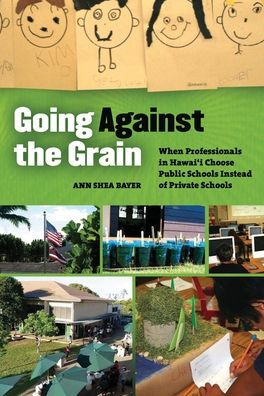
Going Against the Grain: When Professionals in Hawaii Choose Public Schools Instead of Private Schools in Franklin, TN
Current price: $15.00
Barnes and Noble
Going Against the Grain: When Professionals in Hawaii Choose Public Schools Instead of Private Schools in Franklin, TN
Current price: $15.00
Loading Inventory...
Size: OS
This book is about passion, advocacy, and the willingness of parents to "go against the grain." It’s about Hawai‘i professionals choosing public education for their children in a state that adheres to a commonly held belief that "public schools are failing and private schools are succeeding." University of Hawai‘i education professor Ann Bayer interviewed fiftyone parents, including five who chose private schools. Physicians, professors, attorneys, military officers, teachers, legislators, business executives and entrepreneurs, bankers, and administrators of both genders and from a wide range of ethnic backgrounds were among those interviewed.
Bayer begins by asking parents why they chose to send their children to public schools. She also asks them to describe the reaction of families, friends, and colleagues to their decision and their children’s school experiences—both positive and negative. From these conversations the concept of what constitutes a "good public school" emerges as well as the opportunities provided by such schools. Several parents remark that their children have gone on to attend the same colleges and universities as private school graduates. Other chapters examine more closely the prevalent belief in the superiority of Hawai‘i’s private schools and its impact on students, parents, and teachers. Bayer argues that it is important to understand this belief system and how both newcomers and longtime residents are exposed to it given its influence on parental decisions about schooling. Finally, she returns to interviews with parents for suggestions on how to improve public education in Hawai‘i and to address the question "Why should we care about the public school system?" Responses spark frank discussions on the broader implications for the civic and economic health of a community fragmented by twotiered schooling.
Candid and insightful,
Going Against the Grain
provides a muchneeded look at education in Hawai‘i. It will be essential reading for parents, teachers, administrators, legislators, policy makers, and others interested in promoting and supporting public education and understanding its role in a democracy.
Bayer begins by asking parents why they chose to send their children to public schools. She also asks them to describe the reaction of families, friends, and colleagues to their decision and their children’s school experiences—both positive and negative. From these conversations the concept of what constitutes a "good public school" emerges as well as the opportunities provided by such schools. Several parents remark that their children have gone on to attend the same colleges and universities as private school graduates. Other chapters examine more closely the prevalent belief in the superiority of Hawai‘i’s private schools and its impact on students, parents, and teachers. Bayer argues that it is important to understand this belief system and how both newcomers and longtime residents are exposed to it given its influence on parental decisions about schooling. Finally, she returns to interviews with parents for suggestions on how to improve public education in Hawai‘i and to address the question "Why should we care about the public school system?" Responses spark frank discussions on the broader implications for the civic and economic health of a community fragmented by twotiered schooling.
Candid and insightful,
Going Against the Grain
provides a muchneeded look at education in Hawai‘i. It will be essential reading for parents, teachers, administrators, legislators, policy makers, and others interested in promoting and supporting public education and understanding its role in a democracy.
This book is about passion, advocacy, and the willingness of parents to "go against the grain." It’s about Hawai‘i professionals choosing public education for their children in a state that adheres to a commonly held belief that "public schools are failing and private schools are succeeding." University of Hawai‘i education professor Ann Bayer interviewed fiftyone parents, including five who chose private schools. Physicians, professors, attorneys, military officers, teachers, legislators, business executives and entrepreneurs, bankers, and administrators of both genders and from a wide range of ethnic backgrounds were among those interviewed.
Bayer begins by asking parents why they chose to send their children to public schools. She also asks them to describe the reaction of families, friends, and colleagues to their decision and their children’s school experiences—both positive and negative. From these conversations the concept of what constitutes a "good public school" emerges as well as the opportunities provided by such schools. Several parents remark that their children have gone on to attend the same colleges and universities as private school graduates. Other chapters examine more closely the prevalent belief in the superiority of Hawai‘i’s private schools and its impact on students, parents, and teachers. Bayer argues that it is important to understand this belief system and how both newcomers and longtime residents are exposed to it given its influence on parental decisions about schooling. Finally, she returns to interviews with parents for suggestions on how to improve public education in Hawai‘i and to address the question "Why should we care about the public school system?" Responses spark frank discussions on the broader implications for the civic and economic health of a community fragmented by twotiered schooling.
Candid and insightful,
Going Against the Grain
provides a muchneeded look at education in Hawai‘i. It will be essential reading for parents, teachers, administrators, legislators, policy makers, and others interested in promoting and supporting public education and understanding its role in a democracy.
Bayer begins by asking parents why they chose to send their children to public schools. She also asks them to describe the reaction of families, friends, and colleagues to their decision and their children’s school experiences—both positive and negative. From these conversations the concept of what constitutes a "good public school" emerges as well as the opportunities provided by such schools. Several parents remark that their children have gone on to attend the same colleges and universities as private school graduates. Other chapters examine more closely the prevalent belief in the superiority of Hawai‘i’s private schools and its impact on students, parents, and teachers. Bayer argues that it is important to understand this belief system and how both newcomers and longtime residents are exposed to it given its influence on parental decisions about schooling. Finally, she returns to interviews with parents for suggestions on how to improve public education in Hawai‘i and to address the question "Why should we care about the public school system?" Responses spark frank discussions on the broader implications for the civic and economic health of a community fragmented by twotiered schooling.
Candid and insightful,
Going Against the Grain
provides a muchneeded look at education in Hawai‘i. It will be essential reading for parents, teachers, administrators, legislators, policy makers, and others interested in promoting and supporting public education and understanding its role in a democracy.
You May Also Like









More About Barnes and Noble at CoolSprings Galleria
Barnes & Noble is the world’s largest retail bookseller and a leading retailer of content, digital media and educational products. Our Nook Digital business offers a lineup of NOOK® tablets and e-Readers and an expansive collection of digital reading content through the NOOK Store®. Barnes & Noble’s mission is to operate the best omni-channel specialty retail business in America, helping both our customers and booksellers reach their aspirations, while being a credit to the communities we serve.
1800 Galleria Blvd #1310, Franklin, TN 37067, United States
Find Barnes and Noble at CoolSprings Galleria in Franklin, TN
Visit Barnes and Noble at CoolSprings Galleria in Franklin, TN
