
Home
Greek and Roman Painting the Digital Humanities
Barnes and Noble
Loading Inventory...
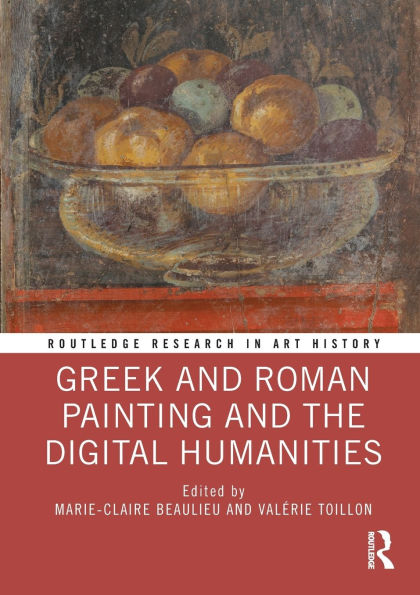
Greek and Roman Painting the Digital Humanities in Franklin, TN
Current price: $190.00
Barnes and Noble
Greek and Roman Painting the Digital Humanities in Franklin, TN
Current price: $190.00
Loading Inventory...
Size: Hardcover
This volume is a groundbreaking discussion of the role of digital media in research on ancient painting, and a deep reflection on the effectiveness of digital media in opening the field to new audiences.
The study of classical art always oscillates between archaeology and classics, between the study of ancient texts and archaeological material. For this reason, it is often difficult to collect all the data, to have access to both types of information on an equal basis. The increasing development of digital collections and databases dedicated to both archaeological material and ancient texts is a direct response to this problem. The book’s central theme is the role of the digital humanities, especially digital collection,s such as the Digital Milliet, in the study of ancient Greek and Roman painting. Part 1 focuses on the transition between the original print version of the
Recueil Milliet
and its digital incarnation. Part 2 addresses the application of digital tools to the analysis of ancient art. Part 3 focuses on ancient wall painting.
The book will be of interest to scholars working in art history, classics, archaeology, and digital humanities.
The study of classical art always oscillates between archaeology and classics, between the study of ancient texts and archaeological material. For this reason, it is often difficult to collect all the data, to have access to both types of information on an equal basis. The increasing development of digital collections and databases dedicated to both archaeological material and ancient texts is a direct response to this problem. The book’s central theme is the role of the digital humanities, especially digital collection,s such as the Digital Milliet, in the study of ancient Greek and Roman painting. Part 1 focuses on the transition between the original print version of the
Recueil Milliet
and its digital incarnation. Part 2 addresses the application of digital tools to the analysis of ancient art. Part 3 focuses on ancient wall painting.
The book will be of interest to scholars working in art history, classics, archaeology, and digital humanities.
This volume is a groundbreaking discussion of the role of digital media in research on ancient painting, and a deep reflection on the effectiveness of digital media in opening the field to new audiences.
The study of classical art always oscillates between archaeology and classics, between the study of ancient texts and archaeological material. For this reason, it is often difficult to collect all the data, to have access to both types of information on an equal basis. The increasing development of digital collections and databases dedicated to both archaeological material and ancient texts is a direct response to this problem. The book’s central theme is the role of the digital humanities, especially digital collection,s such as the Digital Milliet, in the study of ancient Greek and Roman painting. Part 1 focuses on the transition between the original print version of the
Recueil Milliet
and its digital incarnation. Part 2 addresses the application of digital tools to the analysis of ancient art. Part 3 focuses on ancient wall painting.
The book will be of interest to scholars working in art history, classics, archaeology, and digital humanities.
The study of classical art always oscillates between archaeology and classics, between the study of ancient texts and archaeological material. For this reason, it is often difficult to collect all the data, to have access to both types of information on an equal basis. The increasing development of digital collections and databases dedicated to both archaeological material and ancient texts is a direct response to this problem. The book’s central theme is the role of the digital humanities, especially digital collection,s such as the Digital Milliet, in the study of ancient Greek and Roman painting. Part 1 focuses on the transition between the original print version of the
Recueil Milliet
and its digital incarnation. Part 2 addresses the application of digital tools to the analysis of ancient art. Part 3 focuses on ancient wall painting.
The book will be of interest to scholars working in art history, classics, archaeology, and digital humanities.
You May Also Like










More About Barnes and Noble at CoolSprings Galleria
Barnes & Noble is the world’s largest retail bookseller and a leading retailer of content, digital media and educational products. Our Nook Digital business offers a lineup of NOOK® tablets and e-Readers and an expansive collection of digital reading content through the NOOK Store®. Barnes & Noble’s mission is to operate the best omni-channel specialty retail business in America, helping both our customers and booksellers reach their aspirations, while being a credit to the communities we serve.
1800 Galleria Blvd #1310, Franklin, TN 37067, United States
Find Barnes and Noble at CoolSprings Galleria in Franklin, TN
Visit Barnes and Noble at CoolSprings Galleria in Franklin, TN
