
Home
Handbook of India's International Relations
Barnes and Noble
Loading Inventory...
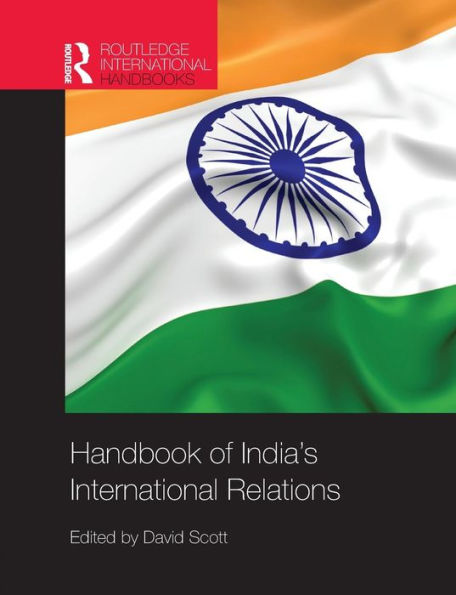
Handbook of India's International Relations in Franklin, TN
Current price: $74.99
Barnes and Noble
Handbook of India's International Relations in Franklin, TN
Current price: $74.99
Loading Inventory...
Size: Paperback
The Handbook of India’s International Relations
gives an overview of India’s international relations, given the development of India as a major economic power in the world, and the growing interest in the impact of Asia on the international system in the future. This book is centred on India’s own description of its foreign policy as operating in ‘concentric circles’. This concentric circles concept is reflected in the following five sections:
Part 1: India.
National ‘aspirations’ of a rising power; India’s ‘strategic culture’; India’s ‘power’ attributes; geopolitics for India; geoeconomics and energy for India.
Part 2: India’s 'Immediate Neighbourhood'.
India’s relations with Pakistan; with the Himalayan states; with Bangladesh; with Sri Lanka; with Afghanistan; India’s role in ‘regional’ integration.
Part 3: India’s 'Extended Neighbourhood'.
Looking east, South-East Asia and the ASEAN and East Asia and Australasia/Oceania; looking south, Indian Ocean; looking west, Iran and the Gulf and beyond the Gulf; looking west, Africa; looking north, Central Asia and the Shanghai Cooperation Organization.
Part 4: India’s Great Power Relations.
India’s relations with Russia; with the European Union; with China; with the USA.
Part 5: India and Global Issues.
India and its diaspora; India and international terrorism; India and the United Nations; India and nuclear weapons; India and climate change; India and outer space.
Edited by David Scott of Brunel University, and with chapters written by a variety of experts, the
Handbook of India’s International Relations
offers an up-to-date, unbiased and comprehensive resource to academics and students of international relations.
gives an overview of India’s international relations, given the development of India as a major economic power in the world, and the growing interest in the impact of Asia on the international system in the future. This book is centred on India’s own description of its foreign policy as operating in ‘concentric circles’. This concentric circles concept is reflected in the following five sections:
Part 1: India.
National ‘aspirations’ of a rising power; India’s ‘strategic culture’; India’s ‘power’ attributes; geopolitics for India; geoeconomics and energy for India.
Part 2: India’s 'Immediate Neighbourhood'.
India’s relations with Pakistan; with the Himalayan states; with Bangladesh; with Sri Lanka; with Afghanistan; India’s role in ‘regional’ integration.
Part 3: India’s 'Extended Neighbourhood'.
Looking east, South-East Asia and the ASEAN and East Asia and Australasia/Oceania; looking south, Indian Ocean; looking west, Iran and the Gulf and beyond the Gulf; looking west, Africa; looking north, Central Asia and the Shanghai Cooperation Organization.
Part 4: India’s Great Power Relations.
India’s relations with Russia; with the European Union; with China; with the USA.
Part 5: India and Global Issues.
India and its diaspora; India and international terrorism; India and the United Nations; India and nuclear weapons; India and climate change; India and outer space.
Edited by David Scott of Brunel University, and with chapters written by a variety of experts, the
Handbook of India’s International Relations
offers an up-to-date, unbiased and comprehensive resource to academics and students of international relations.
The Handbook of India’s International Relations
gives an overview of India’s international relations, given the development of India as a major economic power in the world, and the growing interest in the impact of Asia on the international system in the future. This book is centred on India’s own description of its foreign policy as operating in ‘concentric circles’. This concentric circles concept is reflected in the following five sections:
Part 1: India.
National ‘aspirations’ of a rising power; India’s ‘strategic culture’; India’s ‘power’ attributes; geopolitics for India; geoeconomics and energy for India.
Part 2: India’s 'Immediate Neighbourhood'.
India’s relations with Pakistan; with the Himalayan states; with Bangladesh; with Sri Lanka; with Afghanistan; India’s role in ‘regional’ integration.
Part 3: India’s 'Extended Neighbourhood'.
Looking east, South-East Asia and the ASEAN and East Asia and Australasia/Oceania; looking south, Indian Ocean; looking west, Iran and the Gulf and beyond the Gulf; looking west, Africa; looking north, Central Asia and the Shanghai Cooperation Organization.
Part 4: India’s Great Power Relations.
India’s relations with Russia; with the European Union; with China; with the USA.
Part 5: India and Global Issues.
India and its diaspora; India and international terrorism; India and the United Nations; India and nuclear weapons; India and climate change; India and outer space.
Edited by David Scott of Brunel University, and with chapters written by a variety of experts, the
Handbook of India’s International Relations
offers an up-to-date, unbiased and comprehensive resource to academics and students of international relations.
gives an overview of India’s international relations, given the development of India as a major economic power in the world, and the growing interest in the impact of Asia on the international system in the future. This book is centred on India’s own description of its foreign policy as operating in ‘concentric circles’. This concentric circles concept is reflected in the following five sections:
Part 1: India.
National ‘aspirations’ of a rising power; India’s ‘strategic culture’; India’s ‘power’ attributes; geopolitics for India; geoeconomics and energy for India.
Part 2: India’s 'Immediate Neighbourhood'.
India’s relations with Pakistan; with the Himalayan states; with Bangladesh; with Sri Lanka; with Afghanistan; India’s role in ‘regional’ integration.
Part 3: India’s 'Extended Neighbourhood'.
Looking east, South-East Asia and the ASEAN and East Asia and Australasia/Oceania; looking south, Indian Ocean; looking west, Iran and the Gulf and beyond the Gulf; looking west, Africa; looking north, Central Asia and the Shanghai Cooperation Organization.
Part 4: India’s Great Power Relations.
India’s relations with Russia; with the European Union; with China; with the USA.
Part 5: India and Global Issues.
India and its diaspora; India and international terrorism; India and the United Nations; India and nuclear weapons; India and climate change; India and outer space.
Edited by David Scott of Brunel University, and with chapters written by a variety of experts, the
Handbook of India’s International Relations
offers an up-to-date, unbiased and comprehensive resource to academics and students of international relations.
You May Also Like










More About Barnes and Noble at CoolSprings Galleria
Barnes & Noble is the world’s largest retail bookseller and a leading retailer of content, digital media and educational products. Our Nook Digital business offers a lineup of NOOK® tablets and e-Readers and an expansive collection of digital reading content through the NOOK Store®. Barnes & Noble’s mission is to operate the best omni-channel specialty retail business in America, helping both our customers and booksellers reach their aspirations, while being a credit to the communities we serve.
1800 Galleria Blvd #1310, Franklin, TN 37067, United States
Find Barnes and Noble at CoolSprings Galleria in Franklin, TN
Visit Barnes and Noble at CoolSprings Galleria in Franklin, TN
