
Home
He Had It Coming: Four Murderous Women and the Reporter Who Immortalized Their Stories
Barnes and Noble
Loading Inventory...
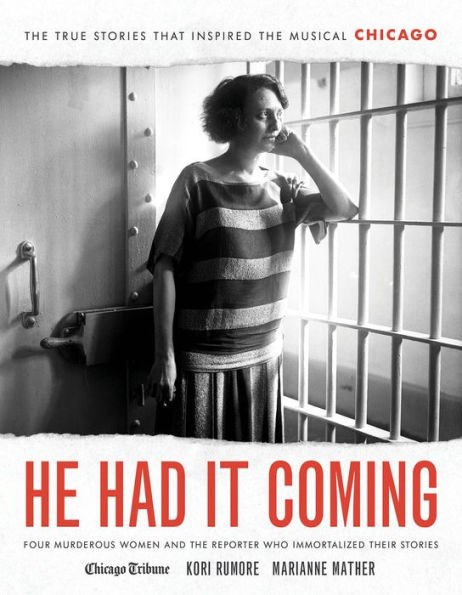
He Had It Coming: Four Murderous Women and the Reporter Who Immortalized Their Stories in Franklin, TN
Current price: $35.00
Barnes and Noble
He Had It Coming: Four Murderous Women and the Reporter Who Immortalized Their Stories in Franklin, TN
Current price: $35.00
Loading Inventory...
Size: OS
Beulah Annan. Belva Gaertner. Kitty Malm. Sabella Nitti. These are the real women of
Chicago
.
You probably know Roxie and Velma, the good-time gals of the 1926 satirical play
and its wildly successful musical and movie adaptations. You might not know that Roxie, Velma, and the rest of the colorful characters of the play were inspired by real prisoners held in “Murderess Row” in 1920s Chicago—or that the reporter who covered their trials for the
Chicago Tribune
went on to write the play
Now, more than 90 years later, the
has uncovered photographs and newspaper clippings telling the story of the four women who inspired the timeless characters of
. But these photos tell a different story—and itʼs not all about glamour, fashion, and celebrity. They show a young mother in jail hugging her two-year-old daughter. They show an immigrant woman who doesnʼt speak the language of her judge, jury, and attorney. And they show women who used their images to sway public opinion—and their juries.
He Had It Coming
collects recently discovered photos, original newspaper clippings, and stories from
Tribune
reporter Maurine Dallas Watkins as well as new analysis written by
film critic Michael Phillips, theater critic Chris Jones, and columnists Heidi Stevens and Rick Kogan to build a fascinating history of women in crime in Jazz Age Chicago, a history that takes on new meaning in today’s #MeToo moment.
Chicago
.
You probably know Roxie and Velma, the good-time gals of the 1926 satirical play
and its wildly successful musical and movie adaptations. You might not know that Roxie, Velma, and the rest of the colorful characters of the play were inspired by real prisoners held in “Murderess Row” in 1920s Chicago—or that the reporter who covered their trials for the
Chicago Tribune
went on to write the play
Now, more than 90 years later, the
has uncovered photographs and newspaper clippings telling the story of the four women who inspired the timeless characters of
. But these photos tell a different story—and itʼs not all about glamour, fashion, and celebrity. They show a young mother in jail hugging her two-year-old daughter. They show an immigrant woman who doesnʼt speak the language of her judge, jury, and attorney. And they show women who used their images to sway public opinion—and their juries.
He Had It Coming
collects recently discovered photos, original newspaper clippings, and stories from
Tribune
reporter Maurine Dallas Watkins as well as new analysis written by
film critic Michael Phillips, theater critic Chris Jones, and columnists Heidi Stevens and Rick Kogan to build a fascinating history of women in crime in Jazz Age Chicago, a history that takes on new meaning in today’s #MeToo moment.
Beulah Annan. Belva Gaertner. Kitty Malm. Sabella Nitti. These are the real women of
Chicago
.
You probably know Roxie and Velma, the good-time gals of the 1926 satirical play
and its wildly successful musical and movie adaptations. You might not know that Roxie, Velma, and the rest of the colorful characters of the play were inspired by real prisoners held in “Murderess Row” in 1920s Chicago—or that the reporter who covered their trials for the
Chicago Tribune
went on to write the play
Now, more than 90 years later, the
has uncovered photographs and newspaper clippings telling the story of the four women who inspired the timeless characters of
. But these photos tell a different story—and itʼs not all about glamour, fashion, and celebrity. They show a young mother in jail hugging her two-year-old daughter. They show an immigrant woman who doesnʼt speak the language of her judge, jury, and attorney. And they show women who used their images to sway public opinion—and their juries.
He Had It Coming
collects recently discovered photos, original newspaper clippings, and stories from
Tribune
reporter Maurine Dallas Watkins as well as new analysis written by
film critic Michael Phillips, theater critic Chris Jones, and columnists Heidi Stevens and Rick Kogan to build a fascinating history of women in crime in Jazz Age Chicago, a history that takes on new meaning in today’s #MeToo moment.
Chicago
.
You probably know Roxie and Velma, the good-time gals of the 1926 satirical play
and its wildly successful musical and movie adaptations. You might not know that Roxie, Velma, and the rest of the colorful characters of the play were inspired by real prisoners held in “Murderess Row” in 1920s Chicago—or that the reporter who covered their trials for the
Chicago Tribune
went on to write the play
Now, more than 90 years later, the
has uncovered photographs and newspaper clippings telling the story of the four women who inspired the timeless characters of
. But these photos tell a different story—and itʼs not all about glamour, fashion, and celebrity. They show a young mother in jail hugging her two-year-old daughter. They show an immigrant woman who doesnʼt speak the language of her judge, jury, and attorney. And they show women who used their images to sway public opinion—and their juries.
He Had It Coming
collects recently discovered photos, original newspaper clippings, and stories from
Tribune
reporter Maurine Dallas Watkins as well as new analysis written by
film critic Michael Phillips, theater critic Chris Jones, and columnists Heidi Stevens and Rick Kogan to build a fascinating history of women in crime in Jazz Age Chicago, a history that takes on new meaning in today’s #MeToo moment.
You May Also Like













More About Barnes and Noble at CoolSprings Galleria
Barnes & Noble is the world’s largest retail bookseller and a leading retailer of content, digital media and educational products. Our Nook Digital business offers a lineup of NOOK® tablets and e-Readers and an expansive collection of digital reading content through the NOOK Store®. Barnes & Noble’s mission is to operate the best omni-channel specialty retail business in America, helping both our customers and booksellers reach their aspirations, while being a credit to the communities we serve.
1800 Galleria Blvd #1310, Franklin, TN 37067, United States
Find Barnes and Noble at CoolSprings Galleria in Franklin, TN
Visit Barnes and Noble at CoolSprings Galleria in Franklin, TN
