
Home
Herland: A Feminist Utopia
Barnes and Noble
Loading Inventory...
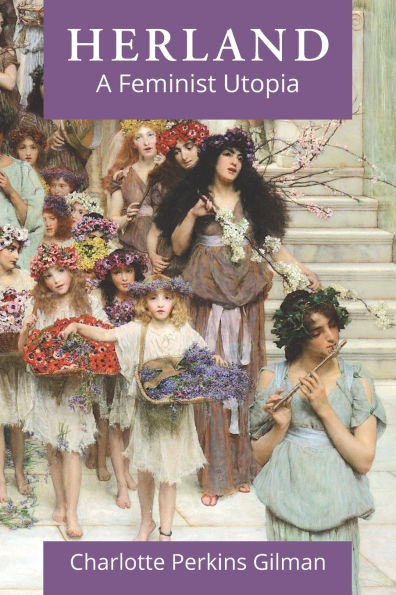
Herland: A Feminist Utopia in Franklin, TN
Current price: $12.95
Barnes and Noble
Herland: A Feminist Utopia in Franklin, TN
Current price: $12.95
Loading Inventory...
Size: OS
Three male explorers set out to reach a legendary land where only women live, and find-to their surprise-that the legends are true. This country hidden in the mountains is a feminist utopia. There are no men, nor is there war, poverty, or crime. The residents subsist on food from cultivated forests, maintain immaculate houses and roads, and reproduce asexually through parthenogenesis. Although the main characters are men, their role is to show us how their notions about society and womanhood are humorously upturned.
Charlotte Perkins Gilman was an outspoken activist and suffragist, most famous nowadays for her short story "The Yellow Wallpaper." As a writer, she was stunningly prolific. She founded
The Forerunner,
a monthly magazine for which she personally wrote every article, story, and poem. Because she chose to run no advertisements, she covered the cost of printing the magazine herself. In contrast to many women's publications of the day, Gilman advocated for equal rights and expanded social roles for women.
Originally published serially in
The Forerunner
in 1915, Herland was not republished as a standalone work until decades later. It is the second in Gilman's Utopian trilogy, along with
Moving the Mountain
and
With Her in Ourland.
Charlotte Perkins Gilman was an outspoken activist and suffragist, most famous nowadays for her short story "The Yellow Wallpaper." As a writer, she was stunningly prolific. She founded
The Forerunner,
a monthly magazine for which she personally wrote every article, story, and poem. Because she chose to run no advertisements, she covered the cost of printing the magazine herself. In contrast to many women's publications of the day, Gilman advocated for equal rights and expanded social roles for women.
Originally published serially in
The Forerunner
in 1915, Herland was not republished as a standalone work until decades later. It is the second in Gilman's Utopian trilogy, along with
Moving the Mountain
and
With Her in Ourland.
Three male explorers set out to reach a legendary land where only women live, and find-to their surprise-that the legends are true. This country hidden in the mountains is a feminist utopia. There are no men, nor is there war, poverty, or crime. The residents subsist on food from cultivated forests, maintain immaculate houses and roads, and reproduce asexually through parthenogenesis. Although the main characters are men, their role is to show us how their notions about society and womanhood are humorously upturned.
Charlotte Perkins Gilman was an outspoken activist and suffragist, most famous nowadays for her short story "The Yellow Wallpaper." As a writer, she was stunningly prolific. She founded
The Forerunner,
a monthly magazine for which she personally wrote every article, story, and poem. Because she chose to run no advertisements, she covered the cost of printing the magazine herself. In contrast to many women's publications of the day, Gilman advocated for equal rights and expanded social roles for women.
Originally published serially in
The Forerunner
in 1915, Herland was not republished as a standalone work until decades later. It is the second in Gilman's Utopian trilogy, along with
Moving the Mountain
and
With Her in Ourland.
Charlotte Perkins Gilman was an outspoken activist and suffragist, most famous nowadays for her short story "The Yellow Wallpaper." As a writer, she was stunningly prolific. She founded
The Forerunner,
a monthly magazine for which she personally wrote every article, story, and poem. Because she chose to run no advertisements, she covered the cost of printing the magazine herself. In contrast to many women's publications of the day, Gilman advocated for equal rights and expanded social roles for women.
Originally published serially in
The Forerunner
in 1915, Herland was not republished as a standalone work until decades later. It is the second in Gilman's Utopian trilogy, along with
Moving the Mountain
and
With Her in Ourland.
You May Also Like









More About Barnes and Noble at CoolSprings Galleria
Barnes & Noble is the world’s largest retail bookseller and a leading retailer of content, digital media and educational products. Our Nook Digital business offers a lineup of NOOK® tablets and e-Readers and an expansive collection of digital reading content through the NOOK Store®. Barnes & Noble’s mission is to operate the best omni-channel specialty retail business in America, helping both our customers and booksellers reach their aspirations, while being a credit to the communities we serve.
1800 Galleria Blvd #1310, Franklin, TN 37067, United States
Find Barnes and Noble at CoolSprings Galleria in Franklin, TN
Visit Barnes and Noble at CoolSprings Galleria in Franklin, TN
