
Home
Hermeneutics: Interpretation Theory in Schleiermacher, Dilthey, Heidegger, and Gadamer
Barnes and Noble
Loading Inventory...
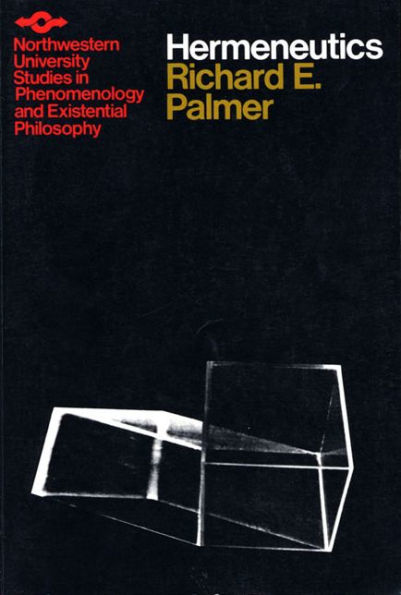
Hermeneutics: Interpretation Theory in Schleiermacher, Dilthey, Heidegger, and Gadamer in Franklin, TN
Current price: $24.95
Barnes and Noble
Hermeneutics: Interpretation Theory in Schleiermacher, Dilthey, Heidegger, and Gadamer in Franklin, TN
Current price: $24.95
Loading Inventory...
Size: OS
Hermeneutics
introduces Englishspeaking readers to a field of increasing importance in contemporary philosophy and theologyhermeneutics, the theory of understanding, or interpretation. Hermeneutics is concerned with the character of understanding, especially as it is related to interpreting linguistic texts. It goes beyond mere philological methodology, however, to questions of the philosophy of language, the nature of historical understanding, and ultimately the roots of interpretation in existential understanding.
Palmer principally treats the conception of hermeneutics enunciated by Heidegger and developed into a “philosophical hermeneutics” by HansGeorg Gadamer. He provides a brief overview of the field of hermeneutics by surveying some halfdozen alternate definitions of the term and by examining in detail the contributions of Friedrich Schleiermacher and Wilhelm Dilthey. In the “Manifesto” which concludes the book, Palmer suggests the potential significance of hermeneutics for literary interpretation.
When the context of interpretation is pressed to its limits, hermeneutics becomes the philosophical analysis of what is involved in every act of understanding. In this context, hermeneutics becomes relevant not simply to the humanistic disciplines, in which linguistic and historical understanding are crucial, but to scientific forms of interpretation as well, for it asserts the principles involved in any and every act of interpretation.
introduces Englishspeaking readers to a field of increasing importance in contemporary philosophy and theologyhermeneutics, the theory of understanding, or interpretation. Hermeneutics is concerned with the character of understanding, especially as it is related to interpreting linguistic texts. It goes beyond mere philological methodology, however, to questions of the philosophy of language, the nature of historical understanding, and ultimately the roots of interpretation in existential understanding.
Palmer principally treats the conception of hermeneutics enunciated by Heidegger and developed into a “philosophical hermeneutics” by HansGeorg Gadamer. He provides a brief overview of the field of hermeneutics by surveying some halfdozen alternate definitions of the term and by examining in detail the contributions of Friedrich Schleiermacher and Wilhelm Dilthey. In the “Manifesto” which concludes the book, Palmer suggests the potential significance of hermeneutics for literary interpretation.
When the context of interpretation is pressed to its limits, hermeneutics becomes the philosophical analysis of what is involved in every act of understanding. In this context, hermeneutics becomes relevant not simply to the humanistic disciplines, in which linguistic and historical understanding are crucial, but to scientific forms of interpretation as well, for it asserts the principles involved in any and every act of interpretation.
Hermeneutics
introduces Englishspeaking readers to a field of increasing importance in contemporary philosophy and theologyhermeneutics, the theory of understanding, or interpretation. Hermeneutics is concerned with the character of understanding, especially as it is related to interpreting linguistic texts. It goes beyond mere philological methodology, however, to questions of the philosophy of language, the nature of historical understanding, and ultimately the roots of interpretation in existential understanding.
Palmer principally treats the conception of hermeneutics enunciated by Heidegger and developed into a “philosophical hermeneutics” by HansGeorg Gadamer. He provides a brief overview of the field of hermeneutics by surveying some halfdozen alternate definitions of the term and by examining in detail the contributions of Friedrich Schleiermacher and Wilhelm Dilthey. In the “Manifesto” which concludes the book, Palmer suggests the potential significance of hermeneutics for literary interpretation.
When the context of interpretation is pressed to its limits, hermeneutics becomes the philosophical analysis of what is involved in every act of understanding. In this context, hermeneutics becomes relevant not simply to the humanistic disciplines, in which linguistic and historical understanding are crucial, but to scientific forms of interpretation as well, for it asserts the principles involved in any and every act of interpretation.
introduces Englishspeaking readers to a field of increasing importance in contemporary philosophy and theologyhermeneutics, the theory of understanding, or interpretation. Hermeneutics is concerned with the character of understanding, especially as it is related to interpreting linguistic texts. It goes beyond mere philological methodology, however, to questions of the philosophy of language, the nature of historical understanding, and ultimately the roots of interpretation in existential understanding.
Palmer principally treats the conception of hermeneutics enunciated by Heidegger and developed into a “philosophical hermeneutics” by HansGeorg Gadamer. He provides a brief overview of the field of hermeneutics by surveying some halfdozen alternate definitions of the term and by examining in detail the contributions of Friedrich Schleiermacher and Wilhelm Dilthey. In the “Manifesto” which concludes the book, Palmer suggests the potential significance of hermeneutics for literary interpretation.
When the context of interpretation is pressed to its limits, hermeneutics becomes the philosophical analysis of what is involved in every act of understanding. In this context, hermeneutics becomes relevant not simply to the humanistic disciplines, in which linguistic and historical understanding are crucial, but to scientific forms of interpretation as well, for it asserts the principles involved in any and every act of interpretation.
You May Also Like
















More About Barnes and Noble at CoolSprings Galleria
Barnes & Noble is the world’s largest retail bookseller and a leading retailer of content, digital media and educational products. Our Nook Digital business offers a lineup of NOOK® tablets and e-Readers and an expansive collection of digital reading content through the NOOK Store®. Barnes & Noble’s mission is to operate the best omni-channel specialty retail business in America, helping both our customers and booksellers reach their aspirations, while being a credit to the communities we serve.
1800 Galleria Blvd #1310, Franklin, TN 37067, United States
Find Barnes and Noble at CoolSprings Galleria in Franklin, TN
Visit Barnes and Noble at CoolSprings Galleria in Franklin, TN
