
Home
Heterotopia and Globalisation in the Twenty-First Century
Barnes and Noble
Loading Inventory...
Heterotopia and Globalisation in the Twenty-First Century in Franklin, TN
Current price: $55.99
Barnes and Noble
Heterotopia and Globalisation in the Twenty-First Century in Franklin, TN
Current price: $55.99
Loading Inventory...
Size: OS
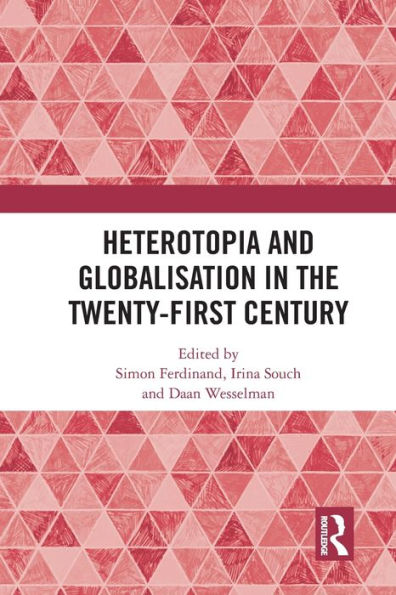
Can heterotopia help us make sense of globalisation? Against simplistic visions that the world is becoming one,
Heterotopia and Globalisation in the Twenty-First Century
shows how contemporary globalising processes are driven by heterotopian tension and complexities.
A heterotopia, in Michel Foucault’s initial formulations, describes the spatial articulation of a discursive order, manifesting its own distinct logics and categories in ways that refract or disturb prevailing paradigms. While in the twenty-first century the concept of globalisation is frequently seen as a tumultuous
un
differentiation of cultures and spaces, this volume breaks new ground by interrogating how heterotopia and globalisation in fact intersect in the cultural present. Bringing together contributors from disciplines including Geography, Literary Studies, Architecture, Sociology, Film Studies, and Philosophy, this volume sets out a new typology for heterotopian spaces in the globalising present. Together, the chapters argue that digital technologies, climate change, migration, and other globalising phenomena are giving rise to a heterotopian multiplicity of discursive spaces, which overlap and clash with one another in contemporary culture.
This volume will be of interest to scholars across disciplines who are engaged with questions of spatial difference, globalising processes, and the ways they are imagined and represented.
Heterotopia and Globalisation in the Twenty-First Century
shows how contemporary globalising processes are driven by heterotopian tension and complexities.
A heterotopia, in Michel Foucault’s initial formulations, describes the spatial articulation of a discursive order, manifesting its own distinct logics and categories in ways that refract or disturb prevailing paradigms. While in the twenty-first century the concept of globalisation is frequently seen as a tumultuous
un
differentiation of cultures and spaces, this volume breaks new ground by interrogating how heterotopia and globalisation in fact intersect in the cultural present. Bringing together contributors from disciplines including Geography, Literary Studies, Architecture, Sociology, Film Studies, and Philosophy, this volume sets out a new typology for heterotopian spaces in the globalising present. Together, the chapters argue that digital technologies, climate change, migration, and other globalising phenomena are giving rise to a heterotopian multiplicity of discursive spaces, which overlap and clash with one another in contemporary culture.
This volume will be of interest to scholars across disciplines who are engaged with questions of spatial difference, globalising processes, and the ways they are imagined and represented.
Can heterotopia help us make sense of globalisation? Against simplistic visions that the world is becoming one,
Heterotopia and Globalisation in the Twenty-First Century
shows how contemporary globalising processes are driven by heterotopian tension and complexities.
A heterotopia, in Michel Foucault’s initial formulations, describes the spatial articulation of a discursive order, manifesting its own distinct logics and categories in ways that refract or disturb prevailing paradigms. While in the twenty-first century the concept of globalisation is frequently seen as a tumultuous
un
differentiation of cultures and spaces, this volume breaks new ground by interrogating how heterotopia and globalisation in fact intersect in the cultural present. Bringing together contributors from disciplines including Geography, Literary Studies, Architecture, Sociology, Film Studies, and Philosophy, this volume sets out a new typology for heterotopian spaces in the globalising present. Together, the chapters argue that digital technologies, climate change, migration, and other globalising phenomena are giving rise to a heterotopian multiplicity of discursive spaces, which overlap and clash with one another in contemporary culture.
This volume will be of interest to scholars across disciplines who are engaged with questions of spatial difference, globalising processes, and the ways they are imagined and represented.
Heterotopia and Globalisation in the Twenty-First Century
shows how contemporary globalising processes are driven by heterotopian tension and complexities.
A heterotopia, in Michel Foucault’s initial formulations, describes the spatial articulation of a discursive order, manifesting its own distinct logics and categories in ways that refract or disturb prevailing paradigms. While in the twenty-first century the concept of globalisation is frequently seen as a tumultuous
un
differentiation of cultures and spaces, this volume breaks new ground by interrogating how heterotopia and globalisation in fact intersect in the cultural present. Bringing together contributors from disciplines including Geography, Literary Studies, Architecture, Sociology, Film Studies, and Philosophy, this volume sets out a new typology for heterotopian spaces in the globalising present. Together, the chapters argue that digital technologies, climate change, migration, and other globalising phenomena are giving rise to a heterotopian multiplicity of discursive spaces, which overlap and clash with one another in contemporary culture.
This volume will be of interest to scholars across disciplines who are engaged with questions of spatial difference, globalising processes, and the ways they are imagined and represented.
You May Also Like















More About Barnes and Noble at CoolSprings Galleria
Barnes & Noble is the world’s largest retail bookseller and a leading retailer of content, digital media and educational products. Our Nook Digital business offers a lineup of NOOK® tablets and e-Readers and an expansive collection of digital reading content through the NOOK Store®. Barnes & Noble’s mission is to operate the best omni-channel specialty retail business in America, helping both our customers and booksellers reach their aspirations, while being a credit to the communities we serve.
1800 Galleria Blvd #1310, Franklin, TN 37067, United States
Find Barnes and Noble at CoolSprings Galleria in Franklin, TN
Visit Barnes and Noble at CoolSprings Galleria in Franklin, TN
