
Home
Hollywood Diplomacy: Film Regulation, Foreign Relations, and East Asian Representations
Barnes and Noble
Loading Inventory...
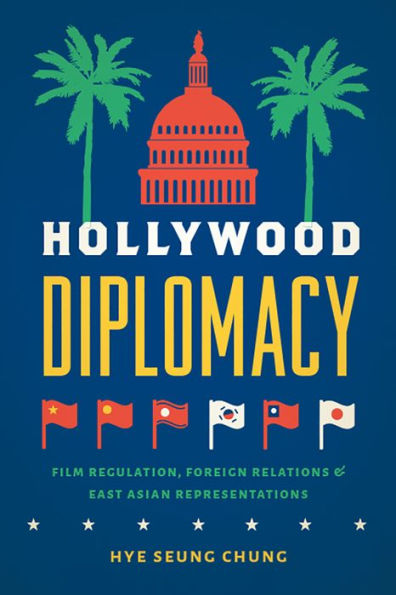
Hollywood Diplomacy: Film Regulation, Foreign Relations, and East Asian Representations in Franklin, TN
Current price: $39.95
Barnes and Noble
Hollywood Diplomacy: Film Regulation, Foreign Relations, and East Asian Representations in Franklin, TN
Current price: $39.95
Loading Inventory...
Size: Paperback
Hollywood Diplomacy
contends that, rather than simply reflect the West’s cultural fantasies of an imagined “Orient,” images of Chinese, Japanese, and Korean ethnicities have long been contested sites where the commercial interests of Hollywood studios and the political mandates of U.S. foreign policy collide, compete against one another, and often become compromised in the process. While tracing both Hollywood’s internal foreign relations protocolsfrom the “Open Door” policy of the silent era to the “National Feelings” provision of the Production Codeand external regulatory interventions by the Chinese government, the U.S. State Department, the Office of War Information, and the Department of Defense, Hye Seung Chung reevaluates such American classics as
Shanghai Express
and
The Great Dictator
and applies historical insights to the controversies surrounding contemporary productions including
Die Another Day
The Interview
. This richly detailed book redefines the concept of “creative freedom” in the context of commerce: shifting focus away from the artistic entitlement to offend foreign audiences toward the opportunity to build new, better relationships with partners around the world through diplomatic representations of race, ethnicity, and nationality.
contends that, rather than simply reflect the West’s cultural fantasies of an imagined “Orient,” images of Chinese, Japanese, and Korean ethnicities have long been contested sites where the commercial interests of Hollywood studios and the political mandates of U.S. foreign policy collide, compete against one another, and often become compromised in the process. While tracing both Hollywood’s internal foreign relations protocolsfrom the “Open Door” policy of the silent era to the “National Feelings” provision of the Production Codeand external regulatory interventions by the Chinese government, the U.S. State Department, the Office of War Information, and the Department of Defense, Hye Seung Chung reevaluates such American classics as
Shanghai Express
and
The Great Dictator
and applies historical insights to the controversies surrounding contemporary productions including
Die Another Day
The Interview
. This richly detailed book redefines the concept of “creative freedom” in the context of commerce: shifting focus away from the artistic entitlement to offend foreign audiences toward the opportunity to build new, better relationships with partners around the world through diplomatic representations of race, ethnicity, and nationality.
Hollywood Diplomacy
contends that, rather than simply reflect the West’s cultural fantasies of an imagined “Orient,” images of Chinese, Japanese, and Korean ethnicities have long been contested sites where the commercial interests of Hollywood studios and the political mandates of U.S. foreign policy collide, compete against one another, and often become compromised in the process. While tracing both Hollywood’s internal foreign relations protocolsfrom the “Open Door” policy of the silent era to the “National Feelings” provision of the Production Codeand external regulatory interventions by the Chinese government, the U.S. State Department, the Office of War Information, and the Department of Defense, Hye Seung Chung reevaluates such American classics as
Shanghai Express
and
The Great Dictator
and applies historical insights to the controversies surrounding contemporary productions including
Die Another Day
The Interview
. This richly detailed book redefines the concept of “creative freedom” in the context of commerce: shifting focus away from the artistic entitlement to offend foreign audiences toward the opportunity to build new, better relationships with partners around the world through diplomatic representations of race, ethnicity, and nationality.
contends that, rather than simply reflect the West’s cultural fantasies of an imagined “Orient,” images of Chinese, Japanese, and Korean ethnicities have long been contested sites where the commercial interests of Hollywood studios and the political mandates of U.S. foreign policy collide, compete against one another, and often become compromised in the process. While tracing both Hollywood’s internal foreign relations protocolsfrom the “Open Door” policy of the silent era to the “National Feelings” provision of the Production Codeand external regulatory interventions by the Chinese government, the U.S. State Department, the Office of War Information, and the Department of Defense, Hye Seung Chung reevaluates such American classics as
Shanghai Express
and
The Great Dictator
and applies historical insights to the controversies surrounding contemporary productions including
Die Another Day
The Interview
. This richly detailed book redefines the concept of “creative freedom” in the context of commerce: shifting focus away from the artistic entitlement to offend foreign audiences toward the opportunity to build new, better relationships with partners around the world through diplomatic representations of race, ethnicity, and nationality.
You May Also Like









More About Barnes and Noble at CoolSprings Galleria
Barnes & Noble is the world’s largest retail bookseller and a leading retailer of content, digital media and educational products. Our Nook Digital business offers a lineup of NOOK® tablets and e-Readers and an expansive collection of digital reading content through the NOOK Store®. Barnes & Noble’s mission is to operate the best omni-channel specialty retail business in America, helping both our customers and booksellers reach their aspirations, while being a credit to the communities we serve.
1800 Galleria Blvd #1310, Franklin, TN 37067, United States
Find Barnes and Noble at CoolSprings Galleria in Franklin, TN
Visit Barnes and Noble at CoolSprings Galleria in Franklin, TN
