
Home
How the Few Became Proud: Crafting Marine Corps Mystique, 1874-1918
Barnes and Noble
Loading Inventory...
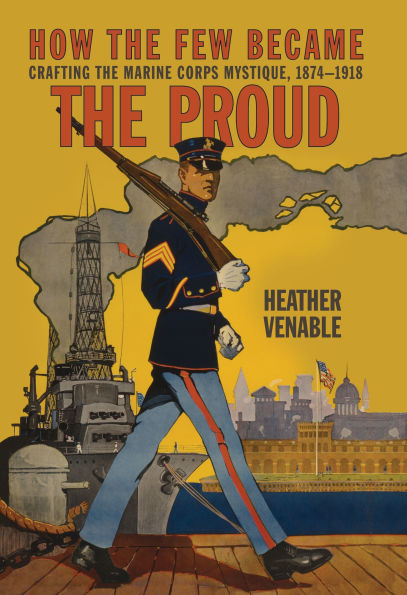
How the Few Became Proud: Crafting Marine Corps Mystique, 1874-1918 in Franklin, TN
Current price: $39.95
Barnes and Noble
How the Few Became Proud: Crafting Marine Corps Mystique, 1874-1918 in Franklin, TN
Current price: $39.95
Loading Inventory...
Size: Paperback
For more than half its existence, the U.S. Marine Corps and its members largely selfidentified as soldiers. In the early decades, being a Marine did not yet mean something distinct, either to Marines or to the public at large. The Corps’ peculiar position resulted in a sort of identity crisis: Being neither a landbased organization like the Army nor an entirely seabased one like the Navy, the Corps’ role overlapped with both institutions. While the Army and Navy easily could define their respective domains, Marines inherently shouldered a more varied array of landandsea responsibilities.
Author Heather Venable argues that, since the Marine Corps could not readily rally around a sole defining mission, it turned instead to an image to ensure its institutional survival. As Marine officers immersed themselves in the Corps’ historical records, they initiated a process by which a maligned group of nineteenthcentury naval policemen eventually would come to be regarded as elite warriors. Embracing their storied past, findesiècle Marines began to justify their existence by invoking their traditions, celebrating their many martial engagements, and claiming to be the nation’s oldest and proudest military branch. A new and enduring institutional persona emerged—that of a fighting force ultimately superior to soldiers and sailors. Although there are countless works on the Marine Corps,
How the Few Became the Proud
is the first to explore the origin of the myths behind the mystique.
Author Heather Venable argues that, since the Marine Corps could not readily rally around a sole defining mission, it turned instead to an image to ensure its institutional survival. As Marine officers immersed themselves in the Corps’ historical records, they initiated a process by which a maligned group of nineteenthcentury naval policemen eventually would come to be regarded as elite warriors. Embracing their storied past, findesiècle Marines began to justify their existence by invoking their traditions, celebrating their many martial engagements, and claiming to be the nation’s oldest and proudest military branch. A new and enduring institutional persona emerged—that of a fighting force ultimately superior to soldiers and sailors. Although there are countless works on the Marine Corps,
How the Few Became the Proud
is the first to explore the origin of the myths behind the mystique.
For more than half its existence, the U.S. Marine Corps and its members largely selfidentified as soldiers. In the early decades, being a Marine did not yet mean something distinct, either to Marines or to the public at large. The Corps’ peculiar position resulted in a sort of identity crisis: Being neither a landbased organization like the Army nor an entirely seabased one like the Navy, the Corps’ role overlapped with both institutions. While the Army and Navy easily could define their respective domains, Marines inherently shouldered a more varied array of landandsea responsibilities.
Author Heather Venable argues that, since the Marine Corps could not readily rally around a sole defining mission, it turned instead to an image to ensure its institutional survival. As Marine officers immersed themselves in the Corps’ historical records, they initiated a process by which a maligned group of nineteenthcentury naval policemen eventually would come to be regarded as elite warriors. Embracing their storied past, findesiècle Marines began to justify their existence by invoking their traditions, celebrating their many martial engagements, and claiming to be the nation’s oldest and proudest military branch. A new and enduring institutional persona emerged—that of a fighting force ultimately superior to soldiers and sailors. Although there are countless works on the Marine Corps,
How the Few Became the Proud
is the first to explore the origin of the myths behind the mystique.
Author Heather Venable argues that, since the Marine Corps could not readily rally around a sole defining mission, it turned instead to an image to ensure its institutional survival. As Marine officers immersed themselves in the Corps’ historical records, they initiated a process by which a maligned group of nineteenthcentury naval policemen eventually would come to be regarded as elite warriors. Embracing their storied past, findesiècle Marines began to justify their existence by invoking their traditions, celebrating their many martial engagements, and claiming to be the nation’s oldest and proudest military branch. A new and enduring institutional persona emerged—that of a fighting force ultimately superior to soldiers and sailors. Although there are countless works on the Marine Corps,
How the Few Became the Proud
is the first to explore the origin of the myths behind the mystique.
You May Also Like











More About Barnes and Noble at CoolSprings Galleria
Barnes & Noble is the world’s largest retail bookseller and a leading retailer of content, digital media and educational products. Our Nook Digital business offers a lineup of NOOK® tablets and e-Readers and an expansive collection of digital reading content through the NOOK Store®. Barnes & Noble’s mission is to operate the best omni-channel specialty retail business in America, helping both our customers and booksellers reach their aspirations, while being a credit to the communities we serve.
1800 Galleria Blvd #1310, Franklin, TN 37067, United States
Find Barnes and Noble at CoolSprings Galleria in Franklin, TN
Visit Barnes and Noble at CoolSprings Galleria in Franklin, TN
