
Home
Human No More: Digital Subjectivities, Unhuman Subjects, and the End of Anthropology
Barnes and Noble
Loading Inventory...
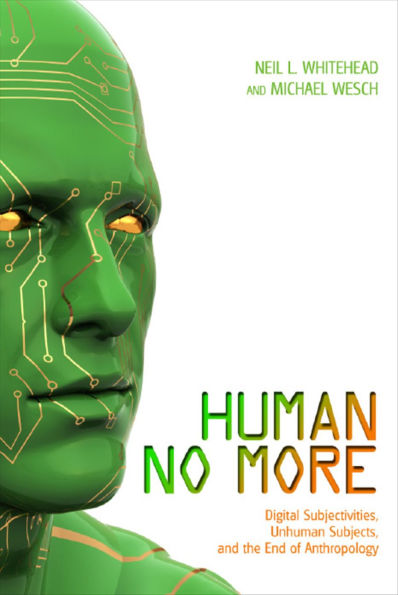
Human No More: Digital Subjectivities, Unhuman Subjects, and the End of Anthropology in Franklin, TN
Current price: $28.95
Barnes and Noble
Human No More: Digital Subjectivities, Unhuman Subjects, and the End of Anthropology in Franklin, TN
Current price: $28.95
Loading Inventory...
Size: Paperback
Turning an anthropological eye toward cyberspace,
Human No More
explores how conditions of the online world shape identity, place, culture, and death within virtual communities.
Online worlds have recently thrown into question the traditional anthropological conception of place-based ethnography. They break definitions, blur distinctions, and force us to rethink the notion of the "subject."
asks how digital cultures can be integrated and how the ethnography of both the "unhuman" and the "digital" could lead to possible reconfiguring the notion of the "human."
This provocative and groundbreaking work challenges fundamental assumptions about the entire field of anthropology. Cross-disciplinary research from well-respected contributors makes this volume vital to the understanding of contemporary human interaction. It will be of interest not only to anthropologists but also to students and scholars of media, communication, popular culture, identity, and technology.
Human No More
explores how conditions of the online world shape identity, place, culture, and death within virtual communities.
Online worlds have recently thrown into question the traditional anthropological conception of place-based ethnography. They break definitions, blur distinctions, and force us to rethink the notion of the "subject."
asks how digital cultures can be integrated and how the ethnography of both the "unhuman" and the "digital" could lead to possible reconfiguring the notion of the "human."
This provocative and groundbreaking work challenges fundamental assumptions about the entire field of anthropology. Cross-disciplinary research from well-respected contributors makes this volume vital to the understanding of contemporary human interaction. It will be of interest not only to anthropologists but also to students and scholars of media, communication, popular culture, identity, and technology.
Turning an anthropological eye toward cyberspace,
Human No More
explores how conditions of the online world shape identity, place, culture, and death within virtual communities.
Online worlds have recently thrown into question the traditional anthropological conception of place-based ethnography. They break definitions, blur distinctions, and force us to rethink the notion of the "subject."
asks how digital cultures can be integrated and how the ethnography of both the "unhuman" and the "digital" could lead to possible reconfiguring the notion of the "human."
This provocative and groundbreaking work challenges fundamental assumptions about the entire field of anthropology. Cross-disciplinary research from well-respected contributors makes this volume vital to the understanding of contemporary human interaction. It will be of interest not only to anthropologists but also to students and scholars of media, communication, popular culture, identity, and technology.
Human No More
explores how conditions of the online world shape identity, place, culture, and death within virtual communities.
Online worlds have recently thrown into question the traditional anthropological conception of place-based ethnography. They break definitions, blur distinctions, and force us to rethink the notion of the "subject."
asks how digital cultures can be integrated and how the ethnography of both the "unhuman" and the "digital" could lead to possible reconfiguring the notion of the "human."
This provocative and groundbreaking work challenges fundamental assumptions about the entire field of anthropology. Cross-disciplinary research from well-respected contributors makes this volume vital to the understanding of contemporary human interaction. It will be of interest not only to anthropologists but also to students and scholars of media, communication, popular culture, identity, and technology.
You May Also Like












More About Barnes and Noble at CoolSprings Galleria
Barnes & Noble is the world’s largest retail bookseller and a leading retailer of content, digital media and educational products. Our Nook Digital business offers a lineup of NOOK® tablets and e-Readers and an expansive collection of digital reading content through the NOOK Store®. Barnes & Noble’s mission is to operate the best omni-channel specialty retail business in America, helping both our customers and booksellers reach their aspirations, while being a credit to the communities we serve.
1800 Galleria Blvd #1310, Franklin, TN 37067, United States
Find Barnes and Noble at CoolSprings Galleria in Franklin, TN
Visit Barnes and Noble at CoolSprings Galleria in Franklin, TN
