
Home
Hume's Philosophy of Belief (Routledge Revivals): A Study His First 'Inquiry'
Barnes and Noble
Loading Inventory...
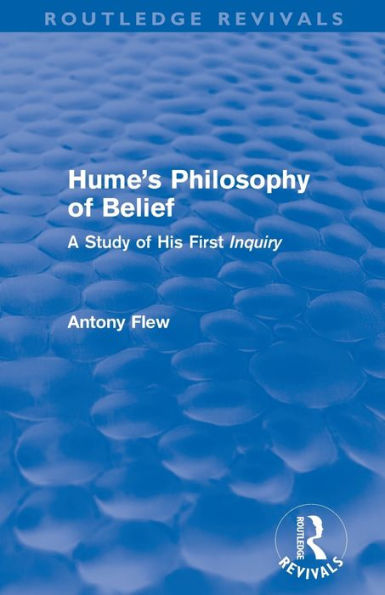
Hume's Philosophy of Belief (Routledge Revivals): A Study His First 'Inquiry' in Franklin, TN
Current price: $200.00
Barnes and Noble
Hume's Philosophy of Belief (Routledge Revivals): A Study His First 'Inquiry' in Franklin, TN
Current price: $200.00
Loading Inventory...
Size: Hardcover
First published in 1961, this book considers Hume’s request to be judged solely by the acknowledged works of his maturity. It focuses on Hume’s first
Inquiry
in its own right as a separate book to the likes of his other works, such as the
Treatise
and the
Dialogues,
which are here only used as supplementary evidence when necessary. This approach brings out, as Hume himself quite explicitly wished to do, the important bearing of his more technical philosophy on matters of religion and of world-outlook generally: "Be a philosopher; but amidst all your philosophy, be still a man."
Inquiry
in its own right as a separate book to the likes of his other works, such as the
Treatise
and the
Dialogues,
which are here only used as supplementary evidence when necessary. This approach brings out, as Hume himself quite explicitly wished to do, the important bearing of his more technical philosophy on matters of religion and of world-outlook generally: "Be a philosopher; but amidst all your philosophy, be still a man."
First published in 1961, this book considers Hume’s request to be judged solely by the acknowledged works of his maturity. It focuses on Hume’s first
Inquiry
in its own right as a separate book to the likes of his other works, such as the
Treatise
and the
Dialogues,
which are here only used as supplementary evidence when necessary. This approach brings out, as Hume himself quite explicitly wished to do, the important bearing of his more technical philosophy on matters of religion and of world-outlook generally: "Be a philosopher; but amidst all your philosophy, be still a man."
Inquiry
in its own right as a separate book to the likes of his other works, such as the
Treatise
and the
Dialogues,
which are here only used as supplementary evidence when necessary. This approach brings out, as Hume himself quite explicitly wished to do, the important bearing of his more technical philosophy on matters of religion and of world-outlook generally: "Be a philosopher; but amidst all your philosophy, be still a man."
You May Also Like














More About Barnes and Noble at CoolSprings Galleria
Barnes & Noble is the world’s largest retail bookseller and a leading retailer of content, digital media and educational products. Our Nook Digital business offers a lineup of NOOK® tablets and e-Readers and an expansive collection of digital reading content through the NOOK Store®. Barnes & Noble’s mission is to operate the best omni-channel specialty retail business in America, helping both our customers and booksellers reach their aspirations, while being a credit to the communities we serve.
1800 Galleria Blvd #1310, Franklin, TN 37067, United States
Find Barnes and Noble at CoolSprings Galleria in Franklin, TN
Visit Barnes and Noble at CoolSprings Galleria in Franklin, TN
