
Home
Ideas and Practices in the History of Medicine, 1650-1820
Barnes and Noble
Loading Inventory...
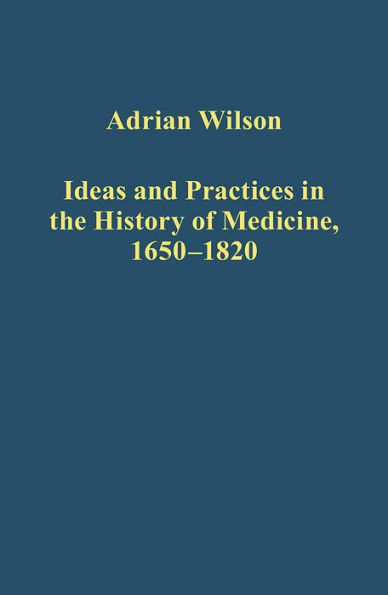
Ideas and Practices in the History of Medicine, 1650-1820 in Franklin, TN
Current price: $54.99
Barnes and Noble
Ideas and Practices in the History of Medicine, 1650-1820 in Franklin, TN
Current price: $54.99
Loading Inventory...
Size: OS
Although articles in this volume fall into three thematic clusters, each of those groups exemplifies three general themes: micro-social processes; innovations and the question of continuity versus discontinuity; and the relationship between ideas and practice. Most of these essays touch upon, and some of them are exclusively concerned with, small scale social processes: e.g. the routines of the all-female early-modern childbirth ritual, the different ways that male practitioners were summoned to such occasions, the functioning of voluntary hospitals, the protocols underlying patient records. Such social practices are well worth studying as both the sites and drivers of larger-scale historical change. Whenever there comes into being something new - whether an institution (a hospital), a social practice (the summoning of men as midwives) or a concept (a new approach to disease) - the question arises as to its relationship with what went before. This concept resonates throughout these essays, but is most to the fore in the chapters on early Hanoverian London (which asks explanatory questions) and on Porter versus Foucault (who represent the extremes of continuity and discontinuity respectively). A couple of generations ago, the ’history of ideas’ was pursued largely without reference to practice; in recent times, the danger has appeared of the very reverse taking place. This book ranges across a broad spectrum in this respect, the emphasis being sometimes upon practice (Eleanor Willughby’s work as a midwife) and sometimes upon ideas (concepts of pleurisy across the centuries); but in every case there is at least the potential for relating the two to one another. None of these themes is specific to medical history; on the contrary, they are the bread-and-butter of historical reconstruction in general.
Although articles in this volume fall into three thematic clusters, each of those groups exemplifies three general themes: micro-social processes; innovations and the question of continuity versus discontinuity; and the relationship between ideas and practice. Most of these essays touch upon, and some of them are exclusively concerned with, small scale social processes: e.g. the routines of the all-female early-modern childbirth ritual, the different ways that male practitioners were summoned to such occasions, the functioning of voluntary hospitals, the protocols underlying patient records. Such social practices are well worth studying as both the sites and drivers of larger-scale historical change. Whenever there comes into being something new - whether an institution (a hospital), a social practice (the summoning of men as midwives) or a concept (a new approach to disease) - the question arises as to its relationship with what went before. This concept resonates throughout these essays, but is most to the fore in the chapters on early Hanoverian London (which asks explanatory questions) and on Porter versus Foucault (who represent the extremes of continuity and discontinuity respectively). A couple of generations ago, the ’history of ideas’ was pursued largely without reference to practice; in recent times, the danger has appeared of the very reverse taking place. This book ranges across a broad spectrum in this respect, the emphasis being sometimes upon practice (Eleanor Willughby’s work as a midwife) and sometimes upon ideas (concepts of pleurisy across the centuries); but in every case there is at least the potential for relating the two to one another. None of these themes is specific to medical history; on the contrary, they are the bread-and-butter of historical reconstruction in general.
You May Also Like














More About Barnes and Noble at CoolSprings Galleria
Barnes & Noble is the world’s largest retail bookseller and a leading retailer of content, digital media and educational products. Our Nook Digital business offers a lineup of NOOK® tablets and e-Readers and an expansive collection of digital reading content through the NOOK Store®. Barnes & Noble’s mission is to operate the best omni-channel specialty retail business in America, helping both our customers and booksellers reach their aspirations, while being a credit to the communities we serve.
1800 Galleria Blvd #1310, Franklin, TN 37067, United States
Find Barnes and Noble at CoolSprings Galleria in Franklin, TN
Visit Barnes and Noble at CoolSprings Galleria in Franklin, TN
