
Home
In Uncle Sam's Service: Women Workers with the American Expeditionary Force, 1917-1919
Barnes and Noble
Loading Inventory...
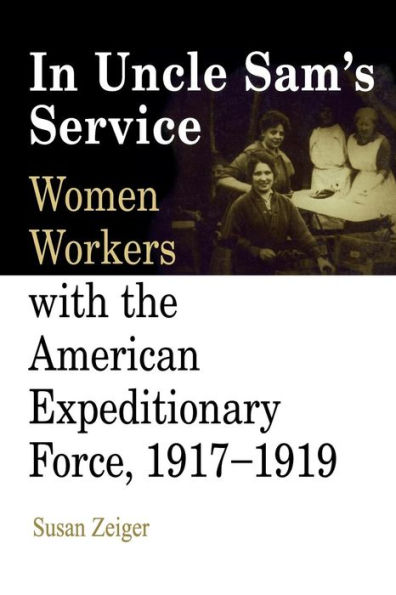
In Uncle Sam's Service: Women Workers with the American Expeditionary Force, 1917-1919 in Franklin, TN
Current price: $29.95
Barnes and Noble
In Uncle Sam's Service: Women Workers with the American Expeditionary Force, 1917-1919 in Franklin, TN
Current price: $29.95
Loading Inventory...
Size: OS
During World War I, the first U.S. war in which women were mobilized by the armed services on a mass scale, more than sixteen thousand female personnel served overseas with the American Expeditionary Force. Elite society women—the so-called heiress corps—have dominated the popular perception of women's service ever since. But Susan Zeiger shows that the majority of these female nurses, clerical workers, telephone operators, and canteen workers were wage-earners whose motives for enlistment ranged from patriotism to economic self-interest, from a sense of adventure to a desire to challenge gender boundaries.
In exploring women's experience of war, Zeiger draws from a wealth of diaries, letters, questionnaires, oral histories, and memoirs, as well as army records. She analyzes the ways women's wartime service brought to light contradictions in prevailing gender relations at the height of the campaign for women's suffrage, and she places the stories of servicewomen in the broader context of women's employment in the early twentieth century. At a time when women sought to expand their personal opportunities, Zeiger argues, the government, determined to contain the disruption to the gender status quo, created a separate, subordinate status for women in the military, attempting to "domesticate" and reinscribe them within conventional roles.
In exploring women's experience of war, Zeiger draws from a wealth of diaries, letters, questionnaires, oral histories, and memoirs, as well as army records. She analyzes the ways women's wartime service brought to light contradictions in prevailing gender relations at the height of the campaign for women's suffrage, and she places the stories of servicewomen in the broader context of women's employment in the early twentieth century. At a time when women sought to expand their personal opportunities, Zeiger argues, the government, determined to contain the disruption to the gender status quo, created a separate, subordinate status for women in the military, attempting to "domesticate" and reinscribe them within conventional roles.
During World War I, the first U.S. war in which women were mobilized by the armed services on a mass scale, more than sixteen thousand female personnel served overseas with the American Expeditionary Force. Elite society women—the so-called heiress corps—have dominated the popular perception of women's service ever since. But Susan Zeiger shows that the majority of these female nurses, clerical workers, telephone operators, and canteen workers were wage-earners whose motives for enlistment ranged from patriotism to economic self-interest, from a sense of adventure to a desire to challenge gender boundaries.
In exploring women's experience of war, Zeiger draws from a wealth of diaries, letters, questionnaires, oral histories, and memoirs, as well as army records. She analyzes the ways women's wartime service brought to light contradictions in prevailing gender relations at the height of the campaign for women's suffrage, and she places the stories of servicewomen in the broader context of women's employment in the early twentieth century. At a time when women sought to expand their personal opportunities, Zeiger argues, the government, determined to contain the disruption to the gender status quo, created a separate, subordinate status for women in the military, attempting to "domesticate" and reinscribe them within conventional roles.
In exploring women's experience of war, Zeiger draws from a wealth of diaries, letters, questionnaires, oral histories, and memoirs, as well as army records. She analyzes the ways women's wartime service brought to light contradictions in prevailing gender relations at the height of the campaign for women's suffrage, and she places the stories of servicewomen in the broader context of women's employment in the early twentieth century. At a time when women sought to expand their personal opportunities, Zeiger argues, the government, determined to contain the disruption to the gender status quo, created a separate, subordinate status for women in the military, attempting to "domesticate" and reinscribe them within conventional roles.
You May Also Like

















More About Barnes and Noble at CoolSprings Galleria
Barnes & Noble is the world’s largest retail bookseller and a leading retailer of content, digital media and educational products. Our Nook Digital business offers a lineup of NOOK® tablets and e-Readers and an expansive collection of digital reading content through the NOOK Store®. Barnes & Noble’s mission is to operate the best omni-channel specialty retail business in America, helping both our customers and booksellers reach their aspirations, while being a credit to the communities we serve.
1800 Galleria Blvd #1310, Franklin, TN 37067, United States
Find Barnes and Noble at CoolSprings Galleria in Franklin, TN
Visit Barnes and Noble at CoolSprings Galleria in Franklin, TN
