
Home
Itinerant Belonging: Intimate Histories of Indian Ocean Capitalism
Barnes and Noble
Loading Inventory...
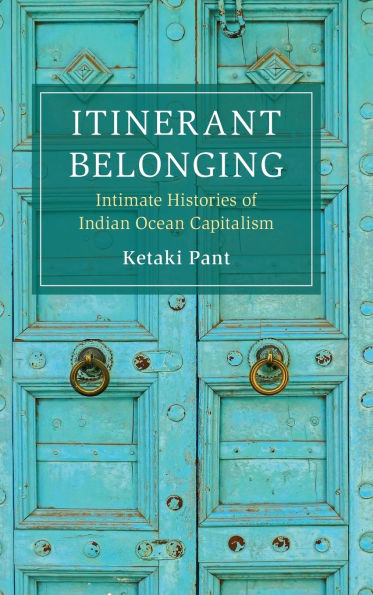
Itinerant Belonging: Intimate Histories of Indian Ocean Capitalism in Franklin, TN
Current price: $120.00
Barnes and Noble
Itinerant Belonging: Intimate Histories of Indian Ocean Capitalism in Franklin, TN
Current price: $120.00
Loading Inventory...
Size: Hardcover
Along the coast of Gujarat, nineteenth-century merchant houses or havelis still stand in historic cities, connecting ports from Durban to Rangoon. In this ambitious and multifaceted work, Ketaki Pant uses these old spaces as a lens through which to view not only the vibrant stories of their occupants, but also the complex entanglements of Indian Ocean capitalism. These homes reveal new perspectives from colonized communities who were also major merchants, signifying ideas of family, race, gender, and religion, as well as representing ties to land. Employing concepts from feminist studies, colonial studies, and history, Pant argues that havelis provide a model for understanding colonial capitalism in the Indian Ocean as a spatial project. This is a rich exploration of both belonging and unbelonging and the ways they continue to shape individual and social identities today.
Along the coast of Gujarat, nineteenth-century merchant houses or havelis still stand in historic cities, connecting ports from Durban to Rangoon. In this ambitious and multifaceted work, Ketaki Pant uses these old spaces as a lens through which to view not only the vibrant stories of their occupants, but also the complex entanglements of Indian Ocean capitalism. These homes reveal new perspectives from colonized communities who were also major merchants, signifying ideas of family, race, gender, and religion, as well as representing ties to land. Employing concepts from feminist studies, colonial studies, and history, Pant argues that havelis provide a model for understanding colonial capitalism in the Indian Ocean as a spatial project. This is a rich exploration of both belonging and unbelonging and the ways they continue to shape individual and social identities today.
You May Also Like














More About Barnes and Noble at CoolSprings Galleria
Barnes & Noble is the world’s largest retail bookseller and a leading retailer of content, digital media and educational products. Our Nook Digital business offers a lineup of NOOK® tablets and e-Readers and an expansive collection of digital reading content through the NOOK Store®. Barnes & Noble’s mission is to operate the best omni-channel specialty retail business in America, helping both our customers and booksellers reach their aspirations, while being a credit to the communities we serve.
1800 Galleria Blvd #1310, Franklin, TN 37067, United States
Find Barnes and Noble at CoolSprings Galleria in Franklin, TN
Visit Barnes and Noble at CoolSprings Galleria in Franklin, TN
