
Home
Jujutsu & Judo in the West: Uke Becomes Tori
Barnes and Noble
Loading Inventory...
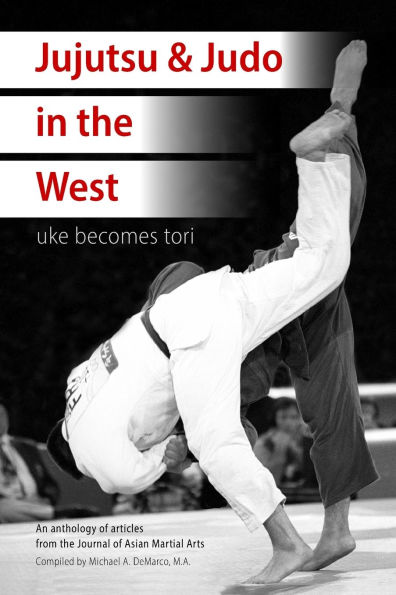
Jujutsu & Judo in the West: Uke Becomes Tori in Franklin, TN
Current price: $18.95
Barnes and Noble
Jujutsu & Judo in the West: Uke Becomes Tori in Franklin, TN
Current price: $18.95
Loading Inventory...
Size: OS
The late 19th century saw a dynamic growth of contacts between Western countries and the Far East. Along with the increase in travel came a wave of educational opportunities for Americans and Europeans to gain first-hand experience living in countries such as China, India, and Japan. Likewise, adventurous individuals from the Orient made their way to the West. Scholars, politicians, and business people because experts in their adapted culture. Some learned the native language and becomes experts in their second culture, often writing and lecturing on a variety of topics, including martial traditions. By the early 20th century a number of Japanese jujutsu and judo instructors were teaching their exotic arts in Germany, Spain, United Kingdom, and the United States. How were these instructors viewed by those in their host countries? What similarities and differences were seen between the Japanese combative and the local traditions such as Catch-as-Catch-Can, Greco-Roman, and Pancrase wrestling, and styles of boxing? Chapters in this anthology present an excellent overview of the early days when jujutsu and judo took foothold in the USA and Europe, with particular emphasis on England and the influence of The Budokwai in London, which as noted on Wikipedia, is "the oldest Japanese martial arts club in Europe. It was founded in 1918 by Gunji Koizumi and initially offered tuition in jujutsu, kendo, and other Japanese arts. It was the first judo club in Europe." This anthology offers a historical view of how and why jujutsu and judo became living traditions in the West, and developed over the decades. There are six technical chapters by David Finch, well-known for his knowledge of judo and famed for his professional photography. The last chapter is a fitting finale presenting a comprehensive history and technical description of The Budokwai Kime-no-kata, a judo kata created during the earlier period of the institute. The fourteen chapters in this anthology-most from the Journal of Asian Martial Arts and a few newer writings-also discuss many of the leading practitioners of jujutsu/judo. As these arts adapted and transformed to Western countries, the purpose and modes of practice have also changed. This is important for all to study since knowledge of the past is vital for how these forms of combat and sport will evolve in the future.
The late 19th century saw a dynamic growth of contacts between Western countries and the Far East. Along with the increase in travel came a wave of educational opportunities for Americans and Europeans to gain first-hand experience living in countries such as China, India, and Japan. Likewise, adventurous individuals from the Orient made their way to the West. Scholars, politicians, and business people because experts in their adapted culture. Some learned the native language and becomes experts in their second culture, often writing and lecturing on a variety of topics, including martial traditions. By the early 20th century a number of Japanese jujutsu and judo instructors were teaching their exotic arts in Germany, Spain, United Kingdom, and the United States. How were these instructors viewed by those in their host countries? What similarities and differences were seen between the Japanese combative and the local traditions such as Catch-as-Catch-Can, Greco-Roman, and Pancrase wrestling, and styles of boxing? Chapters in this anthology present an excellent overview of the early days when jujutsu and judo took foothold in the USA and Europe, with particular emphasis on England and the influence of The Budokwai in London, which as noted on Wikipedia, is "the oldest Japanese martial arts club in Europe. It was founded in 1918 by Gunji Koizumi and initially offered tuition in jujutsu, kendo, and other Japanese arts. It was the first judo club in Europe." This anthology offers a historical view of how and why jujutsu and judo became living traditions in the West, and developed over the decades. There are six technical chapters by David Finch, well-known for his knowledge of judo and famed for his professional photography. The last chapter is a fitting finale presenting a comprehensive history and technical description of The Budokwai Kime-no-kata, a judo kata created during the earlier period of the institute. The fourteen chapters in this anthology-most from the Journal of Asian Martial Arts and a few newer writings-also discuss many of the leading practitioners of jujutsu/judo. As these arts adapted and transformed to Western countries, the purpose and modes of practice have also changed. This is important for all to study since knowledge of the past is vital for how these forms of combat and sport will evolve in the future.
You May Also Like
![Tori and Lokita [Blu-ray]](https://prodimage.images-bn.com/pimages/0715515290111_p0_v5_s600x595.jpg)















More About Barnes and Noble at CoolSprings Galleria
Barnes & Noble is the world’s largest retail bookseller and a leading retailer of content, digital media and educational products. Our Nook Digital business offers a lineup of NOOK® tablets and e-Readers and an expansive collection of digital reading content through the NOOK Store®. Barnes & Noble’s mission is to operate the best omni-channel specialty retail business in America, helping both our customers and booksellers reach their aspirations, while being a credit to the communities we serve.
1800 Galleria Blvd #1310, Franklin, TN 37067, United States
Find Barnes and Noble at CoolSprings Galleria in Franklin, TN
Visit Barnes and Noble at CoolSprings Galleria in Franklin, TN
