
Home
Justice-Oriented Science Teaching and Learning: Anchoring Phenomena Secondary Classrooms
Barnes and Noble
Loading Inventory...
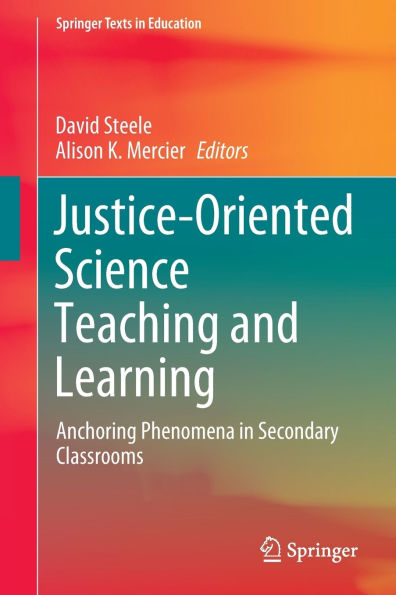
Justice-Oriented Science Teaching and Learning: Anchoring Phenomena Secondary Classrooms in Franklin, TN
Current price: $84.99
Barnes and Noble
Justice-Oriented Science Teaching and Learning: Anchoring Phenomena Secondary Classrooms in Franklin, TN
Current price: $84.99
Loading Inventory...
Size: Paperback
This textbook provides K-12 science teachers and educators innovative uses of anchoring phenomenon-based teaching approaches from a justice-oriented lens (Morales-Doyle, 2017). It discusses topics such as the use of anchoring phenomenon-based pedagogies, qualities of productive anchoring phenomena and includes examples of unit plans that use anchoring phenomena and social justice science issues to create storylines to foster students’ multiple pathways to knowing and learning in the science classrooms. The book is beneficial to K-12 science teachers and science educators who are interested in facilitating students’ sense-making of a real-world phenomenon and engaging in three-dimensional science instruction (NGSS Lead States, 2013). By providing examples of unit plans based on theoretical groundings of anchoring phenomenon-based instruction and justice-oriented science teaching, this book provides a great resource to students, professionals, teachers, and academics in science education.
This textbook provides K-12 science teachers and educators innovative uses of anchoring phenomenon-based teaching approaches from a justice-oriented lens (Morales-Doyle, 2017). It discusses topics such as the use of anchoring phenomenon-based pedagogies, qualities of productive anchoring phenomena and includes examples of unit plans that use anchoring phenomena and social justice science issues to create storylines to foster students’ multiple pathways to knowing and learning in the science classrooms. The book is beneficial to K-12 science teachers and science educators who are interested in facilitating students’ sense-making of a real-world phenomenon and engaging in three-dimensional science instruction (NGSS Lead States, 2013). By providing examples of unit plans based on theoretical groundings of anchoring phenomenon-based instruction and justice-oriented science teaching, this book provides a great resource to students, professionals, teachers, and academics in science education.
You May Also Like










More About Barnes and Noble at CoolSprings Galleria
Barnes & Noble is the world’s largest retail bookseller and a leading retailer of content, digital media and educational products. Our Nook Digital business offers a lineup of NOOK® tablets and e-Readers and an expansive collection of digital reading content through the NOOK Store®. Barnes & Noble’s mission is to operate the best omni-channel specialty retail business in America, helping both our customers and booksellers reach their aspirations, while being a credit to the communities we serve.
1800 Galleria Blvd #1310, Franklin, TN 37067, United States
Find Barnes and Noble at CoolSprings Galleria in Franklin, TN
Visit Barnes and Noble at CoolSprings Galleria in Franklin, TN