
Home
Kant and the Possibility of Progress: From Modern Hopes to Postmodern Anxieties
Barnes and Noble
Loading Inventory...
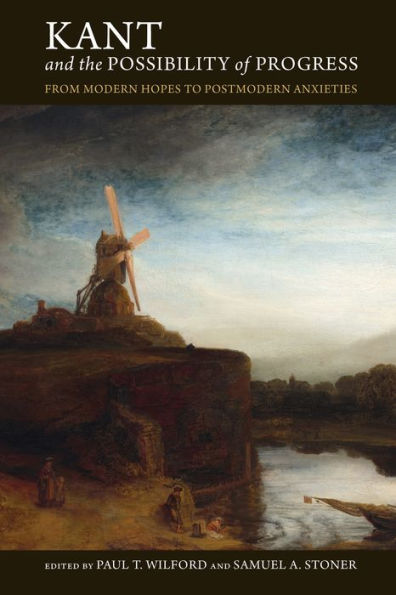
Kant and the Possibility of Progress: From Modern Hopes to Postmodern Anxieties in Franklin, TN
Current price: $65.00
Barnes and Noble
Kant and the Possibility of Progress: From Modern Hopes to Postmodern Anxieties in Franklin, TN
Current price: $65.00
Loading Inventory...
Size: Hardcover
Immanuel Kant (1724-1804) transformed the philosophical, cultural, and religious landscape of modern Europe. Emphasizing the priority of practical reason and moral autonomy, Kant's radically original account of human subjectivity announced new ethical imperatives and engendered new political hopes. This collection of essays investigates the centrality of progress to Kant's philosophical project and the contested legacy of Kant's faith in reason's capacity to advance not only our scientific comprehension and technological prowess, but also our moral, political, and religious lives. Accordingly, the first half of the volume explores the many facets of Kant's thinking about progress, while the remaining essays each focus on one or two thinkers who play a crucial role in post-Kantian German philosophy: J. G. Herder (1744-1803), J. G. Fichte (1762-1814), G. W. F. Hegel (1770-1831), Søren Kierkegaard (1813-1855), Friedrich Nietzsche (1844-1900), Walter Benjamin (1892-1940), and Martin Heidegger (1889-1976). This two-part structure reflects the central thesis of the volume that Kant inaugurates a distinctive theoretical tradition in which human historicity is central to political philosophy.
By exploring the origins and metamorphoses of this tremendously influential tradition, the volume offers a timely perspective on fundamental questions in an age increasingly suspicious of the Enlightenment's promise of universal rational progress. It aims to help us face three sets of questions: (1) Do we still believe in the possibility of progress? If we do, on what grounds? If we do not, why have we lost the hope for a better future that animated previous generations? (2) Is the belief in progress necessary for the maintenance of today's liberal democratic order? Does a cosmopolitan vision of politics ultimately depend on a faith in humanity's gradual, asymptotic realization of that lofty aim? (3) And, if we no longer believe in progress, can we dispense with hope without succumbing to despair?
By exploring the origins and metamorphoses of this tremendously influential tradition, the volume offers a timely perspective on fundamental questions in an age increasingly suspicious of the Enlightenment's promise of universal rational progress. It aims to help us face three sets of questions: (1) Do we still believe in the possibility of progress? If we do, on what grounds? If we do not, why have we lost the hope for a better future that animated previous generations? (2) Is the belief in progress necessary for the maintenance of today's liberal democratic order? Does a cosmopolitan vision of politics ultimately depend on a faith in humanity's gradual, asymptotic realization of that lofty aim? (3) And, if we no longer believe in progress, can we dispense with hope without succumbing to despair?
Immanuel Kant (1724-1804) transformed the philosophical, cultural, and religious landscape of modern Europe. Emphasizing the priority of practical reason and moral autonomy, Kant's radically original account of human subjectivity announced new ethical imperatives and engendered new political hopes. This collection of essays investigates the centrality of progress to Kant's philosophical project and the contested legacy of Kant's faith in reason's capacity to advance not only our scientific comprehension and technological prowess, but also our moral, political, and religious lives. Accordingly, the first half of the volume explores the many facets of Kant's thinking about progress, while the remaining essays each focus on one or two thinkers who play a crucial role in post-Kantian German philosophy: J. G. Herder (1744-1803), J. G. Fichte (1762-1814), G. W. F. Hegel (1770-1831), Søren Kierkegaard (1813-1855), Friedrich Nietzsche (1844-1900), Walter Benjamin (1892-1940), and Martin Heidegger (1889-1976). This two-part structure reflects the central thesis of the volume that Kant inaugurates a distinctive theoretical tradition in which human historicity is central to political philosophy.
By exploring the origins and metamorphoses of this tremendously influential tradition, the volume offers a timely perspective on fundamental questions in an age increasingly suspicious of the Enlightenment's promise of universal rational progress. It aims to help us face three sets of questions: (1) Do we still believe in the possibility of progress? If we do, on what grounds? If we do not, why have we lost the hope for a better future that animated previous generations? (2) Is the belief in progress necessary for the maintenance of today's liberal democratic order? Does a cosmopolitan vision of politics ultimately depend on a faith in humanity's gradual, asymptotic realization of that lofty aim? (3) And, if we no longer believe in progress, can we dispense with hope without succumbing to despair?
By exploring the origins and metamorphoses of this tremendously influential tradition, the volume offers a timely perspective on fundamental questions in an age increasingly suspicious of the Enlightenment's promise of universal rational progress. It aims to help us face three sets of questions: (1) Do we still believe in the possibility of progress? If we do, on what grounds? If we do not, why have we lost the hope for a better future that animated previous generations? (2) Is the belief in progress necessary for the maintenance of today's liberal democratic order? Does a cosmopolitan vision of politics ultimately depend on a faith in humanity's gradual, asymptotic realization of that lofty aim? (3) And, if we no longer believe in progress, can we dispense with hope without succumbing to despair?
You May Also Like















More About Barnes and Noble at CoolSprings Galleria
Barnes & Noble is the world’s largest retail bookseller and a leading retailer of content, digital media and educational products. Our Nook Digital business offers a lineup of NOOK® tablets and e-Readers and an expansive collection of digital reading content through the NOOK Store®. Barnes & Noble’s mission is to operate the best omni-channel specialty retail business in America, helping both our customers and booksellers reach their aspirations, while being a credit to the communities we serve.
1800 Galleria Blvd #1310, Franklin, TN 37067, United States
Find Barnes and Noble at CoolSprings Galleria in Franklin, TN
Visit Barnes and Noble at CoolSprings Galleria in Franklin, TN
