
Home
Kinship, population and social reproduction the 'new Indonesia': A study of Nuaulu cultural resilience
Barnes and Noble
Loading Inventory...
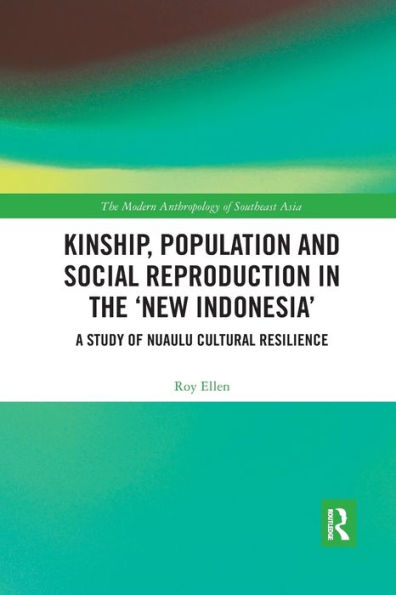
Kinship, population and social reproduction the 'new Indonesia': A study of Nuaulu cultural resilience in Franklin, TN
Current price: $55.99
Barnes and Noble
Kinship, population and social reproduction the 'new Indonesia': A study of Nuaulu cultural resilience in Franklin, TN
Current price: $55.99
Loading Inventory...
Size: Paperback
Nuaulu people on the Indonesian island of Seram have displayed remarkable linguistic and cultural resilience over a period of 50 years. In 1970 their language and traditional culture was widely considered ‘endangered.’ Despite this, Nuaulu have not only maintained their animist identity and shown a robust ability to reproduce 'traditional' ritual performances, but have exhibited both population growth and increasing assertiveness in the projection of their interests through the politics of the ‘New Indonesia’.
This book examines how kinship organization and marriage patterns have responded to some of these challenges, and suggests that the retention of core institutions of descent and exchange are the consequence of population growth, which in turn has enabled ritual reproduction, and thereby effectively maintained a distinct identity in relation to the surrounding majority culture. Low conversion rates to other religions, and the political consequences of Indonesian ‘reformasi’, have also contributed to a situation in which, despite changes in the material basis of their lives, Nuaulu have projected a strong independent identity and organisation. In terms of debates around kinship in eastern Indonesia, this book argues that older notions of prescriptive social structure are fundamentally flawed. Kinship institutions are real enough, but the distinction between genealogical and classificatory relations is often unimportant; all that matters in the end is that the arrangements entered into between clans and houses permit both biological and social reproduction, and that the latter ultimately serves the former.
An important contribution to the study of the peoples of Eastern Indonesia, it highlights a 'good news story' about the successful retention of a traditional way of life in an area that has had a troubled recent history. It will be of interest to academics in various fields of anthropology, in particular the study of kinship and Southeast Asian societies.
This book examines how kinship organization and marriage patterns have responded to some of these challenges, and suggests that the retention of core institutions of descent and exchange are the consequence of population growth, which in turn has enabled ritual reproduction, and thereby effectively maintained a distinct identity in relation to the surrounding majority culture. Low conversion rates to other religions, and the political consequences of Indonesian ‘reformasi’, have also contributed to a situation in which, despite changes in the material basis of their lives, Nuaulu have projected a strong independent identity and organisation. In terms of debates around kinship in eastern Indonesia, this book argues that older notions of prescriptive social structure are fundamentally flawed. Kinship institutions are real enough, but the distinction between genealogical and classificatory relations is often unimportant; all that matters in the end is that the arrangements entered into between clans and houses permit both biological and social reproduction, and that the latter ultimately serves the former.
An important contribution to the study of the peoples of Eastern Indonesia, it highlights a 'good news story' about the successful retention of a traditional way of life in an area that has had a troubled recent history. It will be of interest to academics in various fields of anthropology, in particular the study of kinship and Southeast Asian societies.
Nuaulu people on the Indonesian island of Seram have displayed remarkable linguistic and cultural resilience over a period of 50 years. In 1970 their language and traditional culture was widely considered ‘endangered.’ Despite this, Nuaulu have not only maintained their animist identity and shown a robust ability to reproduce 'traditional' ritual performances, but have exhibited both population growth and increasing assertiveness in the projection of their interests through the politics of the ‘New Indonesia’.
This book examines how kinship organization and marriage patterns have responded to some of these challenges, and suggests that the retention of core institutions of descent and exchange are the consequence of population growth, which in turn has enabled ritual reproduction, and thereby effectively maintained a distinct identity in relation to the surrounding majority culture. Low conversion rates to other religions, and the political consequences of Indonesian ‘reformasi’, have also contributed to a situation in which, despite changes in the material basis of their lives, Nuaulu have projected a strong independent identity and organisation. In terms of debates around kinship in eastern Indonesia, this book argues that older notions of prescriptive social structure are fundamentally flawed. Kinship institutions are real enough, but the distinction between genealogical and classificatory relations is often unimportant; all that matters in the end is that the arrangements entered into between clans and houses permit both biological and social reproduction, and that the latter ultimately serves the former.
An important contribution to the study of the peoples of Eastern Indonesia, it highlights a 'good news story' about the successful retention of a traditional way of life in an area that has had a troubled recent history. It will be of interest to academics in various fields of anthropology, in particular the study of kinship and Southeast Asian societies.
This book examines how kinship organization and marriage patterns have responded to some of these challenges, and suggests that the retention of core institutions of descent and exchange are the consequence of population growth, which in turn has enabled ritual reproduction, and thereby effectively maintained a distinct identity in relation to the surrounding majority culture. Low conversion rates to other religions, and the political consequences of Indonesian ‘reformasi’, have also contributed to a situation in which, despite changes in the material basis of their lives, Nuaulu have projected a strong independent identity and organisation. In terms of debates around kinship in eastern Indonesia, this book argues that older notions of prescriptive social structure are fundamentally flawed. Kinship institutions are real enough, but the distinction between genealogical and classificatory relations is often unimportant; all that matters in the end is that the arrangements entered into between clans and houses permit both biological and social reproduction, and that the latter ultimately serves the former.
An important contribution to the study of the peoples of Eastern Indonesia, it highlights a 'good news story' about the successful retention of a traditional way of life in an area that has had a troubled recent history. It will be of interest to academics in various fields of anthropology, in particular the study of kinship and Southeast Asian societies.
You May Also Like








More About Barnes and Noble at CoolSprings Galleria
Barnes & Noble is the world’s largest retail bookseller and a leading retailer of content, digital media and educational products. Our Nook Digital business offers a lineup of NOOK® tablets and e-Readers and an expansive collection of digital reading content through the NOOK Store®. Barnes & Noble’s mission is to operate the best omni-channel specialty retail business in America, helping both our customers and booksellers reach their aspirations, while being a credit to the communities we serve.
1800 Galleria Blvd #1310, Franklin, TN 37067, United States
Find Barnes and Noble at CoolSprings Galleria in Franklin, TN
Visit Barnes and Noble at CoolSprings Galleria in Franklin, TN
