
Home
Knowledge, Reason, and Taste: Kant's Response to Hume
Barnes and Noble
Loading Inventory...
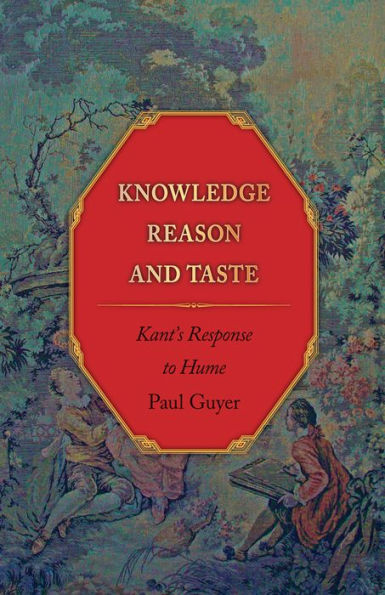
Knowledge, Reason, and Taste: Kant's Response to Hume in Franklin, TN
Current price: $68.00
Barnes and Noble
Knowledge, Reason, and Taste: Kant's Response to Hume in Franklin, TN
Current price: $68.00
Loading Inventory...
Size: Hardcover
Immanuel Kant famously said that he was awoken from his "dogmatic slumbers," and led to question the possibility of metaphysics, by David Hume's doubts about causation. Because of this, many philosophers have viewed Hume's influence on Kant as limited to metaphysics. More recently, some philosophers have questioned whether even Kant's metaphysics was really motivated by Hume. In
Knowledge, Reason, and Taste
, renowned Kant scholar Paul Guyer challenges both of these views. He argues that Kant's entire philosophyincluding his moral philosophy, aesthetics, and teleology, as well as his metaphysicscan fruitfully be read as an engagement with Hume.
In this book, the first to describe and assess Hume's influence throughout Kant's philosophy, Guyer shows where Kant agrees or disagrees with Hume, and where Kant does or doesn't appear to resolve Hume's doubts. In doing so, Guyer examines the progress both Kant and Hume made on enduring questions about causes, objects, selves, taste, moral principles and motivations, and purpose and design in nature. Finally, Guyer looks at questions Kant and Hume left open to their successors.
Knowledge, Reason, and Taste
, renowned Kant scholar Paul Guyer challenges both of these views. He argues that Kant's entire philosophyincluding his moral philosophy, aesthetics, and teleology, as well as his metaphysicscan fruitfully be read as an engagement with Hume.
In this book, the first to describe and assess Hume's influence throughout Kant's philosophy, Guyer shows where Kant agrees or disagrees with Hume, and where Kant does or doesn't appear to resolve Hume's doubts. In doing so, Guyer examines the progress both Kant and Hume made on enduring questions about causes, objects, selves, taste, moral principles and motivations, and purpose and design in nature. Finally, Guyer looks at questions Kant and Hume left open to their successors.
Immanuel Kant famously said that he was awoken from his "dogmatic slumbers," and led to question the possibility of metaphysics, by David Hume's doubts about causation. Because of this, many philosophers have viewed Hume's influence on Kant as limited to metaphysics. More recently, some philosophers have questioned whether even Kant's metaphysics was really motivated by Hume. In
Knowledge, Reason, and Taste
, renowned Kant scholar Paul Guyer challenges both of these views. He argues that Kant's entire philosophyincluding his moral philosophy, aesthetics, and teleology, as well as his metaphysicscan fruitfully be read as an engagement with Hume.
In this book, the first to describe and assess Hume's influence throughout Kant's philosophy, Guyer shows where Kant agrees or disagrees with Hume, and where Kant does or doesn't appear to resolve Hume's doubts. In doing so, Guyer examines the progress both Kant and Hume made on enduring questions about causes, objects, selves, taste, moral principles and motivations, and purpose and design in nature. Finally, Guyer looks at questions Kant and Hume left open to their successors.
Knowledge, Reason, and Taste
, renowned Kant scholar Paul Guyer challenges both of these views. He argues that Kant's entire philosophyincluding his moral philosophy, aesthetics, and teleology, as well as his metaphysicscan fruitfully be read as an engagement with Hume.
In this book, the first to describe and assess Hume's influence throughout Kant's philosophy, Guyer shows where Kant agrees or disagrees with Hume, and where Kant does or doesn't appear to resolve Hume's doubts. In doing so, Guyer examines the progress both Kant and Hume made on enduring questions about causes, objects, selves, taste, moral principles and motivations, and purpose and design in nature. Finally, Guyer looks at questions Kant and Hume left open to their successors.
You May Also Like









More About Barnes and Noble at CoolSprings Galleria
Barnes & Noble is the world’s largest retail bookseller and a leading retailer of content, digital media and educational products. Our Nook Digital business offers a lineup of NOOK® tablets and e-Readers and an expansive collection of digital reading content through the NOOK Store®. Barnes & Noble’s mission is to operate the best omni-channel specialty retail business in America, helping both our customers and booksellers reach their aspirations, while being a credit to the communities we serve.
1800 Galleria Blvd #1310, Franklin, TN 37067, United States
Find Barnes and Noble at CoolSprings Galleria in Franklin, TN
Visit Barnes and Noble at CoolSprings Galleria in Franklin, TN