
Home
Leveraging Sovereignty: Kauikeaouli's Global Strategy for the Hawaiian Nation, 1825-1854
Barnes and Noble
Loading Inventory...
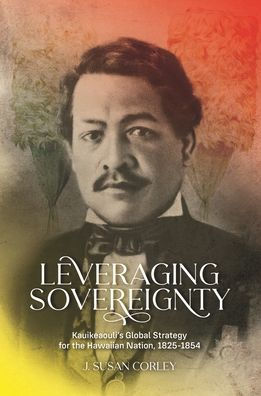
Leveraging Sovereignty: Kauikeaouli's Global Strategy for the Hawaiian Nation, 1825-1854 in Franklin, TN
Current price: $28.00
Barnes and Noble
Leveraging Sovereignty: Kauikeaouli's Global Strategy for the Hawaiian Nation, 1825-1854 in Franklin, TN
Current price: $28.00
Loading Inventory...
Size: OS
Leveraging Sovereignty: Kauikeaouli’s Global Strategy for the Hawaiian Nation, 1825–1854
examines the leadership of Hawai‘i’s longest reigning monarch, King Kamehameha III. It highlights the early 1840s, when Kauikeaouli secured recognition from the United States, Britain, and France that he ruled over an independent and sovereign Hawaiian state. Britain and France, however, sought to limit his powers through forced extraterritorial treaties, and the king struggled to regain ruling control over key governance functions. At the same time, foreign merchants and traders increasingly dominated Hawai‘i’s economic activity, demanded institutional and social changes, and threatened to overwhelm the Hawaiian population already decimated by disease and outmigration.
Kauikeaouli quickly responded to threats to the monarchy’s power with a comprehensive strategy to regain and maintain full functional control. In
Leveraging Sovereignty,
J. Susan Corley upends the popular narrative begun in Kauikeaouli’s own lifetime that his white ministers ruled in his stead. Adding a new layer of understanding, Corley’s meticulous research reveals insights into historical events and Kauikeaouli’s reign. She supports her findings of the king’s policies and tactical negotiations with an extensive use of Kamehameha III’s own commands as recorded in kingdom archives, letters and documents from government records, and contemporary Hawaiian and Englishlanguage newspaper accounts.
While this book includes an overview of the kingdom’s administrative structure in the 1840s, its analysis focuses on the origination, implementation, and effectiveness of key statecraft tactics. The king’s carefully planned strategy relied on the acquisition of western ministerial skills and of an Englishlanguage newspaper (the
Polynesian
) to publicly defend his sovereign rights and privileges at home and abroad. He ensured the enactment of legislation to defeat foreigners’ challenges by strengthening juridical processes and safeguarding landtitle rights for Hawaiians, and he deftly managed the multistage renegotiation of unequal international treaties.
By the end of his reign in 1854, Kamehameha III had succeeded: The king had reclaimed unrestricted power and authority over all governance areas of the independent, sovereign Hawaiian state. He delivered to his successor Kamehameha IV a restructured, constitutional state whose sovereign status was protected by the three maritime powers of that time.
examines the leadership of Hawai‘i’s longest reigning monarch, King Kamehameha III. It highlights the early 1840s, when Kauikeaouli secured recognition from the United States, Britain, and France that he ruled over an independent and sovereign Hawaiian state. Britain and France, however, sought to limit his powers through forced extraterritorial treaties, and the king struggled to regain ruling control over key governance functions. At the same time, foreign merchants and traders increasingly dominated Hawai‘i’s economic activity, demanded institutional and social changes, and threatened to overwhelm the Hawaiian population already decimated by disease and outmigration.
Kauikeaouli quickly responded to threats to the monarchy’s power with a comprehensive strategy to regain and maintain full functional control. In
Leveraging Sovereignty,
J. Susan Corley upends the popular narrative begun in Kauikeaouli’s own lifetime that his white ministers ruled in his stead. Adding a new layer of understanding, Corley’s meticulous research reveals insights into historical events and Kauikeaouli’s reign. She supports her findings of the king’s policies and tactical negotiations with an extensive use of Kamehameha III’s own commands as recorded in kingdom archives, letters and documents from government records, and contemporary Hawaiian and Englishlanguage newspaper accounts.
While this book includes an overview of the kingdom’s administrative structure in the 1840s, its analysis focuses on the origination, implementation, and effectiveness of key statecraft tactics. The king’s carefully planned strategy relied on the acquisition of western ministerial skills and of an Englishlanguage newspaper (the
Polynesian
) to publicly defend his sovereign rights and privileges at home and abroad. He ensured the enactment of legislation to defeat foreigners’ challenges by strengthening juridical processes and safeguarding landtitle rights for Hawaiians, and he deftly managed the multistage renegotiation of unequal international treaties.
By the end of his reign in 1854, Kamehameha III had succeeded: The king had reclaimed unrestricted power and authority over all governance areas of the independent, sovereign Hawaiian state. He delivered to his successor Kamehameha IV a restructured, constitutional state whose sovereign status was protected by the three maritime powers of that time.
Leveraging Sovereignty: Kauikeaouli’s Global Strategy for the Hawaiian Nation, 1825–1854
examines the leadership of Hawai‘i’s longest reigning monarch, King Kamehameha III. It highlights the early 1840s, when Kauikeaouli secured recognition from the United States, Britain, and France that he ruled over an independent and sovereign Hawaiian state. Britain and France, however, sought to limit his powers through forced extraterritorial treaties, and the king struggled to regain ruling control over key governance functions. At the same time, foreign merchants and traders increasingly dominated Hawai‘i’s economic activity, demanded institutional and social changes, and threatened to overwhelm the Hawaiian population already decimated by disease and outmigration.
Kauikeaouli quickly responded to threats to the monarchy’s power with a comprehensive strategy to regain and maintain full functional control. In
Leveraging Sovereignty,
J. Susan Corley upends the popular narrative begun in Kauikeaouli’s own lifetime that his white ministers ruled in his stead. Adding a new layer of understanding, Corley’s meticulous research reveals insights into historical events and Kauikeaouli’s reign. She supports her findings of the king’s policies and tactical negotiations with an extensive use of Kamehameha III’s own commands as recorded in kingdom archives, letters and documents from government records, and contemporary Hawaiian and Englishlanguage newspaper accounts.
While this book includes an overview of the kingdom’s administrative structure in the 1840s, its analysis focuses on the origination, implementation, and effectiveness of key statecraft tactics. The king’s carefully planned strategy relied on the acquisition of western ministerial skills and of an Englishlanguage newspaper (the
Polynesian
) to publicly defend his sovereign rights and privileges at home and abroad. He ensured the enactment of legislation to defeat foreigners’ challenges by strengthening juridical processes and safeguarding landtitle rights for Hawaiians, and he deftly managed the multistage renegotiation of unequal international treaties.
By the end of his reign in 1854, Kamehameha III had succeeded: The king had reclaimed unrestricted power and authority over all governance areas of the independent, sovereign Hawaiian state. He delivered to his successor Kamehameha IV a restructured, constitutional state whose sovereign status was protected by the three maritime powers of that time.
examines the leadership of Hawai‘i’s longest reigning monarch, King Kamehameha III. It highlights the early 1840s, when Kauikeaouli secured recognition from the United States, Britain, and France that he ruled over an independent and sovereign Hawaiian state. Britain and France, however, sought to limit his powers through forced extraterritorial treaties, and the king struggled to regain ruling control over key governance functions. At the same time, foreign merchants and traders increasingly dominated Hawai‘i’s economic activity, demanded institutional and social changes, and threatened to overwhelm the Hawaiian population already decimated by disease and outmigration.
Kauikeaouli quickly responded to threats to the monarchy’s power with a comprehensive strategy to regain and maintain full functional control. In
Leveraging Sovereignty,
J. Susan Corley upends the popular narrative begun in Kauikeaouli’s own lifetime that his white ministers ruled in his stead. Adding a new layer of understanding, Corley’s meticulous research reveals insights into historical events and Kauikeaouli’s reign. She supports her findings of the king’s policies and tactical negotiations with an extensive use of Kamehameha III’s own commands as recorded in kingdom archives, letters and documents from government records, and contemporary Hawaiian and Englishlanguage newspaper accounts.
While this book includes an overview of the kingdom’s administrative structure in the 1840s, its analysis focuses on the origination, implementation, and effectiveness of key statecraft tactics. The king’s carefully planned strategy relied on the acquisition of western ministerial skills and of an Englishlanguage newspaper (the
Polynesian
) to publicly defend his sovereign rights and privileges at home and abroad. He ensured the enactment of legislation to defeat foreigners’ challenges by strengthening juridical processes and safeguarding landtitle rights for Hawaiians, and he deftly managed the multistage renegotiation of unequal international treaties.
By the end of his reign in 1854, Kamehameha III had succeeded: The king had reclaimed unrestricted power and authority over all governance areas of the independent, sovereign Hawaiian state. He delivered to his successor Kamehameha IV a restructured, constitutional state whose sovereign status was protected by the three maritime powers of that time.
You May Also Like














More About Barnes and Noble at CoolSprings Galleria
Barnes & Noble is the world’s largest retail bookseller and a leading retailer of content, digital media and educational products. Our Nook Digital business offers a lineup of NOOK® tablets and e-Readers and an expansive collection of digital reading content through the NOOK Store®. Barnes & Noble’s mission is to operate the best omni-channel specialty retail business in America, helping both our customers and booksellers reach their aspirations, while being a credit to the communities we serve.
1800 Galleria Blvd #1310, Franklin, TN 37067, United States
Find Barnes and Noble at CoolSprings Galleria in Franklin, TN
Visit Barnes and Noble at CoolSprings Galleria in Franklin, TN
