
Home
Leviathan's Shadow: The 17th Century Philosophical Responses to Hobbesian Political Theory
Barnes and Noble
Loading Inventory...
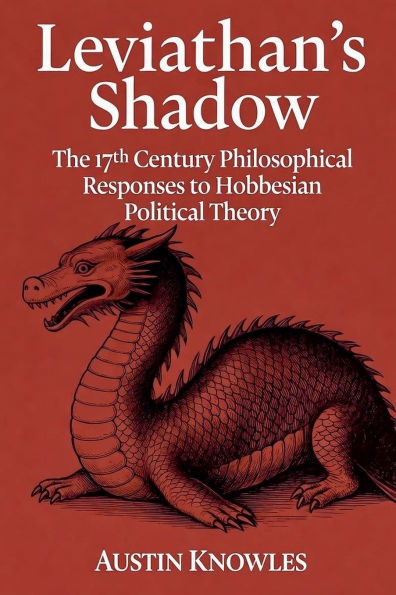
Leviathan's Shadow: The 17th Century Philosophical Responses to Hobbesian Political Theory in Franklin, TN
Current price: $14.26
Barnes and Noble
Leviathan's Shadow: The 17th Century Philosophical Responses to Hobbesian Political Theory in Franklin, TN
Current price: $14.26
Loading Inventory...
Size: OS
When Thomas Hobbes published his masterpiece
Leviathan
in 1651, he unleashed one of the most explosive and controversial political theories ever written. In the tumultuous aftermath of the English Civil War, Hobbes dared to suggest that humans were naturally selfish creatures who required an all-powerful sovereign to prevent society from collapsing into a "war of all against all." His materialist philosophy shocked contemporaries, while his vision of absolute sovereignty threatened traditional conceptions of both church and state.
Leviathan's Shadow
offers the first comprehensive account of how Hobbes's revolutionary ideas were received, contested, and transformed by his contemporaries during the latter half of the seventeenth century. Drawing on rich primary sources, this gripping intellectual history reveals how thinkers across Europe-from Anglican bishops to Catholic theologians, from Cambridge Platonists to Dutch republicans-grappled with Hobbes's radical vision and developed their own compelling alternatives.
Meet John Bramhall, the exiled bishop who condemned Hobbes as the "Monster of Malmesbury," and Robert Filmer, who countered with divine right patriarchalism. Witness the Oxford experimentalists, led by Robert Boyle, who rejected Hobbes's deductive approach to science in favor of collective experimentation. Follow the radical philosopher Spinoza, who transformed Hobbesian ideas into a startling defense of democracy. Discover how Pierre Nicole and the French Jansenists found in Hobbes's psychology of self-interest surprising support for their Augustinian theology.
From the royal courts to underground philosophical societies, from university debates to clandestine manuscripts,
traces how engagement with Hobbes shaped the modern world-even among those who most vehemently rejected him. This riveting account illuminates not only Hobbes's enduring significance but also the birth pangs of modern political thought as it emerged from the intellectual ferment of the seventeenth century.
Essential reading for anyone interested in the origins of liberalism, the relationship between religion and politics, or the philosophical foundations of modernity,
brings to life the passionate debates that defined an era and continue to resonate today. In our age of political polarization, resurgent authoritarianism, and contested truth, Hobbes's questions-about human nature, political obligation, and the limits of power-have never been more relevant.
Leviathan
in 1651, he unleashed one of the most explosive and controversial political theories ever written. In the tumultuous aftermath of the English Civil War, Hobbes dared to suggest that humans were naturally selfish creatures who required an all-powerful sovereign to prevent society from collapsing into a "war of all against all." His materialist philosophy shocked contemporaries, while his vision of absolute sovereignty threatened traditional conceptions of both church and state.
Leviathan's Shadow
offers the first comprehensive account of how Hobbes's revolutionary ideas were received, contested, and transformed by his contemporaries during the latter half of the seventeenth century. Drawing on rich primary sources, this gripping intellectual history reveals how thinkers across Europe-from Anglican bishops to Catholic theologians, from Cambridge Platonists to Dutch republicans-grappled with Hobbes's radical vision and developed their own compelling alternatives.
Meet John Bramhall, the exiled bishop who condemned Hobbes as the "Monster of Malmesbury," and Robert Filmer, who countered with divine right patriarchalism. Witness the Oxford experimentalists, led by Robert Boyle, who rejected Hobbes's deductive approach to science in favor of collective experimentation. Follow the radical philosopher Spinoza, who transformed Hobbesian ideas into a startling defense of democracy. Discover how Pierre Nicole and the French Jansenists found in Hobbes's psychology of self-interest surprising support for their Augustinian theology.
From the royal courts to underground philosophical societies, from university debates to clandestine manuscripts,
traces how engagement with Hobbes shaped the modern world-even among those who most vehemently rejected him. This riveting account illuminates not only Hobbes's enduring significance but also the birth pangs of modern political thought as it emerged from the intellectual ferment of the seventeenth century.
Essential reading for anyone interested in the origins of liberalism, the relationship between religion and politics, or the philosophical foundations of modernity,
brings to life the passionate debates that defined an era and continue to resonate today. In our age of political polarization, resurgent authoritarianism, and contested truth, Hobbes's questions-about human nature, political obligation, and the limits of power-have never been more relevant.
When Thomas Hobbes published his masterpiece
Leviathan
in 1651, he unleashed one of the most explosive and controversial political theories ever written. In the tumultuous aftermath of the English Civil War, Hobbes dared to suggest that humans were naturally selfish creatures who required an all-powerful sovereign to prevent society from collapsing into a "war of all against all." His materialist philosophy shocked contemporaries, while his vision of absolute sovereignty threatened traditional conceptions of both church and state.
Leviathan's Shadow
offers the first comprehensive account of how Hobbes's revolutionary ideas were received, contested, and transformed by his contemporaries during the latter half of the seventeenth century. Drawing on rich primary sources, this gripping intellectual history reveals how thinkers across Europe-from Anglican bishops to Catholic theologians, from Cambridge Platonists to Dutch republicans-grappled with Hobbes's radical vision and developed their own compelling alternatives.
Meet John Bramhall, the exiled bishop who condemned Hobbes as the "Monster of Malmesbury," and Robert Filmer, who countered with divine right patriarchalism. Witness the Oxford experimentalists, led by Robert Boyle, who rejected Hobbes's deductive approach to science in favor of collective experimentation. Follow the radical philosopher Spinoza, who transformed Hobbesian ideas into a startling defense of democracy. Discover how Pierre Nicole and the French Jansenists found in Hobbes's psychology of self-interest surprising support for their Augustinian theology.
From the royal courts to underground philosophical societies, from university debates to clandestine manuscripts,
traces how engagement with Hobbes shaped the modern world-even among those who most vehemently rejected him. This riveting account illuminates not only Hobbes's enduring significance but also the birth pangs of modern political thought as it emerged from the intellectual ferment of the seventeenth century.
Essential reading for anyone interested in the origins of liberalism, the relationship between religion and politics, or the philosophical foundations of modernity,
brings to life the passionate debates that defined an era and continue to resonate today. In our age of political polarization, resurgent authoritarianism, and contested truth, Hobbes's questions-about human nature, political obligation, and the limits of power-have never been more relevant.
Leviathan
in 1651, he unleashed one of the most explosive and controversial political theories ever written. In the tumultuous aftermath of the English Civil War, Hobbes dared to suggest that humans were naturally selfish creatures who required an all-powerful sovereign to prevent society from collapsing into a "war of all against all." His materialist philosophy shocked contemporaries, while his vision of absolute sovereignty threatened traditional conceptions of both church and state.
Leviathan's Shadow
offers the first comprehensive account of how Hobbes's revolutionary ideas were received, contested, and transformed by his contemporaries during the latter half of the seventeenth century. Drawing on rich primary sources, this gripping intellectual history reveals how thinkers across Europe-from Anglican bishops to Catholic theologians, from Cambridge Platonists to Dutch republicans-grappled with Hobbes's radical vision and developed their own compelling alternatives.
Meet John Bramhall, the exiled bishop who condemned Hobbes as the "Monster of Malmesbury," and Robert Filmer, who countered with divine right patriarchalism. Witness the Oxford experimentalists, led by Robert Boyle, who rejected Hobbes's deductive approach to science in favor of collective experimentation. Follow the radical philosopher Spinoza, who transformed Hobbesian ideas into a startling defense of democracy. Discover how Pierre Nicole and the French Jansenists found in Hobbes's psychology of self-interest surprising support for their Augustinian theology.
From the royal courts to underground philosophical societies, from university debates to clandestine manuscripts,
traces how engagement with Hobbes shaped the modern world-even among those who most vehemently rejected him. This riveting account illuminates not only Hobbes's enduring significance but also the birth pangs of modern political thought as it emerged from the intellectual ferment of the seventeenth century.
Essential reading for anyone interested in the origins of liberalism, the relationship between religion and politics, or the philosophical foundations of modernity,
brings to life the passionate debates that defined an era and continue to resonate today. In our age of political polarization, resurgent authoritarianism, and contested truth, Hobbes's questions-about human nature, political obligation, and the limits of power-have never been more relevant.
You May Also Like










More About Barnes and Noble at CoolSprings Galleria
Barnes & Noble is the world’s largest retail bookseller and a leading retailer of content, digital media and educational products. Our Nook Digital business offers a lineup of NOOK® tablets and e-Readers and an expansive collection of digital reading content through the NOOK Store®. Barnes & Noble’s mission is to operate the best omni-channel specialty retail business in America, helping both our customers and booksellers reach their aspirations, while being a credit to the communities we serve.
1800 Galleria Blvd #1310, Franklin, TN 37067, United States
Find Barnes and Noble at CoolSprings Galleria in Franklin, TN
Visit Barnes and Noble at CoolSprings Galleria in Franklin, TN
