
Home
Lost Frogs and Hot Snakes: Herpetologists' Tales from the Field
Barnes and Noble
Loading Inventory...
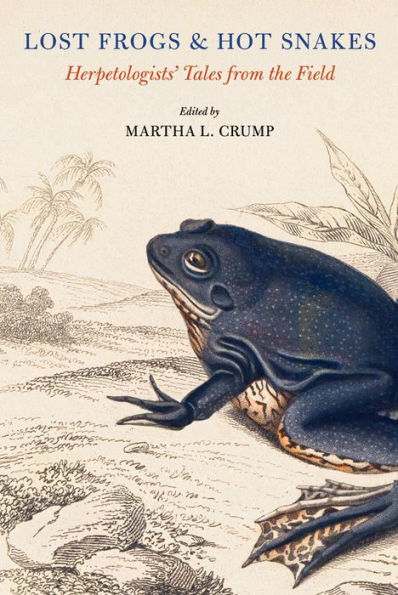
Lost Frogs and Hot Snakes: Herpetologists' Tales from the Field in Franklin, TN
Current price: $26.95
Barnes and Noble
Lost Frogs and Hot Snakes: Herpetologists' Tales from the Field in Franklin, TN
Current price: $26.95
Loading Inventory...
Size: Paperback
Lost Frogs and Hot Snakes
reveals the thrills and travails that herpetologists experience when working with amphibians and reptiles in the wild.
With essays from fifty field biologists, this volume, edited by Martha L. Crump, presents a multifaceted yet intimate look at life in pursuit of knowledge about the natural world.
From the beaches of Peru to the mountains of China, the stories in this collection place readers in the boots of field biologists as they watch, count, experiment, and survey. Some recall mishaps and misadventures—contending with leeches, dangling off a precipice while in a truck. Others tell of onceinalifetime encounters—discovering a new frog species, spotting a rare snake. Together, these stories offer an understanding of what field biology is, what field biologists do, and how they go about doing it.
Written with candor, warmth, and a dash of humor, the stories in
will encourage readers to appreciate the value of engaging with nature and of the amphibians and reptiles so critical to the vitality of our planet.
reveals the thrills and travails that herpetologists experience when working with amphibians and reptiles in the wild.
With essays from fifty field biologists, this volume, edited by Martha L. Crump, presents a multifaceted yet intimate look at life in pursuit of knowledge about the natural world.
From the beaches of Peru to the mountains of China, the stories in this collection place readers in the boots of field biologists as they watch, count, experiment, and survey. Some recall mishaps and misadventures—contending with leeches, dangling off a precipice while in a truck. Others tell of onceinalifetime encounters—discovering a new frog species, spotting a rare snake. Together, these stories offer an understanding of what field biology is, what field biologists do, and how they go about doing it.
Written with candor, warmth, and a dash of humor, the stories in
will encourage readers to appreciate the value of engaging with nature and of the amphibians and reptiles so critical to the vitality of our planet.
Lost Frogs and Hot Snakes
reveals the thrills and travails that herpetologists experience when working with amphibians and reptiles in the wild.
With essays from fifty field biologists, this volume, edited by Martha L. Crump, presents a multifaceted yet intimate look at life in pursuit of knowledge about the natural world.
From the beaches of Peru to the mountains of China, the stories in this collection place readers in the boots of field biologists as they watch, count, experiment, and survey. Some recall mishaps and misadventures—contending with leeches, dangling off a precipice while in a truck. Others tell of onceinalifetime encounters—discovering a new frog species, spotting a rare snake. Together, these stories offer an understanding of what field biology is, what field biologists do, and how they go about doing it.
Written with candor, warmth, and a dash of humor, the stories in
will encourage readers to appreciate the value of engaging with nature and of the amphibians and reptiles so critical to the vitality of our planet.
reveals the thrills and travails that herpetologists experience when working with amphibians and reptiles in the wild.
With essays from fifty field biologists, this volume, edited by Martha L. Crump, presents a multifaceted yet intimate look at life in pursuit of knowledge about the natural world.
From the beaches of Peru to the mountains of China, the stories in this collection place readers in the boots of field biologists as they watch, count, experiment, and survey. Some recall mishaps and misadventures—contending with leeches, dangling off a precipice while in a truck. Others tell of onceinalifetime encounters—discovering a new frog species, spotting a rare snake. Together, these stories offer an understanding of what field biology is, what field biologists do, and how they go about doing it.
Written with candor, warmth, and a dash of humor, the stories in
will encourage readers to appreciate the value of engaging with nature and of the amphibians and reptiles so critical to the vitality of our planet.
You May Also Like
















More About Barnes and Noble at CoolSprings Galleria
Barnes & Noble is the world’s largest retail bookseller and a leading retailer of content, digital media and educational products. Our Nook Digital business offers a lineup of NOOK® tablets and e-Readers and an expansive collection of digital reading content through the NOOK Store®. Barnes & Noble’s mission is to operate the best omni-channel specialty retail business in America, helping both our customers and booksellers reach their aspirations, while being a credit to the communities we serve.
1800 Galleria Blvd #1310, Franklin, TN 37067, United States
Find Barnes and Noble at CoolSprings Galleria in Franklin, TN
Visit Barnes and Noble at CoolSprings Galleria in Franklin, TN
