
Home
Machiavelli's Gospel: The Critique of Christianity in "The Prince"
Barnes and Noble
Loading Inventory...
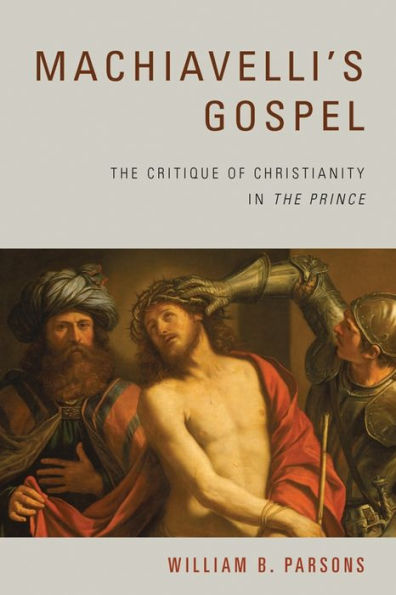
Machiavelli's Gospel: The Critique of Christianity in "The Prince" in Franklin, TN
Current price: $110.00
Barnes and Noble
Machiavelli's Gospel: The Critique of Christianity in "The Prince" in Franklin, TN
Current price: $110.00
Loading Inventory...
Size: OS
A new reading of
The Prince
, arguing that the classic text is neither a scientific treatise on politics nor a patriotic tract but rather an artful, elaborated critique of the dominant religion of his time
The leading interpretations of
focus on Machiavelli's historical context, but they give little attention to the source on which the moral and political thought of Machiavelli's sixteenth century was based, the Christian Bible. In this study of
, William Parsons plumbs Machiavelli's allusions to the Bible, along with his statements on the Church, and shows that Machiavelli was a careful reader of the Bible and an astute observer of the Church. On this basis Parsons contends that Machiavelli's teaching in
is instructively compared with that of the Church's teacher, Jesus Christ.
Parsons thus undertakes what recent interpreters of
have not done: contrast Machiavelli's advice with the teaching of Christ. The result is a new reading of
, revealing in Machiavelli's political thought a systematic critique of the NewTestament and its model for human life, Christ. In this commentary on one of the greatest works on politics ever written, Parsons not only challenges the most recent interpretations of
but also sheds new light onthe classic interpretation that Machiavelli was a teacher of immorality.
William Parsons is associate professor of political science at Carroll College.
The Prince
, arguing that the classic text is neither a scientific treatise on politics nor a patriotic tract but rather an artful, elaborated critique of the dominant religion of his time
The leading interpretations of
focus on Machiavelli's historical context, but they give little attention to the source on which the moral and political thought of Machiavelli's sixteenth century was based, the Christian Bible. In this study of
, William Parsons plumbs Machiavelli's allusions to the Bible, along with his statements on the Church, and shows that Machiavelli was a careful reader of the Bible and an astute observer of the Church. On this basis Parsons contends that Machiavelli's teaching in
is instructively compared with that of the Church's teacher, Jesus Christ.
Parsons thus undertakes what recent interpreters of
have not done: contrast Machiavelli's advice with the teaching of Christ. The result is a new reading of
, revealing in Machiavelli's political thought a systematic critique of the NewTestament and its model for human life, Christ. In this commentary on one of the greatest works on politics ever written, Parsons not only challenges the most recent interpretations of
but also sheds new light onthe classic interpretation that Machiavelli was a teacher of immorality.
William Parsons is associate professor of political science at Carroll College.
A new reading of
The Prince
, arguing that the classic text is neither a scientific treatise on politics nor a patriotic tract but rather an artful, elaborated critique of the dominant religion of his time
The leading interpretations of
focus on Machiavelli's historical context, but they give little attention to the source on which the moral and political thought of Machiavelli's sixteenth century was based, the Christian Bible. In this study of
, William Parsons plumbs Machiavelli's allusions to the Bible, along with his statements on the Church, and shows that Machiavelli was a careful reader of the Bible and an astute observer of the Church. On this basis Parsons contends that Machiavelli's teaching in
is instructively compared with that of the Church's teacher, Jesus Christ.
Parsons thus undertakes what recent interpreters of
have not done: contrast Machiavelli's advice with the teaching of Christ. The result is a new reading of
, revealing in Machiavelli's political thought a systematic critique of the NewTestament and its model for human life, Christ. In this commentary on one of the greatest works on politics ever written, Parsons not only challenges the most recent interpretations of
but also sheds new light onthe classic interpretation that Machiavelli was a teacher of immorality.
William Parsons is associate professor of political science at Carroll College.
The Prince
, arguing that the classic text is neither a scientific treatise on politics nor a patriotic tract but rather an artful, elaborated critique of the dominant religion of his time
The leading interpretations of
focus on Machiavelli's historical context, but they give little attention to the source on which the moral and political thought of Machiavelli's sixteenth century was based, the Christian Bible. In this study of
, William Parsons plumbs Machiavelli's allusions to the Bible, along with his statements on the Church, and shows that Machiavelli was a careful reader of the Bible and an astute observer of the Church. On this basis Parsons contends that Machiavelli's teaching in
is instructively compared with that of the Church's teacher, Jesus Christ.
Parsons thus undertakes what recent interpreters of
have not done: contrast Machiavelli's advice with the teaching of Christ. The result is a new reading of
, revealing in Machiavelli's political thought a systematic critique of the NewTestament and its model for human life, Christ. In this commentary on one of the greatest works on politics ever written, Parsons not only challenges the most recent interpretations of
but also sheds new light onthe classic interpretation that Machiavelli was a teacher of immorality.
William Parsons is associate professor of political science at Carroll College.
You May Also Like









More About Barnes and Noble at CoolSprings Galleria
Barnes & Noble is the world’s largest retail bookseller and a leading retailer of content, digital media and educational products. Our Nook Digital business offers a lineup of NOOK® tablets and e-Readers and an expansive collection of digital reading content through the NOOK Store®. Barnes & Noble’s mission is to operate the best omni-channel specialty retail business in America, helping both our customers and booksellers reach their aspirations, while being a credit to the communities we serve.
1800 Galleria Blvd #1310, Franklin, TN 37067, United States
Find Barnes and Noble at CoolSprings Galleria in Franklin, TN
Visit Barnes and Noble at CoolSprings Galleria in Franklin, TN
