
Home
Made in Niugini: Technology in the Highlands of Papua New Guinea
Barnes and Noble
Loading Inventory...
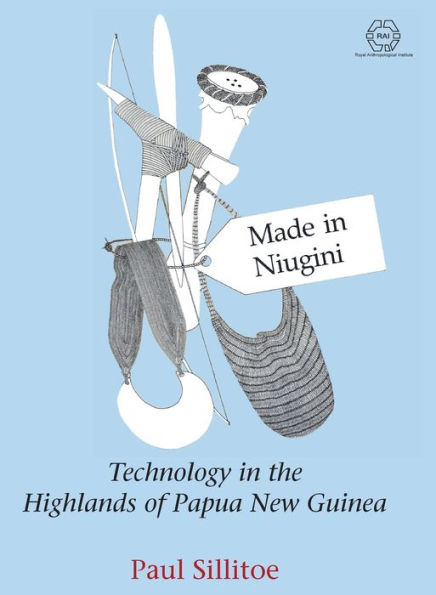
Made in Niugini: Technology in the Highlands of Papua New Guinea in Franklin, TN
Current price: $180.00
Barnes and Noble
Made in Niugini: Technology in the Highlands of Papua New Guinea in Franklin, TN
Current price: $180.00
Loading Inventory...
Size: OS
This impressive and inspiring volume has as its modest origins the documentation of a contemporary collecting project for the British Museum. Informed by curators’ critiques of uneven collections accompanied by highly variable information, Sillitoe set out with the ambition of recording the totality of the material culture of the Wola of the southern highlands of Papua New Guinea, at a time when the study of artefacts was neglected in university anthropology departments. His achievements, presented in this second edition of Made in Nuigini with a new contextualizing preface and foreword, brought a new standard of ethnography to the incipient revival of material culture studies, and opened up the importance of close attention to technology and material assemblages for anthropology. The ‘economy’ fundamentally concerns the material aspects of life, and as Sillitoe makes clear, Wola attitudes and behaviour in this regard are radically different to those of the West, with emphasis on ‘maker users’ and egalitarian access to resources going hand in hand with their stateless and libertarian principles. The project begun in Made in Niugini, which necessarily restricted itself to moveable artefacts, is continued and extended by the newly published Built in Niugini, which deals with immoveable structures and buildings. It argues that the study of material constructions offers an unparalleled opportunity to address fundamental philosophical questions about tacit knowledge and the human condition.
What a stunning and rewarding book! Te Rangi Hiroa, C.S. Ford, Darryl Forde, Clark Wissler and Edward Gifford – to mention a few of my earlier friends and teachers – would all have enjoyed this work immensely. Harold C. Conklin
Not many anthropologists could have brought to fruition a work like this. Its singleness of purpose offers what amounts to a unique perspective on Papua New Guinea Highland life … It will be a work of reference for Melanesianists. But social anthropologists in general should take note. The relentlessness of Sillitoe’s investigation has its own effect. It throws up quite unexpected detail: the chert knappers’ care that people will not cut their feet on fragments, the different times it takes men to tease their hair into wigs, why barbed arrows are feared … the number of skirts a woman needs to feel adequately attired … [A] magnificent epic to human endeavour. Regardless of whether they hold collections from Melanesia, this should be in the library of every ethnographic museum: and regardless of whether they think they are interested in material culture, this should be available to every anthropology department. Marilyn Strathern,
Man
Made in Niugini is an extraordinarily ambitious and finely executed account, encyclopedic in scope and design, and expertly illustrated. Thomas G. Harding,
American Anthropologist
What a stunning and rewarding book! Te Rangi Hiroa, C.S. Ford, Darryl Forde, Clark Wissler and Edward Gifford – to mention a few of my earlier friends and teachers – would all have enjoyed this work immensely. Harold C. Conklin
Not many anthropologists could have brought to fruition a work like this. Its singleness of purpose offers what amounts to a unique perspective on Papua New Guinea Highland life … It will be a work of reference for Melanesianists. But social anthropologists in general should take note. The relentlessness of Sillitoe’s investigation has its own effect. It throws up quite unexpected detail: the chert knappers’ care that people will not cut their feet on fragments, the different times it takes men to tease their hair into wigs, why barbed arrows are feared … the number of skirts a woman needs to feel adequately attired … [A] magnificent epic to human endeavour. Regardless of whether they hold collections from Melanesia, this should be in the library of every ethnographic museum: and regardless of whether they think they are interested in material culture, this should be available to every anthropology department. Marilyn Strathern,
Man
Made in Niugini is an extraordinarily ambitious and finely executed account, encyclopedic in scope and design, and expertly illustrated. Thomas G. Harding,
American Anthropologist
This impressive and inspiring volume has as its modest origins the documentation of a contemporary collecting project for the British Museum. Informed by curators’ critiques of uneven collections accompanied by highly variable information, Sillitoe set out with the ambition of recording the totality of the material culture of the Wola of the southern highlands of Papua New Guinea, at a time when the study of artefacts was neglected in university anthropology departments. His achievements, presented in this second edition of Made in Nuigini with a new contextualizing preface and foreword, brought a new standard of ethnography to the incipient revival of material culture studies, and opened up the importance of close attention to technology and material assemblages for anthropology. The ‘economy’ fundamentally concerns the material aspects of life, and as Sillitoe makes clear, Wola attitudes and behaviour in this regard are radically different to those of the West, with emphasis on ‘maker users’ and egalitarian access to resources going hand in hand with their stateless and libertarian principles. The project begun in Made in Niugini, which necessarily restricted itself to moveable artefacts, is continued and extended by the newly published Built in Niugini, which deals with immoveable structures and buildings. It argues that the study of material constructions offers an unparalleled opportunity to address fundamental philosophical questions about tacit knowledge and the human condition.
What a stunning and rewarding book! Te Rangi Hiroa, C.S. Ford, Darryl Forde, Clark Wissler and Edward Gifford – to mention a few of my earlier friends and teachers – would all have enjoyed this work immensely. Harold C. Conklin
Not many anthropologists could have brought to fruition a work like this. Its singleness of purpose offers what amounts to a unique perspective on Papua New Guinea Highland life … It will be a work of reference for Melanesianists. But social anthropologists in general should take note. The relentlessness of Sillitoe’s investigation has its own effect. It throws up quite unexpected detail: the chert knappers’ care that people will not cut their feet on fragments, the different times it takes men to tease their hair into wigs, why barbed arrows are feared … the number of skirts a woman needs to feel adequately attired … [A] magnificent epic to human endeavour. Regardless of whether they hold collections from Melanesia, this should be in the library of every ethnographic museum: and regardless of whether they think they are interested in material culture, this should be available to every anthropology department. Marilyn Strathern,
Man
Made in Niugini is an extraordinarily ambitious and finely executed account, encyclopedic in scope and design, and expertly illustrated. Thomas G. Harding,
American Anthropologist
What a stunning and rewarding book! Te Rangi Hiroa, C.S. Ford, Darryl Forde, Clark Wissler and Edward Gifford – to mention a few of my earlier friends and teachers – would all have enjoyed this work immensely. Harold C. Conklin
Not many anthropologists could have brought to fruition a work like this. Its singleness of purpose offers what amounts to a unique perspective on Papua New Guinea Highland life … It will be a work of reference for Melanesianists. But social anthropologists in general should take note. The relentlessness of Sillitoe’s investigation has its own effect. It throws up quite unexpected detail: the chert knappers’ care that people will not cut their feet on fragments, the different times it takes men to tease their hair into wigs, why barbed arrows are feared … the number of skirts a woman needs to feel adequately attired … [A] magnificent epic to human endeavour. Regardless of whether they hold collections from Melanesia, this should be in the library of every ethnographic museum: and regardless of whether they think they are interested in material culture, this should be available to every anthropology department. Marilyn Strathern,
Man
Made in Niugini is an extraordinarily ambitious and finely executed account, encyclopedic in scope and design, and expertly illustrated. Thomas G. Harding,
American Anthropologist
You May Also Like









More About Barnes and Noble at CoolSprings Galleria
Barnes & Noble is the world’s largest retail bookseller and a leading retailer of content, digital media and educational products. Our Nook Digital business offers a lineup of NOOK® tablets and e-Readers and an expansive collection of digital reading content through the NOOK Store®. Barnes & Noble’s mission is to operate the best omni-channel specialty retail business in America, helping both our customers and booksellers reach their aspirations, while being a credit to the communities we serve.
1800 Galleria Blvd #1310, Franklin, TN 37067, United States
Find Barnes and Noble at CoolSprings Galleria in Franklin, TN
Visit Barnes and Noble at CoolSprings Galleria in Franklin, TN
