
Home
Mangrove
Barnes and Noble
Loading Inventory...
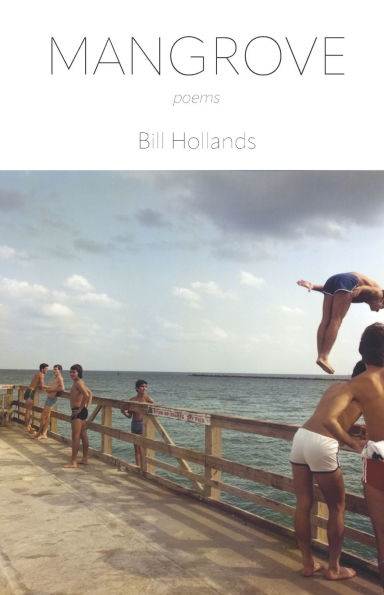
Mangrove in Franklin, TN
Current price: $18.00
Barnes and Noble
Mangrove in Franklin, TN
Current price: $18.00
Loading Inventory...
Size: OS
Bill Hollands is a natural storyteller. His poems are performative in the best sense of the word-rooted in high school and community theater stages, the tennis court, and reimagining TV classics like The Love Boat, Gilligan's Island, and The
Mary Tyler Moore Show. In
Mangrove
, even his childhood Miami home becomes a stage as he searches for it on Zillow. Memories about the less-than-fun parts of childhood like the Presidential Fitness Test and desk graffiti about himself become a tableau of humor and innovation. And who else can begin a love poem like this?
"I gave you crabs and you let us / pretend that it might have been / you who gave them to me and that / was so lovely...". No one! The poetry curtains open and there is a spotlight-inside it, Bill Hollands. -Denise Duhamel In this delightful collection, Bill Hollands confirms he "can, after all, put on a show." With humor, a conversational rhythm, and a careful eye for detail, he explores how a boy who is told "you are not like the others" finds his own identity.
Via masks such as Ginger and Mary Ann, elementary musical performer, and young tennis wannabe-sometimes tortured, always determined-he keeps returning to and claiming "beauty, beauty beyond understanding." The Florida and pop culture of his 1970's childhood provide a backdrop for discovering his own Mangrove. While remembering mother, father, and brothers-along with card tables, Aqua Velva, and The Love Boat-Hollands assures readers: "here's the great thing about poetry: you can change the ending." -Ellen Bass Bill Hollands' song is one of sitcoms, family, and childhood. And most of all,
apartness: "the ritual humiliation." And loss. Hollands shows us that memory is unfinished, like one of his mother's jigsaw puzzles. And shows us, too, that you can create your own family. -David Trinidad
Mary Tyler Moore Show. In
Mangrove
, even his childhood Miami home becomes a stage as he searches for it on Zillow. Memories about the less-than-fun parts of childhood like the Presidential Fitness Test and desk graffiti about himself become a tableau of humor and innovation. And who else can begin a love poem like this?
"I gave you crabs and you let us / pretend that it might have been / you who gave them to me and that / was so lovely...". No one! The poetry curtains open and there is a spotlight-inside it, Bill Hollands. -Denise Duhamel In this delightful collection, Bill Hollands confirms he "can, after all, put on a show." With humor, a conversational rhythm, and a careful eye for detail, he explores how a boy who is told "you are not like the others" finds his own identity.
Via masks such as Ginger and Mary Ann, elementary musical performer, and young tennis wannabe-sometimes tortured, always determined-he keeps returning to and claiming "beauty, beauty beyond understanding." The Florida and pop culture of his 1970's childhood provide a backdrop for discovering his own Mangrove. While remembering mother, father, and brothers-along with card tables, Aqua Velva, and The Love Boat-Hollands assures readers: "here's the great thing about poetry: you can change the ending." -Ellen Bass Bill Hollands' song is one of sitcoms, family, and childhood. And most of all,
apartness: "the ritual humiliation." And loss. Hollands shows us that memory is unfinished, like one of his mother's jigsaw puzzles. And shows us, too, that you can create your own family. -David Trinidad
Bill Hollands is a natural storyteller. His poems are performative in the best sense of the word-rooted in high school and community theater stages, the tennis court, and reimagining TV classics like The Love Boat, Gilligan's Island, and The
Mary Tyler Moore Show. In
Mangrove
, even his childhood Miami home becomes a stage as he searches for it on Zillow. Memories about the less-than-fun parts of childhood like the Presidential Fitness Test and desk graffiti about himself become a tableau of humor and innovation. And who else can begin a love poem like this?
"I gave you crabs and you let us / pretend that it might have been / you who gave them to me and that / was so lovely...". No one! The poetry curtains open and there is a spotlight-inside it, Bill Hollands. -Denise Duhamel In this delightful collection, Bill Hollands confirms he "can, after all, put on a show." With humor, a conversational rhythm, and a careful eye for detail, he explores how a boy who is told "you are not like the others" finds his own identity.
Via masks such as Ginger and Mary Ann, elementary musical performer, and young tennis wannabe-sometimes tortured, always determined-he keeps returning to and claiming "beauty, beauty beyond understanding." The Florida and pop culture of his 1970's childhood provide a backdrop for discovering his own Mangrove. While remembering mother, father, and brothers-along with card tables, Aqua Velva, and The Love Boat-Hollands assures readers: "here's the great thing about poetry: you can change the ending." -Ellen Bass Bill Hollands' song is one of sitcoms, family, and childhood. And most of all,
apartness: "the ritual humiliation." And loss. Hollands shows us that memory is unfinished, like one of his mother's jigsaw puzzles. And shows us, too, that you can create your own family. -David Trinidad
Mary Tyler Moore Show. In
Mangrove
, even his childhood Miami home becomes a stage as he searches for it on Zillow. Memories about the less-than-fun parts of childhood like the Presidential Fitness Test and desk graffiti about himself become a tableau of humor and innovation. And who else can begin a love poem like this?
"I gave you crabs and you let us / pretend that it might have been / you who gave them to me and that / was so lovely...". No one! The poetry curtains open and there is a spotlight-inside it, Bill Hollands. -Denise Duhamel In this delightful collection, Bill Hollands confirms he "can, after all, put on a show." With humor, a conversational rhythm, and a careful eye for detail, he explores how a boy who is told "you are not like the others" finds his own identity.
Via masks such as Ginger and Mary Ann, elementary musical performer, and young tennis wannabe-sometimes tortured, always determined-he keeps returning to and claiming "beauty, beauty beyond understanding." The Florida and pop culture of his 1970's childhood provide a backdrop for discovering his own Mangrove. While remembering mother, father, and brothers-along with card tables, Aqua Velva, and The Love Boat-Hollands assures readers: "here's the great thing about poetry: you can change the ending." -Ellen Bass Bill Hollands' song is one of sitcoms, family, and childhood. And most of all,
apartness: "the ritual humiliation." And loss. Hollands shows us that memory is unfinished, like one of his mother's jigsaw puzzles. And shows us, too, that you can create your own family. -David Trinidad
You May Also Like












More About Barnes and Noble at CoolSprings Galleria
Barnes & Noble is the world’s largest retail bookseller and a leading retailer of content, digital media and educational products. Our Nook Digital business offers a lineup of NOOK® tablets and e-Readers and an expansive collection of digital reading content through the NOOK Store®. Barnes & Noble’s mission is to operate the best omni-channel specialty retail business in America, helping both our customers and booksellers reach their aspirations, while being a credit to the communities we serve.
1800 Galleria Blvd #1310, Franklin, TN 37067, United States
Find Barnes and Noble at CoolSprings Galleria in Franklin, TN
Visit Barnes and Noble at CoolSprings Galleria in Franklin, TN
