
Home
Manufacturing Wastes Stream: Toyota Production System Lean Principles and Values
Barnes and Noble
Loading Inventory...
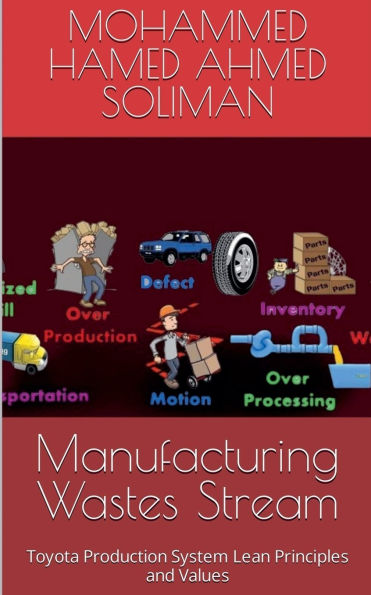
Manufacturing Wastes Stream: Toyota Production System Lean Principles and Values in Franklin, TN
Current price: $18.99
Barnes and Noble
Manufacturing Wastes Stream: Toyota Production System Lean Principles and Values in Franklin, TN
Current price: $18.99
Loading Inventory...
Size: Paperback
Eliminate the Hidden Costs Dragging Your Business Down
What if the biggest losses in your company weren't in the balance sheet-but in everyday operations?
This book reveals the
Seven Deadly Wastes (Muda)
defined in the legendary
Toyota Production System (TPS)
-and shows you how to find and eliminate them in any organization. Whether you work in manufacturing, logistics, services, or healthcare, these wastes silently kill productivity, profits, and morale.
You'll learn:
What each of the seven wastes is costing your business
How to detect hidden inefficiencies in your value stream
Proven strategies from TPS to eliminate each waste
Why cost-cutting layoffs won't work-and what sustainable improvement looks like
How to shift your organization toward a
culture of continuous improvement
Packed with practical insights and real-world logic, this book is your roadmap to lower costs, higher efficiency, and long-term success.
More about this Book:
In order to cut costs during the economic downturn, many businesses are implementing abstinence policies. This could mean laying off workers and cutting some wages. In fact, those actions might only work for a short time. Unless the company implements a culture of continuous improvement and alters its method of operation, the situation may recur and become even worse. This brings us back to the purpose for which the Toyota production system was developed.
Waste is anything that uses resources but offers the customer nothing in return. Most activities are waste, or "muda," and can be divided into two categories. Although type one muda does not provide value, it is inescapable given the production assets and technologies available today. An illustration would be checking welds for safety, that type we also call necessary non-value-added activity. Type two muda does not add value and can be quickly eliminated. An illustration is a process in a process village with disconnected phases that may be swiftly converted into a cell where unnecessary material moves and inventory are no longer necessary. A very small portion of all value-stream activities truly generate value as perceived by the client. The most effective way to boost business performance is to stop doing the numerous unnecessary things.
What if the biggest losses in your company weren't in the balance sheet-but in everyday operations?
This book reveals the
Seven Deadly Wastes (Muda)
defined in the legendary
Toyota Production System (TPS)
-and shows you how to find and eliminate them in any organization. Whether you work in manufacturing, logistics, services, or healthcare, these wastes silently kill productivity, profits, and morale.
You'll learn:
What each of the seven wastes is costing your business
How to detect hidden inefficiencies in your value stream
Proven strategies from TPS to eliminate each waste
Why cost-cutting layoffs won't work-and what sustainable improvement looks like
How to shift your organization toward a
culture of continuous improvement
Packed with practical insights and real-world logic, this book is your roadmap to lower costs, higher efficiency, and long-term success.
More about this Book:
In order to cut costs during the economic downturn, many businesses are implementing abstinence policies. This could mean laying off workers and cutting some wages. In fact, those actions might only work for a short time. Unless the company implements a culture of continuous improvement and alters its method of operation, the situation may recur and become even worse. This brings us back to the purpose for which the Toyota production system was developed.
Waste is anything that uses resources but offers the customer nothing in return. Most activities are waste, or "muda," and can be divided into two categories. Although type one muda does not provide value, it is inescapable given the production assets and technologies available today. An illustration would be checking welds for safety, that type we also call necessary non-value-added activity. Type two muda does not add value and can be quickly eliminated. An illustration is a process in a process village with disconnected phases that may be swiftly converted into a cell where unnecessary material moves and inventory are no longer necessary. A very small portion of all value-stream activities truly generate value as perceived by the client. The most effective way to boost business performance is to stop doing the numerous unnecessary things.
Eliminate the Hidden Costs Dragging Your Business Down
What if the biggest losses in your company weren't in the balance sheet-but in everyday operations?
This book reveals the
Seven Deadly Wastes (Muda)
defined in the legendary
Toyota Production System (TPS)
-and shows you how to find and eliminate them in any organization. Whether you work in manufacturing, logistics, services, or healthcare, these wastes silently kill productivity, profits, and morale.
You'll learn:
What each of the seven wastes is costing your business
How to detect hidden inefficiencies in your value stream
Proven strategies from TPS to eliminate each waste
Why cost-cutting layoffs won't work-and what sustainable improvement looks like
How to shift your organization toward a
culture of continuous improvement
Packed with practical insights and real-world logic, this book is your roadmap to lower costs, higher efficiency, and long-term success.
More about this Book:
In order to cut costs during the economic downturn, many businesses are implementing abstinence policies. This could mean laying off workers and cutting some wages. In fact, those actions might only work for a short time. Unless the company implements a culture of continuous improvement and alters its method of operation, the situation may recur and become even worse. This brings us back to the purpose for which the Toyota production system was developed.
Waste is anything that uses resources but offers the customer nothing in return. Most activities are waste, or "muda," and can be divided into two categories. Although type one muda does not provide value, it is inescapable given the production assets and technologies available today. An illustration would be checking welds for safety, that type we also call necessary non-value-added activity. Type two muda does not add value and can be quickly eliminated. An illustration is a process in a process village with disconnected phases that may be swiftly converted into a cell where unnecessary material moves and inventory are no longer necessary. A very small portion of all value-stream activities truly generate value as perceived by the client. The most effective way to boost business performance is to stop doing the numerous unnecessary things.
What if the biggest losses in your company weren't in the balance sheet-but in everyday operations?
This book reveals the
Seven Deadly Wastes (Muda)
defined in the legendary
Toyota Production System (TPS)
-and shows you how to find and eliminate them in any organization. Whether you work in manufacturing, logistics, services, or healthcare, these wastes silently kill productivity, profits, and morale.
You'll learn:
What each of the seven wastes is costing your business
How to detect hidden inefficiencies in your value stream
Proven strategies from TPS to eliminate each waste
Why cost-cutting layoffs won't work-and what sustainable improvement looks like
How to shift your organization toward a
culture of continuous improvement
Packed with practical insights and real-world logic, this book is your roadmap to lower costs, higher efficiency, and long-term success.
More about this Book:
In order to cut costs during the economic downturn, many businesses are implementing abstinence policies. This could mean laying off workers and cutting some wages. In fact, those actions might only work for a short time. Unless the company implements a culture of continuous improvement and alters its method of operation, the situation may recur and become even worse. This brings us back to the purpose for which the Toyota production system was developed.
Waste is anything that uses resources but offers the customer nothing in return. Most activities are waste, or "muda," and can be divided into two categories. Although type one muda does not provide value, it is inescapable given the production assets and technologies available today. An illustration would be checking welds for safety, that type we also call necessary non-value-added activity. Type two muda does not add value and can be quickly eliminated. An illustration is a process in a process village with disconnected phases that may be swiftly converted into a cell where unnecessary material moves and inventory are no longer necessary. A very small portion of all value-stream activities truly generate value as perceived by the client. The most effective way to boost business performance is to stop doing the numerous unnecessary things.
You May Also Like









More About Barnes and Noble at CoolSprings Galleria
Barnes & Noble is the world’s largest retail bookseller and a leading retailer of content, digital media and educational products. Our Nook Digital business offers a lineup of NOOK® tablets and e-Readers and an expansive collection of digital reading content through the NOOK Store®. Barnes & Noble’s mission is to operate the best omni-channel specialty retail business in America, helping both our customers and booksellers reach their aspirations, while being a credit to the communities we serve.
1800 Galleria Blvd #1310, Franklin, TN 37067, United States
Find Barnes and Noble at CoolSprings Galleria in Franklin, TN
Visit Barnes and Noble at CoolSprings Galleria in Franklin, TN
