
Home
Matthew López-Jensen: The Work and the Water: Labor and Landscapes along the Erie Canal
Barnes and Noble
Loading Inventory...
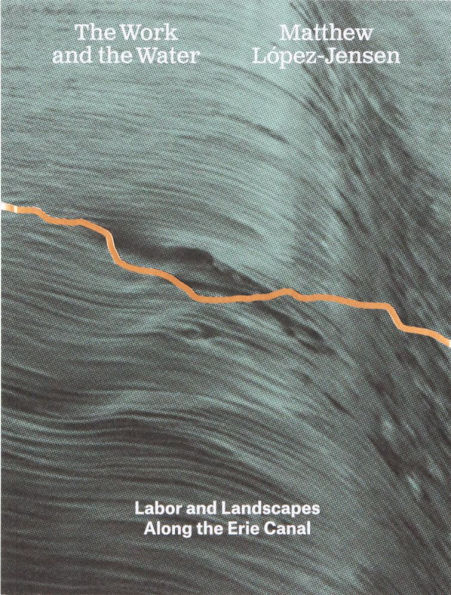
Matthew López-Jensen: The Work and the Water: Labor and Landscapes along the Erie Canal in Franklin, TN
Current price: $28.00
Barnes and Noble
Matthew López-Jensen: The Work and the Water: Labor and Landscapes along the Erie Canal in Franklin, TN
Current price: $28.00
Loading Inventory...
Size: OS
For the Erie Canal's 200th anniversary, López-Jensen's series centers the unseen labor that keeps the waterway operational
The debut photobook
The Work and the Water: Labor and Landscapes along the Erie Canal
by Matthew López-Jensen (born 1980) is a work of environmental social practice centering the unseen labor required to keep the Erie Canal, a 524-mile inland waterway in upstate New York, operational. Over 40 photographs are accompanied by commentary from the more than 400 employees who work on the canal year-round, often out of view and in hazardous conditions. As the first artist-in-residence with the canal in its 200-year history, López-Jensen visited every lock in the system from Buffalo to Albany, from Whitehall to Seneca Falls. The archive of images he created helps communicate the potentials of the canal as a site for environmental restoration while also conveying the scale of this colossal piece of infrastructure that transformed the region in ways that are still felt today.
The debut photobook
The Work and the Water: Labor and Landscapes along the Erie Canal
by Matthew López-Jensen (born 1980) is a work of environmental social practice centering the unseen labor required to keep the Erie Canal, a 524-mile inland waterway in upstate New York, operational. Over 40 photographs are accompanied by commentary from the more than 400 employees who work on the canal year-round, often out of view and in hazardous conditions. As the first artist-in-residence with the canal in its 200-year history, López-Jensen visited every lock in the system from Buffalo to Albany, from Whitehall to Seneca Falls. The archive of images he created helps communicate the potentials of the canal as a site for environmental restoration while also conveying the scale of this colossal piece of infrastructure that transformed the region in ways that are still felt today.
For the Erie Canal's 200th anniversary, López-Jensen's series centers the unseen labor that keeps the waterway operational
The debut photobook
The Work and the Water: Labor and Landscapes along the Erie Canal
by Matthew López-Jensen (born 1980) is a work of environmental social practice centering the unseen labor required to keep the Erie Canal, a 524-mile inland waterway in upstate New York, operational. Over 40 photographs are accompanied by commentary from the more than 400 employees who work on the canal year-round, often out of view and in hazardous conditions. As the first artist-in-residence with the canal in its 200-year history, López-Jensen visited every lock in the system from Buffalo to Albany, from Whitehall to Seneca Falls. The archive of images he created helps communicate the potentials of the canal as a site for environmental restoration while also conveying the scale of this colossal piece of infrastructure that transformed the region in ways that are still felt today.
The debut photobook
The Work and the Water: Labor and Landscapes along the Erie Canal
by Matthew López-Jensen (born 1980) is a work of environmental social practice centering the unseen labor required to keep the Erie Canal, a 524-mile inland waterway in upstate New York, operational. Over 40 photographs are accompanied by commentary from the more than 400 employees who work on the canal year-round, often out of view and in hazardous conditions. As the first artist-in-residence with the canal in its 200-year history, López-Jensen visited every lock in the system from Buffalo to Albany, from Whitehall to Seneca Falls. The archive of images he created helps communicate the potentials of the canal as a site for environmental restoration while also conveying the scale of this colossal piece of infrastructure that transformed the region in ways that are still felt today.
You May Also Like

















More About Barnes and Noble at CoolSprings Galleria
Barnes & Noble is the world’s largest retail bookseller and a leading retailer of content, digital media and educational products. Our Nook Digital business offers a lineup of NOOK® tablets and e-Readers and an expansive collection of digital reading content through the NOOK Store®. Barnes & Noble’s mission is to operate the best omni-channel specialty retail business in America, helping both our customers and booksellers reach their aspirations, while being a credit to the communities we serve.
1800 Galleria Blvd #1310, Franklin, TN 37067, United States
Find Barnes and Noble at CoolSprings Galleria in Franklin, TN
Visit Barnes and Noble at CoolSprings Galleria in Franklin, TN
