
Home
Mediation of Legitimacy Early China: A Study the Neglected Zhou Scriptures and Grand Duke Traditions
Barnes and Noble
Loading Inventory...
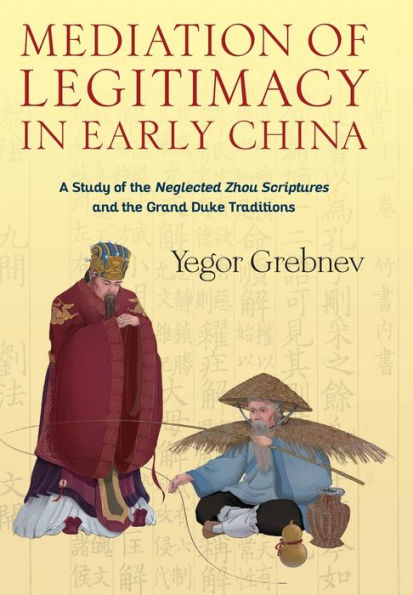
Mediation of Legitimacy Early China: A Study the Neglected Zhou Scriptures and Grand Duke Traditions in Franklin, TN
Current price: $65.00
Barnes and Noble
Mediation of Legitimacy Early China: A Study the Neglected Zhou Scriptures and Grand Duke Traditions in Franklin, TN
Current price: $65.00
Loading Inventory...
Size: Hardcover
Scholarship on early China has traditionally focused on a core group of canonical texts. However, understudied sources have the potential to shift perspectives on fundamental aspects of Chinese intellectual, religious, and political history. Yegor Grebnev examines crucial noncanonical texts preserved in the
Yi Zhou shu
(Neglected Zhou Scriptures) and the Grand Duke traditions, which represent scriptural traditions influential during the Warring States period but sidelined in later history. He develops an innovative framework for the study and interpretation of these texts, focusing on their role in the mediation of royal legitimacy and their formative impact on early Daoism.
Grebnev demonstrates the centrality of the
in Chinese intellectual history by highlighting its simultaneous connections to canonical traditions and esoteric Daoism. He also shows that the Daoist rituals of textual transmission embedded in the Grand Duke traditions bear an imprint of the courtly environment of the Warring States period, where early Daoists strove for prestige and power, offering legitimacy through texts ascribed to the mythical sage rulers. These rituals appear to have emerged at the same period as the core Daoist philosophical texts and not several centuries later as conventionally believed, which calls for a reassessment of the history of Daoism’s interrelated religious and philosophical strands. Offering a far-reaching reconsideration of early Chinese intellectual and religious history,
Mediation of Legitimacy in Early China
sheds new light on the foundations of the Chinese textual tradition.
Yi Zhou shu
(Neglected Zhou Scriptures) and the Grand Duke traditions, which represent scriptural traditions influential during the Warring States period but sidelined in later history. He develops an innovative framework for the study and interpretation of these texts, focusing on their role in the mediation of royal legitimacy and their formative impact on early Daoism.
Grebnev demonstrates the centrality of the
in Chinese intellectual history by highlighting its simultaneous connections to canonical traditions and esoteric Daoism. He also shows that the Daoist rituals of textual transmission embedded in the Grand Duke traditions bear an imprint of the courtly environment of the Warring States period, where early Daoists strove for prestige and power, offering legitimacy through texts ascribed to the mythical sage rulers. These rituals appear to have emerged at the same period as the core Daoist philosophical texts and not several centuries later as conventionally believed, which calls for a reassessment of the history of Daoism’s interrelated religious and philosophical strands. Offering a far-reaching reconsideration of early Chinese intellectual and religious history,
Mediation of Legitimacy in Early China
sheds new light on the foundations of the Chinese textual tradition.
Scholarship on early China has traditionally focused on a core group of canonical texts. However, understudied sources have the potential to shift perspectives on fundamental aspects of Chinese intellectual, religious, and political history. Yegor Grebnev examines crucial noncanonical texts preserved in the
Yi Zhou shu
(Neglected Zhou Scriptures) and the Grand Duke traditions, which represent scriptural traditions influential during the Warring States period but sidelined in later history. He develops an innovative framework for the study and interpretation of these texts, focusing on their role in the mediation of royal legitimacy and their formative impact on early Daoism.
Grebnev demonstrates the centrality of the
in Chinese intellectual history by highlighting its simultaneous connections to canonical traditions and esoteric Daoism. He also shows that the Daoist rituals of textual transmission embedded in the Grand Duke traditions bear an imprint of the courtly environment of the Warring States period, where early Daoists strove for prestige and power, offering legitimacy through texts ascribed to the mythical sage rulers. These rituals appear to have emerged at the same period as the core Daoist philosophical texts and not several centuries later as conventionally believed, which calls for a reassessment of the history of Daoism’s interrelated religious and philosophical strands. Offering a far-reaching reconsideration of early Chinese intellectual and religious history,
Mediation of Legitimacy in Early China
sheds new light on the foundations of the Chinese textual tradition.
Yi Zhou shu
(Neglected Zhou Scriptures) and the Grand Duke traditions, which represent scriptural traditions influential during the Warring States period but sidelined in later history. He develops an innovative framework for the study and interpretation of these texts, focusing on their role in the mediation of royal legitimacy and their formative impact on early Daoism.
Grebnev demonstrates the centrality of the
in Chinese intellectual history by highlighting its simultaneous connections to canonical traditions and esoteric Daoism. He also shows that the Daoist rituals of textual transmission embedded in the Grand Duke traditions bear an imprint of the courtly environment of the Warring States period, where early Daoists strove for prestige and power, offering legitimacy through texts ascribed to the mythical sage rulers. These rituals appear to have emerged at the same period as the core Daoist philosophical texts and not several centuries later as conventionally believed, which calls for a reassessment of the history of Daoism’s interrelated religious and philosophical strands. Offering a far-reaching reconsideration of early Chinese intellectual and religious history,
Mediation of Legitimacy in Early China
sheds new light on the foundations of the Chinese textual tradition.
You May Also Like














More About Barnes and Noble at CoolSprings Galleria
Barnes & Noble is the world’s largest retail bookseller and a leading retailer of content, digital media and educational products. Our Nook Digital business offers a lineup of NOOK® tablets and e-Readers and an expansive collection of digital reading content through the NOOK Store®. Barnes & Noble’s mission is to operate the best omni-channel specialty retail business in America, helping both our customers and booksellers reach their aspirations, while being a credit to the communities we serve.
1800 Galleria Blvd #1310, Franklin, TN 37067, United States
Find Barnes and Noble at CoolSprings Galleria in Franklin, TN
Visit Barnes and Noble at CoolSprings Galleria in Franklin, TN
