
Home
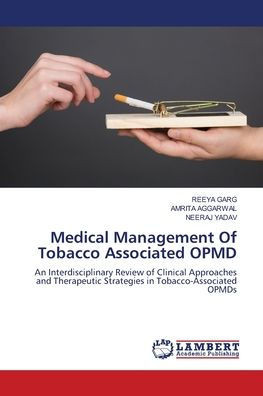
Medical Management Of Tobacco Associated OPMD
Barnes and Noble
Loading Inventory...
Medical Management Of Tobacco Associated OPMD in Franklin, TN
Current price: $69.00
Barnes and Noble
Medical Management Of Tobacco Associated OPMD in Franklin, TN
Current price: $69.00
Loading Inventory...
Size: OS
Tobacco-associated oral potentially malignant disorders (OPMDs)-including leukoplakia, erythroplakia, proliferative verrucous leukoplakia (PVL), and oral submucous fibrosis (OSMF)-remain a major concern in oral healthcare due to their risk of malignant transformation. Despite numerous treatment modalities, no universally accepted approach exists, emphasizing the need for a multidisciplinary strategy. Early detection, intervention, and tobacco cessation are critical components of management. Pharmacological treatments such as retinoids, beta-carotene, and antifibrotic agents have shown variable success, with no definitive evidence of preventing malignancy. Long-term surveillance, regular follow-ups, and clinical documentation are essential for monitoring disease progression. Challenges include inconsistent diagnostic criteria, lack of high-quality RCTs, and limited treatment efficacy. Future directions should focus on personalized therapies based on genetic markers, regenerative medicine, and public health initiatives targeting tobacco and areca nut use.
Tobacco-associated oral potentially malignant disorders (OPMDs)-including leukoplakia, erythroplakia, proliferative verrucous leukoplakia (PVL), and oral submucous fibrosis (OSMF)-remain a major concern in oral healthcare due to their risk of malignant transformation. Despite numerous treatment modalities, no universally accepted approach exists, emphasizing the need for a multidisciplinary strategy. Early detection, intervention, and tobacco cessation are critical components of management. Pharmacological treatments such as retinoids, beta-carotene, and antifibrotic agents have shown variable success, with no definitive evidence of preventing malignancy. Long-term surveillance, regular follow-ups, and clinical documentation are essential for monitoring disease progression. Challenges include inconsistent diagnostic criteria, lack of high-quality RCTs, and limited treatment efficacy. Future directions should focus on personalized therapies based on genetic markers, regenerative medicine, and public health initiatives targeting tobacco and areca nut use.
You May Also Like













More About Barnes and Noble at CoolSprings Galleria
Barnes & Noble is the world’s largest retail bookseller and a leading retailer of content, digital media and educational products. Our Nook Digital business offers a lineup of NOOK® tablets and e-Readers and an expansive collection of digital reading content through the NOOK Store®. Barnes & Noble’s mission is to operate the best omni-channel specialty retail business in America, helping both our customers and booksellers reach their aspirations, while being a credit to the communities we serve.
1800 Galleria Blvd #1310, Franklin, TN 37067, United States
Find Barnes and Noble at CoolSprings Galleria in Franklin, TN
Visit Barnes and Noble at CoolSprings Galleria in Franklin, TN