
Home
Midnight Rambles: H. P. Lovecraft Gotham
Barnes and Noble
Loading Inventory...
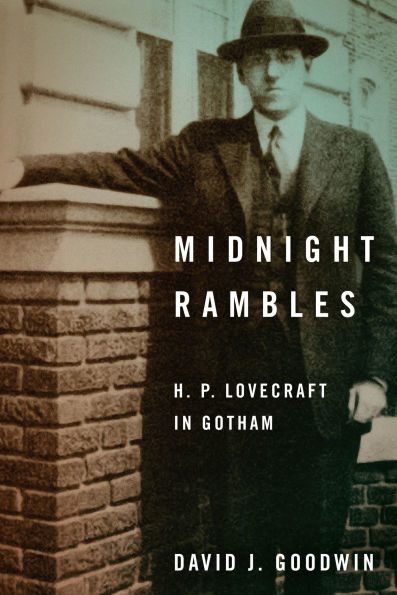
Midnight Rambles: H. P. Lovecraft Gotham in Franklin, TN
Current price: $29.95
Barnes and Noble
Midnight Rambles: H. P. Lovecraft Gotham in Franklin, TN
Current price: $29.95
Loading Inventory...
Size: Hardcover
A microbiography of horror fiction’s most influential author and his love–hate relationship with New York City.
By the end of his life and near financial ruin, pulp horror writer Howard Phillips Lovecraft resigned himself to the likelihood that his writing would be forgotten. Today, Lovecraft stands alongside J. R. R. Tolkien as the most influential genre writer of the twentieth century. His reputation as an unreformed racist and bigot, however, leaves readers to grapple with his legacy.
Midnight Rambles
explores Lovecraft’s time in New York City, a crucial yet often overlooked chapter in his life that shaped his literary career and the inextricable racism in his work.
Initially, New York stood as a place of liberation for Lovecraft. During the brief period between 1924 and 1926 when he lived there, Lovecraft joined a creative community and experimented with bohemian living in the publishing and cultural capital of the United States. He also married fellow writer Sonia H. Greene, a UkrainianJewish émigré in the fashion industry. However, cascading personal setbacks and his own professional ineptitude soured him on New York. As Lovecraft became more frustrated, his xenophobia and racism became more pronounced. New York’s large immigrant population and minority communities disgusted him, and this mindset soon became evident in his writing. Many of his stories from this era are infused with racial and ethnic stereotypes and nativist themes, most notably his overtly racist short story, “The Horror at Red Hook,” set in Red Hook, Brooklyn. His personal letters reveal an even darker bigotry.
Author David J. Goodwin presents a chronological microbiography of Lovecraft’s New York years, emphasizing Lovecraft’s exploration of the city environment, the greater metropolitan region, and other locales and how they molded him as a writer and as an individual. Drawing from primary sources (letters, memoirs, and published personal reflections) and secondary sources (biographies and scholarship),
develops a portrait of a talented and troubled author and offers insights into his unsettling beliefs on race, ethnicity, and immigration.
By the end of his life and near financial ruin, pulp horror writer Howard Phillips Lovecraft resigned himself to the likelihood that his writing would be forgotten. Today, Lovecraft stands alongside J. R. R. Tolkien as the most influential genre writer of the twentieth century. His reputation as an unreformed racist and bigot, however, leaves readers to grapple with his legacy.
Midnight Rambles
explores Lovecraft’s time in New York City, a crucial yet often overlooked chapter in his life that shaped his literary career and the inextricable racism in his work.
Initially, New York stood as a place of liberation for Lovecraft. During the brief period between 1924 and 1926 when he lived there, Lovecraft joined a creative community and experimented with bohemian living in the publishing and cultural capital of the United States. He also married fellow writer Sonia H. Greene, a UkrainianJewish émigré in the fashion industry. However, cascading personal setbacks and his own professional ineptitude soured him on New York. As Lovecraft became more frustrated, his xenophobia and racism became more pronounced. New York’s large immigrant population and minority communities disgusted him, and this mindset soon became evident in his writing. Many of his stories from this era are infused with racial and ethnic stereotypes and nativist themes, most notably his overtly racist short story, “The Horror at Red Hook,” set in Red Hook, Brooklyn. His personal letters reveal an even darker bigotry.
Author David J. Goodwin presents a chronological microbiography of Lovecraft’s New York years, emphasizing Lovecraft’s exploration of the city environment, the greater metropolitan region, and other locales and how they molded him as a writer and as an individual. Drawing from primary sources (letters, memoirs, and published personal reflections) and secondary sources (biographies and scholarship),
develops a portrait of a talented and troubled author and offers insights into his unsettling beliefs on race, ethnicity, and immigration.
A microbiography of horror fiction’s most influential author and his love–hate relationship with New York City.
By the end of his life and near financial ruin, pulp horror writer Howard Phillips Lovecraft resigned himself to the likelihood that his writing would be forgotten. Today, Lovecraft stands alongside J. R. R. Tolkien as the most influential genre writer of the twentieth century. His reputation as an unreformed racist and bigot, however, leaves readers to grapple with his legacy.
Midnight Rambles
explores Lovecraft’s time in New York City, a crucial yet often overlooked chapter in his life that shaped his literary career and the inextricable racism in his work.
Initially, New York stood as a place of liberation for Lovecraft. During the brief period between 1924 and 1926 when he lived there, Lovecraft joined a creative community and experimented with bohemian living in the publishing and cultural capital of the United States. He also married fellow writer Sonia H. Greene, a UkrainianJewish émigré in the fashion industry. However, cascading personal setbacks and his own professional ineptitude soured him on New York. As Lovecraft became more frustrated, his xenophobia and racism became more pronounced. New York’s large immigrant population and minority communities disgusted him, and this mindset soon became evident in his writing. Many of his stories from this era are infused with racial and ethnic stereotypes and nativist themes, most notably his overtly racist short story, “The Horror at Red Hook,” set in Red Hook, Brooklyn. His personal letters reveal an even darker bigotry.
Author David J. Goodwin presents a chronological microbiography of Lovecraft’s New York years, emphasizing Lovecraft’s exploration of the city environment, the greater metropolitan region, and other locales and how they molded him as a writer and as an individual. Drawing from primary sources (letters, memoirs, and published personal reflections) and secondary sources (biographies and scholarship),
develops a portrait of a talented and troubled author and offers insights into his unsettling beliefs on race, ethnicity, and immigration.
By the end of his life and near financial ruin, pulp horror writer Howard Phillips Lovecraft resigned himself to the likelihood that his writing would be forgotten. Today, Lovecraft stands alongside J. R. R. Tolkien as the most influential genre writer of the twentieth century. His reputation as an unreformed racist and bigot, however, leaves readers to grapple with his legacy.
Midnight Rambles
explores Lovecraft’s time in New York City, a crucial yet often overlooked chapter in his life that shaped his literary career and the inextricable racism in his work.
Initially, New York stood as a place of liberation for Lovecraft. During the brief period between 1924 and 1926 when he lived there, Lovecraft joined a creative community and experimented with bohemian living in the publishing and cultural capital of the United States. He also married fellow writer Sonia H. Greene, a UkrainianJewish émigré in the fashion industry. However, cascading personal setbacks and his own professional ineptitude soured him on New York. As Lovecraft became more frustrated, his xenophobia and racism became more pronounced. New York’s large immigrant population and minority communities disgusted him, and this mindset soon became evident in his writing. Many of his stories from this era are infused with racial and ethnic stereotypes and nativist themes, most notably his overtly racist short story, “The Horror at Red Hook,” set in Red Hook, Brooklyn. His personal letters reveal an even darker bigotry.
Author David J. Goodwin presents a chronological microbiography of Lovecraft’s New York years, emphasizing Lovecraft’s exploration of the city environment, the greater metropolitan region, and other locales and how they molded him as a writer and as an individual. Drawing from primary sources (letters, memoirs, and published personal reflections) and secondary sources (biographies and scholarship),
develops a portrait of a talented and troubled author and offers insights into his unsettling beliefs on race, ethnicity, and immigration.
You May Also Like










More About Barnes and Noble at CoolSprings Galleria
Barnes & Noble is the world’s largest retail bookseller and a leading retailer of content, digital media and educational products. Our Nook Digital business offers a lineup of NOOK® tablets and e-Readers and an expansive collection of digital reading content through the NOOK Store®. Barnes & Noble’s mission is to operate the best omni-channel specialty retail business in America, helping both our customers and booksellers reach their aspirations, while being a credit to the communities we serve.
1800 Galleria Blvd #1310, Franklin, TN 37067, United States
Find Barnes and Noble at CoolSprings Galleria in Franklin, TN
Visit Barnes and Noble at CoolSprings Galleria in Franklin, TN
