
Home
Milton and the Preaching Arts
Barnes and Noble
Loading Inventory...
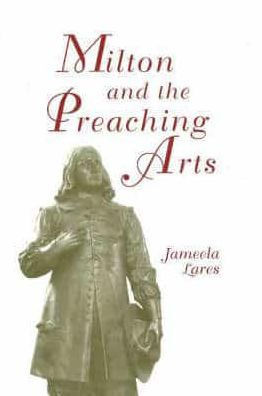
Milton and the Preaching Arts in Franklin, TN
Current price: $58.00
Barnes and Noble
Milton and the Preaching Arts in Franklin, TN
Current price: $58.00
Loading Inventory...
Size: OS
This study truly breaks new ground in Milton scholarship by demonstrating the extent to which Milton’s work reflects the dominant discourse of his age – preaching.
During the sixteenth and seventeenth centuries, the pulpit consistently commanded greater audiences than did the stage, and many of the era’s great poets were also preachers. Milton himself argued that poetry can serve “beside the office of a pulpit” and prepared for his life’s work at the greatest English center for formal homiletics of its time, Christ’s College, Cambridge, but this connection has been virtually ignored by scholars and critics in examining Milton’s poetry
Lares now challenges the longstanding assumption that Milton the poet paid no attention to the ministerial training of his past, and she demonstrates how Milton appropriated many structures from English preaching in his own work. That preaching was informed by five sermon types – doctrine, reproof, correction, instruction and consolation – first enumerated by the continental reformer Andreas Gerhard Hyperius (1511 – 1564). Milton, we find, favored an odd combination of correction and consolation. Of all the preaching manuals published in England during the sixteenth and seventeenth centuries, only one so combines consolation and correction: Methodus concionandi by William Chappell, Milton’s first tutor at Christ’s College, Cambridge.
Milton’s use of homiletics, as explained by Lares, may be used in particular to resolve many critical issues related to the last two books of Paradise Lost, which are composed of Adam’s dream vision and Michael’s narration thereof. These diffuse books, which scholars have been unable to place into any critical paradigm, are actually sermonic in structure and content. And Paradise Regained, in which Milton seems to reject classical rhetoric, actually reflects then-contemporary pulpit concerns over the stylistic inadequacy of the Bible. Moreover, Milton’s prose commentaries – often deplored as strident and uncharitable – follow the structure of a sermon of reproof.
During the sixteenth and seventeenth centuries, the pulpit consistently commanded greater audiences than did the stage, and many of the era’s great poets were also preachers. Milton himself argued that poetry can serve “beside the office of a pulpit” and prepared for his life’s work at the greatest English center for formal homiletics of its time, Christ’s College, Cambridge, but this connection has been virtually ignored by scholars and critics in examining Milton’s poetry
Lares now challenges the longstanding assumption that Milton the poet paid no attention to the ministerial training of his past, and she demonstrates how Milton appropriated many structures from English preaching in his own work. That preaching was informed by five sermon types – doctrine, reproof, correction, instruction and consolation – first enumerated by the continental reformer Andreas Gerhard Hyperius (1511 – 1564). Milton, we find, favored an odd combination of correction and consolation. Of all the preaching manuals published in England during the sixteenth and seventeenth centuries, only one so combines consolation and correction: Methodus concionandi by William Chappell, Milton’s first tutor at Christ’s College, Cambridge.
Milton’s use of homiletics, as explained by Lares, may be used in particular to resolve many critical issues related to the last two books of Paradise Lost, which are composed of Adam’s dream vision and Michael’s narration thereof. These diffuse books, which scholars have been unable to place into any critical paradigm, are actually sermonic in structure and content. And Paradise Regained, in which Milton seems to reject classical rhetoric, actually reflects then-contemporary pulpit concerns over the stylistic inadequacy of the Bible. Moreover, Milton’s prose commentaries – often deplored as strident and uncharitable – follow the structure of a sermon of reproof.
This study truly breaks new ground in Milton scholarship by demonstrating the extent to which Milton’s work reflects the dominant discourse of his age – preaching.
During the sixteenth and seventeenth centuries, the pulpit consistently commanded greater audiences than did the stage, and many of the era’s great poets were also preachers. Milton himself argued that poetry can serve “beside the office of a pulpit” and prepared for his life’s work at the greatest English center for formal homiletics of its time, Christ’s College, Cambridge, but this connection has been virtually ignored by scholars and critics in examining Milton’s poetry
Lares now challenges the longstanding assumption that Milton the poet paid no attention to the ministerial training of his past, and she demonstrates how Milton appropriated many structures from English preaching in his own work. That preaching was informed by five sermon types – doctrine, reproof, correction, instruction and consolation – first enumerated by the continental reformer Andreas Gerhard Hyperius (1511 – 1564). Milton, we find, favored an odd combination of correction and consolation. Of all the preaching manuals published in England during the sixteenth and seventeenth centuries, only one so combines consolation and correction: Methodus concionandi by William Chappell, Milton’s first tutor at Christ’s College, Cambridge.
Milton’s use of homiletics, as explained by Lares, may be used in particular to resolve many critical issues related to the last two books of Paradise Lost, which are composed of Adam’s dream vision and Michael’s narration thereof. These diffuse books, which scholars have been unable to place into any critical paradigm, are actually sermonic in structure and content. And Paradise Regained, in which Milton seems to reject classical rhetoric, actually reflects then-contemporary pulpit concerns over the stylistic inadequacy of the Bible. Moreover, Milton’s prose commentaries – often deplored as strident and uncharitable – follow the structure of a sermon of reproof.
During the sixteenth and seventeenth centuries, the pulpit consistently commanded greater audiences than did the stage, and many of the era’s great poets were also preachers. Milton himself argued that poetry can serve “beside the office of a pulpit” and prepared for his life’s work at the greatest English center for formal homiletics of its time, Christ’s College, Cambridge, but this connection has been virtually ignored by scholars and critics in examining Milton’s poetry
Lares now challenges the longstanding assumption that Milton the poet paid no attention to the ministerial training of his past, and she demonstrates how Milton appropriated many structures from English preaching in his own work. That preaching was informed by five sermon types – doctrine, reproof, correction, instruction and consolation – first enumerated by the continental reformer Andreas Gerhard Hyperius (1511 – 1564). Milton, we find, favored an odd combination of correction and consolation. Of all the preaching manuals published in England during the sixteenth and seventeenth centuries, only one so combines consolation and correction: Methodus concionandi by William Chappell, Milton’s first tutor at Christ’s College, Cambridge.
Milton’s use of homiletics, as explained by Lares, may be used in particular to resolve many critical issues related to the last two books of Paradise Lost, which are composed of Adam’s dream vision and Michael’s narration thereof. These diffuse books, which scholars have been unable to place into any critical paradigm, are actually sermonic in structure and content. And Paradise Regained, in which Milton seems to reject classical rhetoric, actually reflects then-contemporary pulpit concerns over the stylistic inadequacy of the Bible. Moreover, Milton’s prose commentaries – often deplored as strident and uncharitable – follow the structure of a sermon of reproof.
You May Also Like

![Milton + esperanza [Opaque Tangerine 2 LP] [Barnes & Noble Exclusive]](https://prodimage.images-bn.com/pimages/0888072619210_p0_v2_s600x595.jpg)










More About Barnes and Noble at CoolSprings Galleria
Barnes & Noble is the world’s largest retail bookseller and a leading retailer of content, digital media and educational products. Our Nook Digital business offers a lineup of NOOK® tablets and e-Readers and an expansive collection of digital reading content through the NOOK Store®. Barnes & Noble’s mission is to operate the best omni-channel specialty retail business in America, helping both our customers and booksellers reach their aspirations, while being a credit to the communities we serve.
1800 Galleria Blvd #1310, Franklin, TN 37067, United States
Find Barnes and Noble at CoolSprings Galleria in Franklin, TN
Visit Barnes and Noble at CoolSprings Galleria in Franklin, TN
