
Home
Monetary Policy and Inequality: The Pasinetti Index
Barnes and Noble
Loading Inventory...
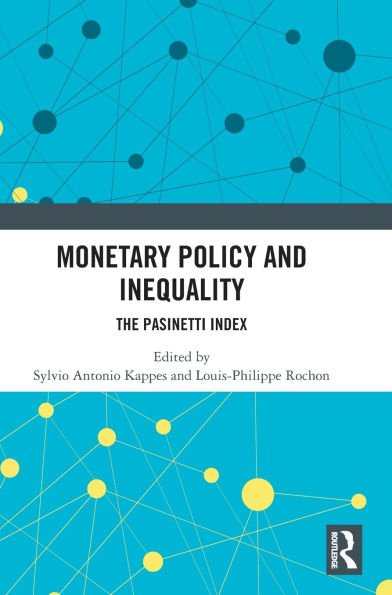
Monetary Policy and Inequality: The Pasinetti Index in Franklin, TN
Current price: $190.00
Barnes and Noble
Monetary Policy and Inequality: The Pasinetti Index in Franklin, TN
Current price: $190.00
Loading Inventory...
Size: Hardcover
This book explores the relationship between monetary policy and income (and wealth) distribution, a growing area of research in post-Keynesian and heterodox economics today. The interest actually goes back at least to Keynes, who, in his
A Tract on Monetary Reform
, discusses the effects of interest rates on income distribution—what has been called a ‘rentier-first’ monetary policy. This led Keynes, in the
General Theory
, to advocate for what he calls ‘the euthanasia of the rentier.’ For Keynes, monetary policy should be set at a low enough rate of interest as to maximize our collective ability to attain full employment. Joan Robinson further developed these ideas in her
Accumulation of Capital
(1956), examining the distributive nature of interest rates.
Within contemporary heterodox economics, this topic gained renewed attention in the late 1980s through influential papers by prominent post-Keynesians who highlighted concerns about how interest rate changes affect functional income distribution. This perspective places social class dynamics and class conflict at the center of monetary policy debates, challenging mainstream approaches that often overlook distributional consequences.
This book is an invaluable read for economics researchers, graduate students, and policy analysts of monetary theory, macroeconomics, political economy, income inequality, financial economics, and heterodox economic approaches.
The chapters in this book were originally published in
Review of Political Economy
.
A Tract on Monetary Reform
, discusses the effects of interest rates on income distribution—what has been called a ‘rentier-first’ monetary policy. This led Keynes, in the
General Theory
, to advocate for what he calls ‘the euthanasia of the rentier.’ For Keynes, monetary policy should be set at a low enough rate of interest as to maximize our collective ability to attain full employment. Joan Robinson further developed these ideas in her
Accumulation of Capital
(1956), examining the distributive nature of interest rates.
Within contemporary heterodox economics, this topic gained renewed attention in the late 1980s through influential papers by prominent post-Keynesians who highlighted concerns about how interest rate changes affect functional income distribution. This perspective places social class dynamics and class conflict at the center of monetary policy debates, challenging mainstream approaches that often overlook distributional consequences.
This book is an invaluable read for economics researchers, graduate students, and policy analysts of monetary theory, macroeconomics, political economy, income inequality, financial economics, and heterodox economic approaches.
The chapters in this book were originally published in
Review of Political Economy
.
This book explores the relationship between monetary policy and income (and wealth) distribution, a growing area of research in post-Keynesian and heterodox economics today. The interest actually goes back at least to Keynes, who, in his
A Tract on Monetary Reform
, discusses the effects of interest rates on income distribution—what has been called a ‘rentier-first’ monetary policy. This led Keynes, in the
General Theory
, to advocate for what he calls ‘the euthanasia of the rentier.’ For Keynes, monetary policy should be set at a low enough rate of interest as to maximize our collective ability to attain full employment. Joan Robinson further developed these ideas in her
Accumulation of Capital
(1956), examining the distributive nature of interest rates.
Within contemporary heterodox economics, this topic gained renewed attention in the late 1980s through influential papers by prominent post-Keynesians who highlighted concerns about how interest rate changes affect functional income distribution. This perspective places social class dynamics and class conflict at the center of monetary policy debates, challenging mainstream approaches that often overlook distributional consequences.
This book is an invaluable read for economics researchers, graduate students, and policy analysts of monetary theory, macroeconomics, political economy, income inequality, financial economics, and heterodox economic approaches.
The chapters in this book were originally published in
Review of Political Economy
.
A Tract on Monetary Reform
, discusses the effects of interest rates on income distribution—what has been called a ‘rentier-first’ monetary policy. This led Keynes, in the
General Theory
, to advocate for what he calls ‘the euthanasia of the rentier.’ For Keynes, monetary policy should be set at a low enough rate of interest as to maximize our collective ability to attain full employment. Joan Robinson further developed these ideas in her
Accumulation of Capital
(1956), examining the distributive nature of interest rates.
Within contemporary heterodox economics, this topic gained renewed attention in the late 1980s through influential papers by prominent post-Keynesians who highlighted concerns about how interest rate changes affect functional income distribution. This perspective places social class dynamics and class conflict at the center of monetary policy debates, challenging mainstream approaches that often overlook distributional consequences.
This book is an invaluable read for economics researchers, graduate students, and policy analysts of monetary theory, macroeconomics, political economy, income inequality, financial economics, and heterodox economic approaches.
The chapters in this book were originally published in
Review of Political Economy
.
You May Also Like










More About Barnes and Noble at CoolSprings Galleria
Barnes & Noble is the world’s largest retail bookseller and a leading retailer of content, digital media and educational products. Our Nook Digital business offers a lineup of NOOK® tablets and e-Readers and an expansive collection of digital reading content through the NOOK Store®. Barnes & Noble’s mission is to operate the best omni-channel specialty retail business in America, helping both our customers and booksellers reach their aspirations, while being a credit to the communities we serve.
1800 Galleria Blvd #1310, Franklin, TN 37067, United States
Find Barnes and Noble at CoolSprings Galleria in Franklin, TN
Visit Barnes and Noble at CoolSprings Galleria in Franklin, TN
