
Home
Multispecies Leisure: Human-Animal Interactions Leisure Landscapes
Barnes and Noble
Loading Inventory...
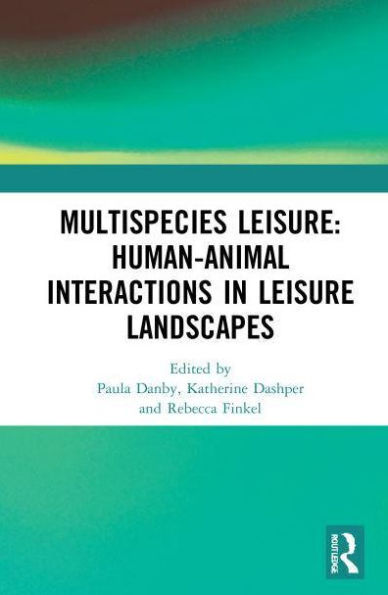
Multispecies Leisure: Human-Animal Interactions Leisure Landscapes in Franklin, TN
Current price: $140.00
Barnes and Noble
Multispecies Leisure: Human-Animal Interactions Leisure Landscapes in Franklin, TN
Current price: $140.00
Loading Inventory...
Size: Hardcover
Multispecies Leisure: Human-Animal Interactions in Leisure Landscapes
seeks to ‘bring the animal in’ to the leisure studies domain and contribute to greater understanding of leisure as a complex, interwoven multispecies phenomenon.
The emerging multidisciplinary field of human-animal studies encourages researchers to move beyond narrow focus on human-centric practices and ways of being in the world, and to recognise that human and non-human beings are positioned within shared ecological, social, cultural and political spaces. With some exceptions, leisure studies has been slow to embrace the ‘animal turn’ and consider how leisure actions, experiences and landscapes are shaped through multispecies encounters between humans, other animals, birds and insects, plants and environment. This book begins to address this gap by presenting research that considers leisure as more-than-human experiences. The authors consider leisure
with
nonhuman others (e.g. dogs, horses),
affecting
those others (e.g. environmental concerns) and
affected by
the non-human (e.g. landscape, weather), by exploring the ‘contact zones’ between humans and other species. Thus, this work contributes to greater understanding of leisure as a complex, multispecies phenomenon.
The chapters in this book were originally published as a Special Issue of the
Leisure Studies
.
seeks to ‘bring the animal in’ to the leisure studies domain and contribute to greater understanding of leisure as a complex, interwoven multispecies phenomenon.
The emerging multidisciplinary field of human-animal studies encourages researchers to move beyond narrow focus on human-centric practices and ways of being in the world, and to recognise that human and non-human beings are positioned within shared ecological, social, cultural and political spaces. With some exceptions, leisure studies has been slow to embrace the ‘animal turn’ and consider how leisure actions, experiences and landscapes are shaped through multispecies encounters between humans, other animals, birds and insects, plants and environment. This book begins to address this gap by presenting research that considers leisure as more-than-human experiences. The authors consider leisure
with
nonhuman others (e.g. dogs, horses),
affecting
those others (e.g. environmental concerns) and
affected by
the non-human (e.g. landscape, weather), by exploring the ‘contact zones’ between humans and other species. Thus, this work contributes to greater understanding of leisure as a complex, multispecies phenomenon.
The chapters in this book were originally published as a Special Issue of the
Leisure Studies
.
Multispecies Leisure: Human-Animal Interactions in Leisure Landscapes
seeks to ‘bring the animal in’ to the leisure studies domain and contribute to greater understanding of leisure as a complex, interwoven multispecies phenomenon.
The emerging multidisciplinary field of human-animal studies encourages researchers to move beyond narrow focus on human-centric practices and ways of being in the world, and to recognise that human and non-human beings are positioned within shared ecological, social, cultural and political spaces. With some exceptions, leisure studies has been slow to embrace the ‘animal turn’ and consider how leisure actions, experiences and landscapes are shaped through multispecies encounters between humans, other animals, birds and insects, plants and environment. This book begins to address this gap by presenting research that considers leisure as more-than-human experiences. The authors consider leisure
with
nonhuman others (e.g. dogs, horses),
affecting
those others (e.g. environmental concerns) and
affected by
the non-human (e.g. landscape, weather), by exploring the ‘contact zones’ between humans and other species. Thus, this work contributes to greater understanding of leisure as a complex, multispecies phenomenon.
The chapters in this book were originally published as a Special Issue of the
Leisure Studies
.
seeks to ‘bring the animal in’ to the leisure studies domain and contribute to greater understanding of leisure as a complex, interwoven multispecies phenomenon.
The emerging multidisciplinary field of human-animal studies encourages researchers to move beyond narrow focus on human-centric practices and ways of being in the world, and to recognise that human and non-human beings are positioned within shared ecological, social, cultural and political spaces. With some exceptions, leisure studies has been slow to embrace the ‘animal turn’ and consider how leisure actions, experiences and landscapes are shaped through multispecies encounters between humans, other animals, birds and insects, plants and environment. This book begins to address this gap by presenting research that considers leisure as more-than-human experiences. The authors consider leisure
with
nonhuman others (e.g. dogs, horses),
affecting
those others (e.g. environmental concerns) and
affected by
the non-human (e.g. landscape, weather), by exploring the ‘contact zones’ between humans and other species. Thus, this work contributes to greater understanding of leisure as a complex, multispecies phenomenon.
The chapters in this book were originally published as a Special Issue of the
Leisure Studies
.
You May Also Like


















More About Barnes and Noble at CoolSprings Galleria
Barnes & Noble is the world’s largest retail bookseller and a leading retailer of content, digital media and educational products. Our Nook Digital business offers a lineup of NOOK® tablets and e-Readers and an expansive collection of digital reading content through the NOOK Store®. Barnes & Noble’s mission is to operate the best omni-channel specialty retail business in America, helping both our customers and booksellers reach their aspirations, while being a credit to the communities we serve.
1800 Galleria Blvd #1310, Franklin, TN 37067, United States
Find Barnes and Noble at CoolSprings Galleria in Franklin, TN
Visit Barnes and Noble at CoolSprings Galleria in Franklin, TN
