
Home
Muntjac and Water Deer: Natural History, Environmental Impact Management
Barnes and Noble
Loading Inventory...
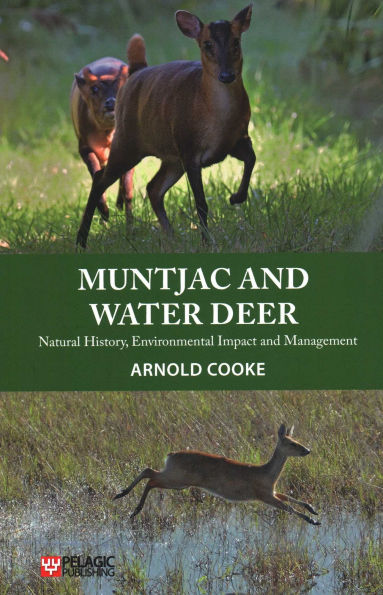
Muntjac and Water Deer: Natural History, Environmental Impact Management in Franklin, TN
Current price: $53.99
Barnes and Noble
Muntjac and Water Deer: Natural History, Environmental Impact Management in Franklin, TN
Current price: $53.99
Loading Inventory...
Size: Paperback
A comprehensive overview of the biology and ecology of muntjac and water deer.
Muntjac deer are one of the major drivers of changes in woodland structure and species composition in lowland England, and many of the principles relating to such woodland impact are also applicable to the activities of other species of deer. Interest in environmental impacts of deer is not solely restricted to woodlands. The highest densities of water deer occur in wetlands, where there is potential for conflict, and considerable numbers are also found on agricultural land. Muntjac deer have settled in suburbia and frequently cause impacts there. Conservationists and national decision makers are concerned both about invasive alien species and about increasing deer populations.
The first section covers the natural history of both species: breeding biology, deer in the field, colonisation of Britain, a detailed look at colonisation in a single county, methods for studying deer populations and a review of deer population numbers. The second section covers environmental impact: risk assessment, impact management, control of muntjac, effect of muntjac browsing and grazing, habitat recovery from muntjac impacts and a review of the impacts of water deer. The section concludes with an overview of management and monitoring.
The costs and benefits of both species are discussed, including asking whether muntjac have been totally bad for this country, whether we are getting on top of problems they cause (locally and nationally) and whether water deer will turn out to be similar to muntjac. Attitudes and approaches to these species are changing: with water deer we are actively studying whether it might be an environmental problem, not waiting until after it has obviously become one. What will happen to distribution, numbers, impacts and attitudes in the future? Will water deer ever become a suburban animal? What does the future hold for water deer in China and Korea? And how important is the English population as a global conservation resource?
Muntjac deer are one of the major drivers of changes in woodland structure and species composition in lowland England, and many of the principles relating to such woodland impact are also applicable to the activities of other species of deer. Interest in environmental impacts of deer is not solely restricted to woodlands. The highest densities of water deer occur in wetlands, where there is potential for conflict, and considerable numbers are also found on agricultural land. Muntjac deer have settled in suburbia and frequently cause impacts there. Conservationists and national decision makers are concerned both about invasive alien species and about increasing deer populations.
The first section covers the natural history of both species: breeding biology, deer in the field, colonisation of Britain, a detailed look at colonisation in a single county, methods for studying deer populations and a review of deer population numbers. The second section covers environmental impact: risk assessment, impact management, control of muntjac, effect of muntjac browsing and grazing, habitat recovery from muntjac impacts and a review of the impacts of water deer. The section concludes with an overview of management and monitoring.
The costs and benefits of both species are discussed, including asking whether muntjac have been totally bad for this country, whether we are getting on top of problems they cause (locally and nationally) and whether water deer will turn out to be similar to muntjac. Attitudes and approaches to these species are changing: with water deer we are actively studying whether it might be an environmental problem, not waiting until after it has obviously become one. What will happen to distribution, numbers, impacts and attitudes in the future? Will water deer ever become a suburban animal? What does the future hold for water deer in China and Korea? And how important is the English population as a global conservation resource?
A comprehensive overview of the biology and ecology of muntjac and water deer.
Muntjac deer are one of the major drivers of changes in woodland structure and species composition in lowland England, and many of the principles relating to such woodland impact are also applicable to the activities of other species of deer. Interest in environmental impacts of deer is not solely restricted to woodlands. The highest densities of water deer occur in wetlands, where there is potential for conflict, and considerable numbers are also found on agricultural land. Muntjac deer have settled in suburbia and frequently cause impacts there. Conservationists and national decision makers are concerned both about invasive alien species and about increasing deer populations.
The first section covers the natural history of both species: breeding biology, deer in the field, colonisation of Britain, a detailed look at colonisation in a single county, methods for studying deer populations and a review of deer population numbers. The second section covers environmental impact: risk assessment, impact management, control of muntjac, effect of muntjac browsing and grazing, habitat recovery from muntjac impacts and a review of the impacts of water deer. The section concludes with an overview of management and monitoring.
The costs and benefits of both species are discussed, including asking whether muntjac have been totally bad for this country, whether we are getting on top of problems they cause (locally and nationally) and whether water deer will turn out to be similar to muntjac. Attitudes and approaches to these species are changing: with water deer we are actively studying whether it might be an environmental problem, not waiting until after it has obviously become one. What will happen to distribution, numbers, impacts and attitudes in the future? Will water deer ever become a suburban animal? What does the future hold for water deer in China and Korea? And how important is the English population as a global conservation resource?
Muntjac deer are one of the major drivers of changes in woodland structure and species composition in lowland England, and many of the principles relating to such woodland impact are also applicable to the activities of other species of deer. Interest in environmental impacts of deer is not solely restricted to woodlands. The highest densities of water deer occur in wetlands, where there is potential for conflict, and considerable numbers are also found on agricultural land. Muntjac deer have settled in suburbia and frequently cause impacts there. Conservationists and national decision makers are concerned both about invasive alien species and about increasing deer populations.
The first section covers the natural history of both species: breeding biology, deer in the field, colonisation of Britain, a detailed look at colonisation in a single county, methods for studying deer populations and a review of deer population numbers. The second section covers environmental impact: risk assessment, impact management, control of muntjac, effect of muntjac browsing and grazing, habitat recovery from muntjac impacts and a review of the impacts of water deer. The section concludes with an overview of management and monitoring.
The costs and benefits of both species are discussed, including asking whether muntjac have been totally bad for this country, whether we are getting on top of problems they cause (locally and nationally) and whether water deer will turn out to be similar to muntjac. Attitudes and approaches to these species are changing: with water deer we are actively studying whether it might be an environmental problem, not waiting until after it has obviously become one. What will happen to distribution, numbers, impacts and attitudes in the future? Will water deer ever become a suburban animal? What does the future hold for water deer in China and Korea? And how important is the English population as a global conservation resource?
You May Also Like









More About Barnes and Noble at CoolSprings Galleria
Barnes & Noble is the world’s largest retail bookseller and a leading retailer of content, digital media and educational products. Our Nook Digital business offers a lineup of NOOK® tablets and e-Readers and an expansive collection of digital reading content through the NOOK Store®. Barnes & Noble’s mission is to operate the best omni-channel specialty retail business in America, helping both our customers and booksellers reach their aspirations, while being a credit to the communities we serve.
1800 Galleria Blvd #1310, Franklin, TN 37067, United States
Find Barnes and Noble at CoolSprings Galleria in Franklin, TN
Visit Barnes and Noble at CoolSprings Galleria in Franklin, TN
