
Home
Nestorius and His Place in the History of Christian Doctrine
Barnes and Noble
Loading Inventory...
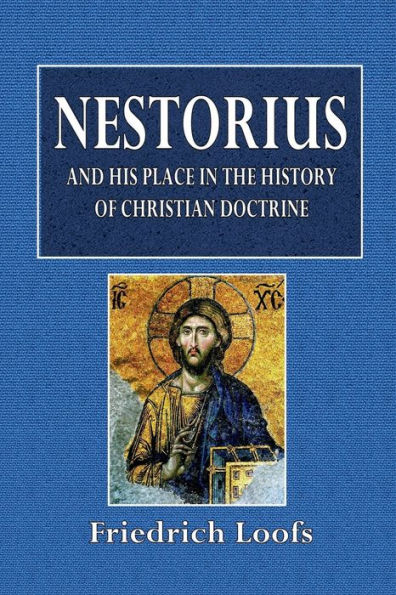
Nestorius and His Place in the History of Christian Doctrine in Franklin, TN
Current price: $5.99
Barnes and Noble
Nestorius and His Place in the History of Christian Doctrine in Franklin, TN
Current price: $5.99
Loading Inventory...
Size: OS
140Pages, Complete and Unabridged. One element of the tragedy of Nestorius's life lay in the fact that already before the council was held in 451 whose creed he could have confessed, he had been condemned. A very careful endeavor is made to trace the origin of Nestorius's view concerning the human nature of Jesus, but fortunately no attempt is made to connect him with Athanasius. Two sentences may be quoted - the last sentence of the preface and the last sentence of the text - the meaning of which will be best understood by reference to Professor Loofs' Oberlin lecture on "What is the Truth about Jesus Christi"; both sentences concern Nestorius's Christology. "There is no other Christology in the ancient church so 'modern' as his and perhaps that of his teachers whose dogmatical works are lost." "Only by returning to the lines of the Antiochian theology, along which in Germany, e.g., I. A. Dorner and M. Kaehler went and R. Seeberg and others are now going, can we arrive at an understanding of the Johannine, which is in harmony with the New Testament and avoids theological and rational impossibilities." -The Homiletic Review, Vol. 69
140Pages, Complete and Unabridged. One element of the tragedy of Nestorius's life lay in the fact that already before the council was held in 451 whose creed he could have confessed, he had been condemned. A very careful endeavor is made to trace the origin of Nestorius's view concerning the human nature of Jesus, but fortunately no attempt is made to connect him with Athanasius. Two sentences may be quoted - the last sentence of the preface and the last sentence of the text - the meaning of which will be best understood by reference to Professor Loofs' Oberlin lecture on "What is the Truth about Jesus Christi"; both sentences concern Nestorius's Christology. "There is no other Christology in the ancient church so 'modern' as his and perhaps that of his teachers whose dogmatical works are lost." "Only by returning to the lines of the Antiochian theology, along which in Germany, e.g., I. A. Dorner and M. Kaehler went and R. Seeberg and others are now going, can we arrive at an understanding of the Johannine, which is in harmony with the New Testament and avoids theological and rational impossibilities." -The Homiletic Review, Vol. 69
You May Also Like










More About Barnes and Noble at CoolSprings Galleria
Barnes & Noble is the world’s largest retail bookseller and a leading retailer of content, digital media and educational products. Our Nook Digital business offers a lineup of NOOK® tablets and e-Readers and an expansive collection of digital reading content through the NOOK Store®. Barnes & Noble’s mission is to operate the best omni-channel specialty retail business in America, helping both our customers and booksellers reach their aspirations, while being a credit to the communities we serve.
1800 Galleria Blvd #1310, Franklin, TN 37067, United States
Find Barnes and Noble at CoolSprings Galleria in Franklin, TN
Visit Barnes and Noble at CoolSprings Galleria in Franklin, TN